
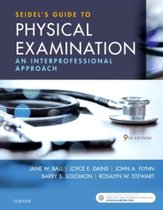
Best selling Seidel\'s Guide to Physical Examination - E-Book notes
Exam (elaborations)
CH. 11 Seidel's Guide to Physical Examination
Popular1. Which cranial nerves inner- vate the face? a. II and V b. III and VI c. V and VII d. VIII and IX e. I and VII 2. The trapezius and sternoclei- domastoid muscles and the clavicle form a landmark called the triangle. a. anterior b. posterior c. lateral d. medial e. ventral 3. The medial border of the sternocleidomastoid mus- cles and the mandible form the triangle. a. dorsal b. posterior c. lateral d. medial e. anterior 4. The largest endocrine gland in the body lies in the trian- gle. a. ...
 YOURVERIFIEDEXAMPLUG
Exam (elaborations)
CH. 13 Seidel's Guide to Physical Examination
Popular1. The middle ear contains the: ANS: B The middle ear contains the ossi- a. cerumen and sebaceous glands. cles, which are three small bones: b. umbo and malleus. c. vestibule and cochlea. d. pars tensa and semicircular canals. e. helix and antihelix. 2. The hair cells of Corti and mem- brane of Corti: a. maintain equilibrium. b. protect the ear from foreign par- ticles. c. stimulate the eighth cranial nerve. d. transmit vibrations to the ossi- cles e. produce a waxy lubricant. U 3. W...
YOURVERIFIEDEXAMPLUG
Exam (elaborations)
Seidel's Guide to Physical Examination 9th Edition Ball Test Bank / Ball: Seidel’s Guide to Physical Examination, 9th Edition, complete test bank; questions and answers (deeply explained)
Popular1. Which bronchial structure(s) is (are) most susceptible to aspiration of foreign bodies? a. Left mainstem bronchus b. Terminal bronchioles c. Right mainstem bronchus d. Right respiratory bronchioles e. Left respiratory bronchioles 2. When auscultating the apex of the lung, you should listen: a. even with the second rib. b. 4 cm above the first rib. c. higher on the right side. d. on the convex diaphragm sur- face. e. directly over the clavicles. 3. You are documenting a rash be- tween the eigh...
YOURVERIFIEDEXAMPLUG
Exam (elaborations)
Chapter 15 & 16: Cardiovascular - PD II (Exam III)
Popular1. The condition in which a pa- tient's heart is either rotated or displaced to the right or is situated as a mirror image of the expected position is called a. amyloidosis. b. cardiomyopathy. c. dextrocardia. d. situs inversus. e. coarctation. 2. Heart position can vary de- pending on body habitus. In a short, stocky individual, you would expect the heart to be located a. more to the right and hang- ing more vertically. b. more to the left and lying more horizontally. c. riding higher in the...
YOURVERIFIEDEXAMPLUG
Newest Seidel\'s Guide to Physical Examination - E-Book summaries
Exam (elaborations)
Chapter 15 & 16: Cardiovascular - PD II (Exam III)
New1. The condition in which a pa- tient's heart is either rotated or displaced to the right or is situated as a mirror image of the expected position is called a. amyloidosis. b. cardiomyopathy. c. dextrocardia. d. situs inversus. e. coarctation. 2. Heart position can vary de- pending on body habitus. In a short, stocky individual, you would expect the heart to be located a. more to the right and hang- ing more vertically. b. more to the left and lying more horizontally. c. riding higher in the...
YOURVERIFIEDEXAMPLUG
Exam (elaborations)
Seidel's Guide to Physical Examination 9th Edition Ball Test Bank / Ball: Seidel’s Guide to Physical Examination, 9th Edition, complete test bank; questions and answers (deeply explained)
New1. Which bronchial structure(s) is (are) most susceptible to aspiration of foreign bodies? a. Left mainstem bronchus b. Terminal bronchioles c. Right mainstem bronchus d. Right respiratory bronchioles e. Left respiratory bronchioles 2. When auscultating the apex of the lung, you should listen: a. even with the second rib. b. 4 cm above the first rib. c. higher on the right side. d. on the convex diaphragm sur- face. e. directly over the clavicles. 3. You are documenting a rash be- tween the eigh...
YOURVERIFIEDEXAMPLUG
Exam (elaborations)
CH. 13 Seidel's Guide to Physical Examination
New1. The middle ear contains the: ANS: B The middle ear contains the ossi- a. cerumen and sebaceous glands. cles, which are three small bones: b. umbo and malleus. c. vestibule and cochlea. d. pars tensa and semicircular canals. e. helix and antihelix. 2. The hair cells of Corti and mem- brane of Corti: a. maintain equilibrium. b. protect the ear from foreign par- ticles. c. stimulate the eighth cranial nerve. d. transmit vibrations to the ossi- cles e. produce a waxy lubricant. U 3. W...
YOURVERIFIEDEXAMPLUG
Exam (elaborations)
CH. 11 Seidel's Guide to Physical Examination
New1. Which cranial nerves inner- vate the face? a. II and V b. III and VI c. V and VII d. VIII and IX e. I and VII 2. The trapezius and sternoclei- domastoid muscles and the clavicle form a landmark called the triangle. a. anterior b. posterior c. lateral d. medial e. ventral 3. The medial border of the sternocleidomastoid mus- cles and the mandible form the triangle. a. dorsal b. posterior c. lateral d. medial e. anterior 4. The largest endocrine gland in the body lies in the trian- gle. a. ...
YOURVERIFIEDEXAMPLUG