

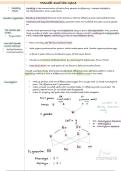
Mendel and the Gene
◦ Heredity Heredity is the transmission of traits from parents to offspring , whereas the trait is
◦ Traits the characteristics of an individual.
Mendel’s Hypothesis Blending inheritance:Parental traits blends so that the offspring have intermediate traits.
Inheritance of acquired characteristics: parental traits are modified through use and passed
on.
The Garden pea Mendel chose pea because they were inexpensive, easy to grow, short generation time, produce
model large number of seeds, can control which parents where involved in mating,have polymorphic
◦ Polymorphic traits (traits that appears commonly in two or more different forms.
How did Mendel ◦ Peas normally self fertilize (self pollinate)
control mating?
◦ Self pollination ◦ Male organs produce pollen grains, which make sperm and Female organs produce eggs
◦ Cross pollination
◦ A flower’s pollen falls on the female organ of that same flower.
◦ Mendel could prevent self pollination by removing the male organ from a flower
◦ cross-pollination: He used pollen of one flower to fertilize another flower.
Mendel used pure lines (that produces identical offspring when self pollinated) to create a
hybrid by mating it with a different pure line that differs in one or two traits.
Monohybrid ◦ Mating parents with two different phenotypes for a single trait is called monohybrid
cross. The offspring are F1 generation.
◦ When crossed rounded seeds with wrinkled seeds, F1 offspring had round seed. The
genetic determinant for wrinkled seed disappeared.
◦ When F1 progeny self pollinates, the wrinkled seed traits reappears
◦ RR - homozygous dominan
◦ Rr - heterozygous
◦ Rr - homozygous recessive.
, To see if the sex of the parent affected inheritance.
◦ In the first cross, the mother has one phenotype (for example, a plant with a certain
Reciprocal cross
flower color), and the father has another phenotype (a different flower color).
◦ In the second cross, he swaps the roles: the father has the first phenotype, and the mother
has the second.
◦ Mendel found that the results of both crosses were the same, meaning the traits were
inherited the same way regardless of whether the genetic information came from the
mother or the father.
The blended inheritance hypothesis is inconsistent becoause the traits did not blend instead
the inherited clear traits.
The acquired inheritance hypothesis is in inconsistent . This idea says that traits developed
Particulate during life, like a giraffe's long neck, are passed to offspring.
Hypothesis ◦ Mendel found that traits are passed through genes, not changes made during life.
—particulate inheritance hypothesis
Gene, allele, Hereditary determinants for a trait are called genes. Mendel also proposed that
genotype ◦ Each individual has two versions of each gene
◦ These different versions of a gene are called alleles
◦ Different alleles are responsible for variation in traits
◦ The combination of alleles found in an individual is called its genotype
◦ An individual’s genotype has a profound effect on its phenotype
The principal of
segregation The Principle of Segregation says that:
◦ Every individual has two alleles (versions) for each gene, one from each parent.
◦ These alleles separate (segregate) during the formation of egg and sperm cells.
◦ Each gamete (egg or sperm) gets only one allele from each gene pair.
◦ When fertilization happens, the offspring gets one allele from each parent.
For example, in seed shape, "R" is the dominant allele for round seeds, and "r" is the recessive al
for wrinkled seeds. If a plant is "Rr," it can pass on either "R" or "r" in its gametes.
◦ Pure-line individuals produce offspring with the same phenotype because they are
homozygous
◦ A mating between two pure lines (RR and rr) results in heterozygotes with the dominan
phenotype
A mating between two heterozygous parents
◦ Results in offspring that are ¼ RR, ½ Rr, and ¼ rr [Ratio—1:2:1]
◦ Produces a 3:1 ratio of phenotypes
Dihybrid cross Heterozygous allele
To determine whether alleles of different genes segregrate together or independently.
Hypothesis
Independent assortment: Alleles of different genes are transmitted independently of each
other
Dependent assortment: The transmission of one allele depends on the transmission of
another
◦ Heredity Heredity is the transmission of traits from parents to offspring , whereas the trait is
◦ Traits the characteristics of an individual.
Mendel’s Hypothesis Blending inheritance:Parental traits blends so that the offspring have intermediate traits.
Inheritance of acquired characteristics: parental traits are modified through use and passed
on.
The Garden pea Mendel chose pea because they were inexpensive, easy to grow, short generation time, produce
model large number of seeds, can control which parents where involved in mating,have polymorphic
◦ Polymorphic traits (traits that appears commonly in two or more different forms.
How did Mendel ◦ Peas normally self fertilize (self pollinate)
control mating?
◦ Self pollination ◦ Male organs produce pollen grains, which make sperm and Female organs produce eggs
◦ Cross pollination
◦ A flower’s pollen falls on the female organ of that same flower.
◦ Mendel could prevent self pollination by removing the male organ from a flower
◦ cross-pollination: He used pollen of one flower to fertilize another flower.
Mendel used pure lines (that produces identical offspring when self pollinated) to create a
hybrid by mating it with a different pure line that differs in one or two traits.
Monohybrid ◦ Mating parents with two different phenotypes for a single trait is called monohybrid
cross. The offspring are F1 generation.
◦ When crossed rounded seeds with wrinkled seeds, F1 offspring had round seed. The
genetic determinant for wrinkled seed disappeared.
◦ When F1 progeny self pollinates, the wrinkled seed traits reappears
◦ RR - homozygous dominan
◦ Rr - heterozygous
◦ Rr - homozygous recessive.
, To see if the sex of the parent affected inheritance.
◦ In the first cross, the mother has one phenotype (for example, a plant with a certain
Reciprocal cross
flower color), and the father has another phenotype (a different flower color).
◦ In the second cross, he swaps the roles: the father has the first phenotype, and the mother
has the second.
◦ Mendel found that the results of both crosses were the same, meaning the traits were
inherited the same way regardless of whether the genetic information came from the
mother or the father.
The blended inheritance hypothesis is inconsistent becoause the traits did not blend instead
the inherited clear traits.
The acquired inheritance hypothesis is in inconsistent . This idea says that traits developed
Particulate during life, like a giraffe's long neck, are passed to offspring.
Hypothesis ◦ Mendel found that traits are passed through genes, not changes made during life.
—particulate inheritance hypothesis
Gene, allele, Hereditary determinants for a trait are called genes. Mendel also proposed that
genotype ◦ Each individual has two versions of each gene
◦ These different versions of a gene are called alleles
◦ Different alleles are responsible for variation in traits
◦ The combination of alleles found in an individual is called its genotype
◦ An individual’s genotype has a profound effect on its phenotype
The principal of
segregation The Principle of Segregation says that:
◦ Every individual has two alleles (versions) for each gene, one from each parent.
◦ These alleles separate (segregate) during the formation of egg and sperm cells.
◦ Each gamete (egg or sperm) gets only one allele from each gene pair.
◦ When fertilization happens, the offspring gets one allele from each parent.
For example, in seed shape, "R" is the dominant allele for round seeds, and "r" is the recessive al
for wrinkled seeds. If a plant is "Rr," it can pass on either "R" or "r" in its gametes.
◦ Pure-line individuals produce offspring with the same phenotype because they are
homozygous
◦ A mating between two pure lines (RR and rr) results in heterozygotes with the dominan
phenotype
A mating between two heterozygous parents
◦ Results in offspring that are ¼ RR, ½ Rr, and ¼ rr [Ratio—1:2:1]
◦ Produces a 3:1 ratio of phenotypes
Dihybrid cross Heterozygous allele
To determine whether alleles of different genes segregrate together or independently.
Hypothesis
Independent assortment: Alleles of different genes are transmitted independently of each
other
Dependent assortment: The transmission of one allele depends on the transmission of
another


