
NCE Exam Summary Notes
Human Development
1. Human Development (20%)
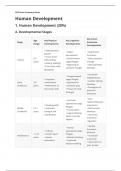
A. Developmental Stages
Key Social-
Age Key Physical Key Cognitive
Stage Emotional
Range Developments Developments
Developments
• Rapid physical
• Object • Attachment
growth
permanence formation
• Gross motor
0-2 • Sensorimotor • Basic emotions
Infancy skills (rolling,
years stage (Piaget) emerge
crawling, walking)
• Beginning of • Self-awareness
• Fine motor skills
symbolic thought develops
(grasping)
• Increased
• Preoperational
independence
• Improved stage (Piaget)
• Gender identity
Early 2-6 coordination • Egocentrism
develops
Childhood years • Refinement of • Symbolic play
• Emergence of
fine motor skills • Theory of mind
prosocial
emerges
behaviors
• Peer
• Concrete
relationships gain
operational stage
• Steady growth importance
(Piaget)
Middle 6-11 • Improved • Self-concept
• Conservation
Childhood years strength and develops
• Logical thinking
coordination • Improved
about concrete
emotional
objects
regulation
• Identity
• Formal
formation
• Puberty operational stage
(Erikson)
11-18 • Growth spurt (Piaget)
Adolescence • Increased
years • Sexual • Abstract thinking
autonomy
maturation • Improved
• Importance of
decision-making
peer groups
, Key Social-
Age Key Physical Key Cognitive
Stage Emotional
Range Developments Developments
Developments
• Intimacy vs.
• Peak physical • Post-formal Isolation (Erikson)
Early 18-40 condition (20s) thought • Career
Adulthood years • Gradual decline • Peak in fluid development
begins (late 30s) intelligence • Possible
parenthood
• Generativity vs.
Stagnation
• Maintenance of
• Gradual physical (Erikson)
cognitive abilities
Middle 40-65 decline • Balancing work
• Potential decline
Adulthood years • Menopause and family
in processing
(women, 45-55) • Possible
speed
caregiving for
parents
• Potential • Integrity vs.
• Continued
cognitive decline Despair (Erikson)
Late 65+ physical decline
• Maintained • Adjustment to
Adulthood years • Increased health
crystallized retirement
risks
intelligence • Coping with loss
B. Theories of Development
1. Erikson's Psychosocial Stages
Positive Negative
Stage Age Crisis
Outcome Outcome
1 0-18 months Trust vs. Mistrust Hope Fear and mistrust
18 months-3 Autonomy vs. Self-doubt,
2 Will, self-control
years Shame and Doubt shame
Guilt, lack of
3 3-5 years Initiative vs. Guilt Purpose
initiative
Industry vs. Feelings of
4 5-12 years Competence
Inferiority inferiority
Identity vs. Role Fidelity, clear
5 12-18 years Role confusion
Confusion sense of self
Young Intimacy vs. Loneliness,
6 Love
adulthood Isolation isolation
Middle Generativity vs. Self-absorption,
7 Care, productivity
adulthood Stagnation stagnation
, Positive Negative
Stage Age Crisis
Outcome Outcome
Late
8 Integrity vs. Despair Wisdom Regret, despair
adulthood
2. Piaget's Cognitive Development Theory
Sensorimotor Stage 0-2 years
Preoperational Stage 2-7 years Object Permanence Circular Reactions
Concrete Operational Stage 7-11 years Symbolic Thought Egocentrism
Formal Operational Stage 11+ years Conservation Reversibility
Abstract Thinking Hypothetical Reasoning
Key Concepts:
Schemas: Mental representations of the world
Assimilation: Incorporating new information into existing schemas
Accommodation: Modifying existing schemas to fit new information
3. Freud's Psychosexual Stages
Stage Age Focus Conflict Potential Fixation
0-18 Oral personalities (e.g.,
Oral Mouth Weaning
months overeating)
18 months- Anal personalities (e.g.,
Anal Anus Toilet training
3 years obsessive cleanliness)
Oedipus/Electra Sexual inhibition or
Phallic 3-6 years Genitals
complex promiscuity
Dormant
Latency 6-puberty sexual - -
feelings
Mature
Puberty
Genital sexual - -
onwards
interests
, 4. Vygotsky's Sociocultural Theory
Vygotsky's Sociocultural Theory
Zone of Proximal Development ZPD Scaffolding Social Mediation Private Speech
What a child can do with help Temporary support for learning Learning through social interaction Self-directed speech for self-regulation
C. Cognitive and Emotional Development
1. Cognitive Development
Information Processing Theory Components:
1. Attention
2. Perception
3. Memory
4. Problem-solving
Executive Functions:
Working memory
Inhibitory control
Cognitive flexibility
Theory of Mind:
Develops around age 4-5
Understanding others' mental states
2. Emotional Development
Attachment Theory (Bowlby and Ainsworth):
Attachment Style Child Behavior Caregiver Behavior
Responsive and
Secure Uses caregiver as secure base
consistent
Anxious- Distressed on separation, difficult to Inconsistent
Ambivalent comfort responsiveness
Little distress on separation, avoids
Avoidant Unresponsive or rejecting
caregiver
Disorganized Confused, contradictory behaviors Frightening or abusive
Emotional Regulation Development:
1. External regulation (by caregivers)
2. Co-regulation
3. Internal regulation
Human Development
1. Human Development (20%)
A. Developmental Stages
Key Social-
Age Key Physical Key Cognitive
Stage Emotional
Range Developments Developments
Developments
• Rapid physical
• Object • Attachment
growth
permanence formation
• Gross motor
0-2 • Sensorimotor • Basic emotions
Infancy skills (rolling,
years stage (Piaget) emerge
crawling, walking)
• Beginning of • Self-awareness
• Fine motor skills
symbolic thought develops
(grasping)
• Increased
• Preoperational
independence
• Improved stage (Piaget)
• Gender identity
Early 2-6 coordination • Egocentrism
develops
Childhood years • Refinement of • Symbolic play
• Emergence of
fine motor skills • Theory of mind
prosocial
emerges
behaviors
• Peer
• Concrete
relationships gain
operational stage
• Steady growth importance
(Piaget)
Middle 6-11 • Improved • Self-concept
• Conservation
Childhood years strength and develops
• Logical thinking
coordination • Improved
about concrete
emotional
objects
regulation
• Identity
• Formal
formation
• Puberty operational stage
(Erikson)
11-18 • Growth spurt (Piaget)
Adolescence • Increased
years • Sexual • Abstract thinking
autonomy
maturation • Improved
• Importance of
decision-making
peer groups
, Key Social-
Age Key Physical Key Cognitive
Stage Emotional
Range Developments Developments
Developments
• Intimacy vs.
• Peak physical • Post-formal Isolation (Erikson)
Early 18-40 condition (20s) thought • Career
Adulthood years • Gradual decline • Peak in fluid development
begins (late 30s) intelligence • Possible
parenthood
• Generativity vs.
Stagnation
• Maintenance of
• Gradual physical (Erikson)
cognitive abilities
Middle 40-65 decline • Balancing work
• Potential decline
Adulthood years • Menopause and family
in processing
(women, 45-55) • Possible
speed
caregiving for
parents
• Potential • Integrity vs.
• Continued
cognitive decline Despair (Erikson)
Late 65+ physical decline
• Maintained • Adjustment to
Adulthood years • Increased health
crystallized retirement
risks
intelligence • Coping with loss
B. Theories of Development
1. Erikson's Psychosocial Stages
Positive Negative
Stage Age Crisis
Outcome Outcome
1 0-18 months Trust vs. Mistrust Hope Fear and mistrust
18 months-3 Autonomy vs. Self-doubt,
2 Will, self-control
years Shame and Doubt shame
Guilt, lack of
3 3-5 years Initiative vs. Guilt Purpose
initiative
Industry vs. Feelings of
4 5-12 years Competence
Inferiority inferiority
Identity vs. Role Fidelity, clear
5 12-18 years Role confusion
Confusion sense of self
Young Intimacy vs. Loneliness,
6 Love
adulthood Isolation isolation
Middle Generativity vs. Self-absorption,
7 Care, productivity
adulthood Stagnation stagnation
, Positive Negative
Stage Age Crisis
Outcome Outcome
Late
8 Integrity vs. Despair Wisdom Regret, despair
adulthood
2. Piaget's Cognitive Development Theory
Sensorimotor Stage 0-2 years
Preoperational Stage 2-7 years Object Permanence Circular Reactions
Concrete Operational Stage 7-11 years Symbolic Thought Egocentrism
Formal Operational Stage 11+ years Conservation Reversibility
Abstract Thinking Hypothetical Reasoning
Key Concepts:
Schemas: Mental representations of the world
Assimilation: Incorporating new information into existing schemas
Accommodation: Modifying existing schemas to fit new information
3. Freud's Psychosexual Stages
Stage Age Focus Conflict Potential Fixation
0-18 Oral personalities (e.g.,
Oral Mouth Weaning
months overeating)
18 months- Anal personalities (e.g.,
Anal Anus Toilet training
3 years obsessive cleanliness)
Oedipus/Electra Sexual inhibition or
Phallic 3-6 years Genitals
complex promiscuity
Dormant
Latency 6-puberty sexual - -
feelings
Mature
Puberty
Genital sexual - -
onwards
interests
, 4. Vygotsky's Sociocultural Theory
Vygotsky's Sociocultural Theory
Zone of Proximal Development ZPD Scaffolding Social Mediation Private Speech
What a child can do with help Temporary support for learning Learning through social interaction Self-directed speech for self-regulation
C. Cognitive and Emotional Development
1. Cognitive Development
Information Processing Theory Components:
1. Attention
2. Perception
3. Memory
4. Problem-solving
Executive Functions:
Working memory
Inhibitory control
Cognitive flexibility
Theory of Mind:
Develops around age 4-5
Understanding others' mental states
2. Emotional Development
Attachment Theory (Bowlby and Ainsworth):
Attachment Style Child Behavior Caregiver Behavior
Responsive and
Secure Uses caregiver as secure base
consistent
Anxious- Distressed on separation, difficult to Inconsistent
Ambivalent comfort responsiveness
Little distress on separation, avoids
Avoidant Unresponsive or rejecting
caregiver
Disorganized Confused, contradictory behaviors Frightening or abusive
Emotional Regulation Development:
1. External regulation (by caregivers)
2. Co-regulation
3. Internal regulation


