1
Chapter 14 Medical Overview
Introduction
Trauma emergency: involves injuries resulting from physical force applied to the body
Medical emergency: involve illnesses or conditions caused by disease Types of Medical Emergencies
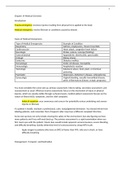
Type of Medical Emergencies Example of Condition
Respiratory Asthma, emphysema, chronic bronchitis
Cardiovascular Heart attack, congestive heart failure
Neurologic Stroke, seizure, syncope (fainting)
Gastrointestinal Appendicitis, diverticulitis, pancreatitis
Urologic Kidney stones
Endocrine Diabetes mellitus
Hematologic Sickle cell disease, hemophilia Immunologic Anaphylactic reaction
Toxicologic Substance abuse, food, plant, or chemical poisoning
Psychiatric Depression, Alzheimer’s disease, schizophrenia
Gynecologic Vaginal bleeding, sexually transmitted disease, pelvic inflammatory disease, ectopic pregnancy
You must complete the scene-size up, primary assessment, history taking, secondary assessment, and reassessment as usual. Whereas trauma assessments focus on the mechanism of injury or physical injuries, which are usually visible through a physical exam, medical patient assessment focuses on the nature of illness (NOI), symptoms, and the chief complaint. -Index of suspicion: your awareness and concern for potentially serious underlying and unseen injuries or illnesses
If a patient is hostile, maintain a professional, calm, nonjudgmental demeanor. You should refrain from labeling patients, and remember that a frequent caller may have a different complaint this time. Scene size-up does not only include viewing the safety of the environment, but also figuring out how many patients and if you will need back up. The primary assessment is a rapid examination when you first meet eyes with the patient. Visual clues would include apparent unconsciousness, severe bleeding, and difficulty breathing. Quickly determine level of consciousness by using AVPU scale. -Apply oxygen to patients who have an SP02 of lower than 94%, who are in shock, or have difficulty breathing
Management, Transport, and Destination 2
Basic EMTs will not be able to give many medications. What is able to be given is based on local protocols. You may be able to use an AED on a patient who is pulseless and apneic. Scene Time
In many cases, the time on scene will be longer for medical patients than trauma patients. The time on scene should be limited to 10 minutes or less if the patient is in critical condition. If the patient is not in critical condition, take time to gather their information so you can forward it to the hospital’s staff. Type of Transport
If a life-threatening condition exists, transportation should include lights and sirens. But if patient is not critical, consider nonemergency transport. Good examples of when to use air transport include a complication of pregnancy, heart attacks, strokes, or if a patient is in a rural area with long ground transport times. Destination Selection
It is generally appropriate to select the closest emergency department as the destination. However, if there is a hospital that is better fit for your patient’s emergency needs, then go there. Infectious Diseases
After scene-size up and primary assessment, you must gather the patient’s history by using OPQRST (Onset, provocation, quality, radiation, severity, timing). Obtain SAMPLE and set a baseline of vital signs. Ask whether the patient has recently traveled or been in contact with someone who has. General Management Principles
The general management of a patient with a suspected infectious disease first focuses on any life-
threatening conditions that were identified in the primary assessment. Place the patient comfortably on the stretcher and keep them warm. Epidemic and Pandemic Considerations
Epidemic: occurs when new cases of a disease in a human population substantially exceed the number expected based on recent experience Pandemic: an outbreak that occurs on a global scale