
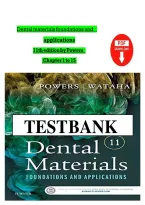
Dental materials foundations and
n n n
applications
11th edition by Powers
n n n
Chapter 1 to 15 n n n
TEST BANK n
,TABLE OF CONTENT n n
NEW! The Nature of Dental Materials
n n n n n
n 1.Introduction to Restorative Dental Materials n n n n
n 2.Properties of Dental Materials n n n
3.Preventive Dental Materials n n
4.Direct Esthetic Restorative Materials
n n n
n 5.Dental Amalgam
n
6.Finishing, Polishing, and Cleansing Materials
n n n n
n 7.Cements
8.Impression Materials n
n 9.Model and Die Materials
n n n
n 10.Waxes
11.Casting Alloys, Wrought Alloys, and Solders
n n n n n
n 12.Casting, Soldering, and Welding
n n n
n 13.Polymers in Prosthodontics n n
14. Dental Ceramics n
n 15.Dental Implants n
,Chapter 01: Introduction to Restorative Dental
n n n n n
Materials Powers: Dental Materials, 11th Edition
n n n n n n
MULTIPLE
CHOICE
n
1. What causes caries?
n n
a. Food debris n
b. Materia alba n
c. Acidic foodstuff n
d. Bacterial plaque n
e. Salivary glycoproteins n
ANS: D n
Feedback
A Food debris does not have the structural organization of bacterial
n n n n n n n n n
nplaque biofilm. n
B Materia alba does not have the structural organization of bacterial
n n n n n n n n n
nplaque biofilm. n
C Acidic foodstuff lowers pH and may demineralize teeth but does not
n n n n n n n n n n
ndirectly cause decay. n n
D Caries is caused by biofilm; also known as bacterial plaque.
n n n n n n n n n
E Salivary glycoproteins form the acquired enamel pellicle to which
n n n n n n n n
nbacteria adhere. n
DIF: Knowledge REF: p. 1 OBJ: 2 nn n nn n nn n nn n
TOP: CDA, GC, V, A,1b. Patient Education and Oral Health Management
n n n n n n n n n n n
MSC: NBDHE, 6.0 Providing Supportive Treatment Services, 6.1 Properties and
n n n n n n n n n
nManipulation of Materials n n
2. Caries is most likely to occur on which of the following tooth surfaces?
n n n n n n n n n n n n
a. Buccal
b. Lingual
c. Occlusal
d. Interproximal
e. C and D are both correct.
n n n n n
ANS: E n
Feedback
A Buccal surfaces are also susceptible to caries; however, there is less
n n n n n n n n n n
nsurface area left unchecked. n n n
B Lingual surfaces are also susceptible to caries; however, there is less
n n n n n n n n n n
nsurface area left unchecked. n n n
C Caries is most likely to occur in pits and fissures on the occlusal surface
n n n n n n n n n n n n n
nand on interproximal tooth surfaces where plaque accumulates
n n n n n n n
, unchecked.
D Caries is most likely to occur in pits and fissures on the occlusal surface
n n n n n n n n n n n n n
nand on interproximal tooth surfaces where plaque accumulates
n n n n n n n
nunchecked.
E Caries is most likely to occur in pits and fissures on the occlusal surface
n n n n n n n n n n n n n
nand on interproximal tooth surfaces where plaque accumulates
n n n n n n n
nunchecked.
DIF: Knowledge REF: p. 1 OBJ: 2 nn n nn n nn n nn n
TOP: CDA, GC, III, B, 1, Describe how to prepare, mix, deliver, and store restorative
n n n n n n n n n n n n n n n
nmaterials, including but not limited to a. amalgam, c. composites
n n n n n n n n n
MSC: NBDHE, 6.0 Providing Supportive Treatment Services, 6.5 General
n n n n n n n n
3. Which of the following is an intracoronal restoration?
n n n n n n n
a. Ceramic–alloy crown on tooth number 21 n n n n n
b. Ceramic veneer on tooth number 8 n n n n n
c. Ceramic onlay on tooth number 30 n n n n n
d. Ceramic inlay on tooth number 14 n n n n n
ANS: D
n
Feedback
A The alternate choices are all extracoronal restorations used to repair
n n n n n n n n n
nthe external. n
B The alternate choices are all extracoronal restorations used to repair
n n n n n n n n n
nthe external. n
C The alternate choices are all extracoronal restorations used to repair
n n n n n n n n n
nthe external. n
D A ceramic inlay on tooth number 14 is an example of an intracoronal
n n n n n n n n n n n n
nrestoration, meaning that the restoration is being used to repair n n n n n n n n n
ndamage restricted to the internal parts of a tooth. Materials such as
n n n n n n n n n n n
namalgam and composite resin are used in addition to ceramic or
n n n n n n n n n n
cast metal.
n n
DIF: Knowledge REF: p. 4 OBJ: 3 nn n nn n nn n nn n
TOP: CDA, GC, III, B, 1, Describe how to prepare, mix, deliver, and store restorative
n n n n n n n n n n n n n n n
nmaterials, including but not limited to a. amalgam, c. composites
n n n n n n n n n
MSC: NBDHE, 6.0 Providing Supportive Treatment Services, 6.5 General
n n n n n n n n
4. What is the process called where decay is removed from the tooth in order for a
n n n n n n n n n n n n n n n
nrestoration to be placed? n n n
a. Cavity preparation n
b. Convenience form n
c. Margination
d. Extension
ANS: A
n
n n n
applications
11th edition by Powers
n n n
Chapter 1 to 15 n n n
TEST BANK n
,TABLE OF CONTENT n n
NEW! The Nature of Dental Materials
n n n n n
n 1.Introduction to Restorative Dental Materials n n n n
n 2.Properties of Dental Materials n n n
3.Preventive Dental Materials n n
4.Direct Esthetic Restorative Materials
n n n
n 5.Dental Amalgam
n
6.Finishing, Polishing, and Cleansing Materials
n n n n
n 7.Cements
8.Impression Materials n
n 9.Model and Die Materials
n n n
n 10.Waxes
11.Casting Alloys, Wrought Alloys, and Solders
n n n n n
n 12.Casting, Soldering, and Welding
n n n
n 13.Polymers in Prosthodontics n n
14. Dental Ceramics n
n 15.Dental Implants n
,Chapter 01: Introduction to Restorative Dental
n n n n n
Materials Powers: Dental Materials, 11th Edition
n n n n n n
MULTIPLE
CHOICE
n
1. What causes caries?
n n
a. Food debris n
b. Materia alba n
c. Acidic foodstuff n
d. Bacterial plaque n
e. Salivary glycoproteins n
ANS: D n
Feedback
A Food debris does not have the structural organization of bacterial
n n n n n n n n n
nplaque biofilm. n
B Materia alba does not have the structural organization of bacterial
n n n n n n n n n
nplaque biofilm. n
C Acidic foodstuff lowers pH and may demineralize teeth but does not
n n n n n n n n n n
ndirectly cause decay. n n
D Caries is caused by biofilm; also known as bacterial plaque.
n n n n n n n n n
E Salivary glycoproteins form the acquired enamel pellicle to which
n n n n n n n n
nbacteria adhere. n
DIF: Knowledge REF: p. 1 OBJ: 2 nn n nn n nn n nn n
TOP: CDA, GC, V, A,1b. Patient Education and Oral Health Management
n n n n n n n n n n n
MSC: NBDHE, 6.0 Providing Supportive Treatment Services, 6.1 Properties and
n n n n n n n n n
nManipulation of Materials n n
2. Caries is most likely to occur on which of the following tooth surfaces?
n n n n n n n n n n n n
a. Buccal
b. Lingual
c. Occlusal
d. Interproximal
e. C and D are both correct.
n n n n n
ANS: E n
Feedback
A Buccal surfaces are also susceptible to caries; however, there is less
n n n n n n n n n n
nsurface area left unchecked. n n n
B Lingual surfaces are also susceptible to caries; however, there is less
n n n n n n n n n n
nsurface area left unchecked. n n n
C Caries is most likely to occur in pits and fissures on the occlusal surface
n n n n n n n n n n n n n
nand on interproximal tooth surfaces where plaque accumulates
n n n n n n n
, unchecked.
D Caries is most likely to occur in pits and fissures on the occlusal surface
n n n n n n n n n n n n n
nand on interproximal tooth surfaces where plaque accumulates
n n n n n n n
nunchecked.
E Caries is most likely to occur in pits and fissures on the occlusal surface
n n n n n n n n n n n n n
nand on interproximal tooth surfaces where plaque accumulates
n n n n n n n
nunchecked.
DIF: Knowledge REF: p. 1 OBJ: 2 nn n nn n nn n nn n
TOP: CDA, GC, III, B, 1, Describe how to prepare, mix, deliver, and store restorative
n n n n n n n n n n n n n n n
nmaterials, including but not limited to a. amalgam, c. composites
n n n n n n n n n
MSC: NBDHE, 6.0 Providing Supportive Treatment Services, 6.5 General
n n n n n n n n
3. Which of the following is an intracoronal restoration?
n n n n n n n
a. Ceramic–alloy crown on tooth number 21 n n n n n
b. Ceramic veneer on tooth number 8 n n n n n
c. Ceramic onlay on tooth number 30 n n n n n
d. Ceramic inlay on tooth number 14 n n n n n
ANS: D
n
Feedback
A The alternate choices are all extracoronal restorations used to repair
n n n n n n n n n
nthe external. n
B The alternate choices are all extracoronal restorations used to repair
n n n n n n n n n
nthe external. n
C The alternate choices are all extracoronal restorations used to repair
n n n n n n n n n
nthe external. n
D A ceramic inlay on tooth number 14 is an example of an intracoronal
n n n n n n n n n n n n
nrestoration, meaning that the restoration is being used to repair n n n n n n n n n
ndamage restricted to the internal parts of a tooth. Materials such as
n n n n n n n n n n n
namalgam and composite resin are used in addition to ceramic or
n n n n n n n n n n
cast metal.
n n
DIF: Knowledge REF: p. 4 OBJ: 3 nn n nn n nn n nn n
TOP: CDA, GC, III, B, 1, Describe how to prepare, mix, deliver, and store restorative
n n n n n n n n n n n n n n n
nmaterials, including but not limited to a. amalgam, c. composites
n n n n n n n n n
MSC: NBDHE, 6.0 Providing Supportive Treatment Services, 6.5 General
n n n n n n n n
4. What is the process called where decay is removed from the tooth in order for a
n n n n n n n n n n n n n n n
nrestoration to be placed? n n n
a. Cavity preparation n
b. Convenience form n
c. Margination
d. Extension
ANS: A
n


