
NC ELECTRICAL INSPECTOR LEVEL I | PRACTICE EXAM BANK
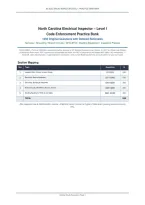
North Carolina Electrical Inspector – Level I
Code Enforcement Practice Bank
1050 Original Questions with Detailed Rationales
Services • Grounding • Branch Circuits • GFCI/AFCI • Dwelling Equipment • Inspection Process
DISCLAIMER – This is an ORIGINAL educational practice resource for NC Electrical Inspector Level I themes. It is NOT an official Code Officials
Qualifications Board exam, NOT a reproduction of proprietary test items, and NOT a substitute for the adopted NEC edition, NC amendments, 11
NCAC 08, Law & Administration, or approved Level I coursework. Verify current Board requirements and code edition for your exam cycle.
Section Mapping
Sec Topic Questions N
1 Inspector Role, Process & Level I Scope Q1-Q210 210
2 Services & Service Equipment Q211-Q420 210
3 Grounding, Bonding & Subpanels Q421-Q630 210
4 Branch Circuits, GFCI/AFCI, Boxes & Devices Q631-Q840 210
5 Dwelling Equipment, HVAC & Life Safety Q841-Q1050 210
TOTAL 1050
Also required: Law & Administration course + Electrical Level I course (or higher). State exam passing score commonly
70%.
Original Study Resource | Page 1
, NC ELECTRICAL INSPECTOR LEVEL I | PRACTICE EXAM BANK
Section 1: Inspector Role, Process & Level I Scope
Q1: A North Carolina Electrical Inspector Level I certificate authorizes inspection within:
A. Unlimited high-rise commercial scope identical to Level III always
B. The building size and occupancy limits defined for Level I in NC rules [CORRECT]
C. Only utility transmission substations
D. Only low-voltage data cabling with no power
Correct Answer: B
Rationale: Level I is the limited/entry inspector level.
Q2: Before performing code enforcement, applicants typically must complete:
A. No courses ever
B. Law & Administration and the Electrical Level I (or higher) course with passing scores
[CORRECT]
C. Only a social media quiz
D. Only federal tax training
Correct Answer: B
Rationale: Board-approved coursework is required.
Q3: A rough-in electrical inspection is performed:
A. After drywall conceals all wiring
B. While wiring methods are still visible and accessible [CORRECT]
C. Only after certificate of occupancy
D. Only for the service mast
Correct Answer: B
Rationale: See work before concealment.
Original Study Resource | Page 2
, NC ELECTRICAL INSPECTOR LEVEL I | PRACTICE EXAM BANK
Q4: Final inspection generally verifies:
A. Only that a permit number exists
B. Completed, code-compliant installation ready for the intended use [CORRECT]
C. Only paint colors
D. That grounding was omitted
Correct Answer: B
Rationale: Completeness and compliance.
Q5: Inspectors should document deficiencies by:
A. Vague complaints with no code reference
B. Clear, factual notes tied to code requirements [CORRECT]
C. Only verbal comments with no record
D. Public social media posts of the homeowner
Correct Answer: B
Rationale: Professional enforcement records.
Q6: Listed equipment must be installed:
A. Any way the installer prefers
B. Per listing instructions and the adopted code [CORRECT]
C. Only outdoors
D. Without following labels
Correct Answer: B
Rationale: Listing conditions apply.
Q7: Working space at panels is required so that:
A. Storage can permanently block the equipment
B. The equipment can be safely operated and serviced [CORRECT]
C. Clearances can be ignored under 100A
D. Only aesthetics are improved
Correct Answer: B
Rationale: Access and safety.
Original Study Resource | Page 3
, NC ELECTRICAL INSPECTOR LEVEL I | PRACTICE EXAM BANK
Q8: The adopted NEC becomes enforceable when:
A. It is published by NFPA only
B. Adopted by the jurisdiction/state for code enforcement [CORRECT]
C. A contractor posts it online
D. It is used as a design suggestion only
Correct Answer: B
Rationale: Adoption creates legal force.
Q9: When plans and field installation differ, the inspector should:
A. Always accept field changes silently
B. Require compliance with approved plans/code or a proper revision process [CORRECT]
C. Ignore life-safety issues
D. Only photograph without action
Correct Answer: B
Rationale: Built work must match approvals/code.
Q10: Level I inspectors should know the limits of their certification and:
A. Inspect beyond Level I scope without authority
B. Stay within authorized scope or involve properly certified staff [CORRECT]
C. Ignore jurisdictional boundaries
D. Only inspect after occupancy forever
Correct Answer: B
Rationale: Work within certification level.
Original Study Resource | Page 4
North Carolina Electrical Inspector – Level I
Code Enforcement Practice Bank
1050 Original Questions with Detailed Rationales
Services • Grounding • Branch Circuits • GFCI/AFCI • Dwelling Equipment • Inspection Process
DISCLAIMER – This is an ORIGINAL educational practice resource for NC Electrical Inspector Level I themes. It is NOT an official Code Officials
Qualifications Board exam, NOT a reproduction of proprietary test items, and NOT a substitute for the adopted NEC edition, NC amendments, 11
NCAC 08, Law & Administration, or approved Level I coursework. Verify current Board requirements and code edition for your exam cycle.
Section Mapping
Sec Topic Questions N
1 Inspector Role, Process & Level I Scope Q1-Q210 210
2 Services & Service Equipment Q211-Q420 210
3 Grounding, Bonding & Subpanels Q421-Q630 210
4 Branch Circuits, GFCI/AFCI, Boxes & Devices Q631-Q840 210
5 Dwelling Equipment, HVAC & Life Safety Q841-Q1050 210
TOTAL 1050
Also required: Law & Administration course + Electrical Level I course (or higher). State exam passing score commonly
70%.
Original Study Resource | Page 1
, NC ELECTRICAL INSPECTOR LEVEL I | PRACTICE EXAM BANK
Section 1: Inspector Role, Process & Level I Scope
Q1: A North Carolina Electrical Inspector Level I certificate authorizes inspection within:
A. Unlimited high-rise commercial scope identical to Level III always
B. The building size and occupancy limits defined for Level I in NC rules [CORRECT]
C. Only utility transmission substations
D. Only low-voltage data cabling with no power
Correct Answer: B
Rationale: Level I is the limited/entry inspector level.
Q2: Before performing code enforcement, applicants typically must complete:
A. No courses ever
B. Law & Administration and the Electrical Level I (or higher) course with passing scores
[CORRECT]
C. Only a social media quiz
D. Only federal tax training
Correct Answer: B
Rationale: Board-approved coursework is required.
Q3: A rough-in electrical inspection is performed:
A. After drywall conceals all wiring
B. While wiring methods are still visible and accessible [CORRECT]
C. Only after certificate of occupancy
D. Only for the service mast
Correct Answer: B
Rationale: See work before concealment.
Original Study Resource | Page 2
, NC ELECTRICAL INSPECTOR LEVEL I | PRACTICE EXAM BANK
Q4: Final inspection generally verifies:
A. Only that a permit number exists
B. Completed, code-compliant installation ready for the intended use [CORRECT]
C. Only paint colors
D. That grounding was omitted
Correct Answer: B
Rationale: Completeness and compliance.
Q5: Inspectors should document deficiencies by:
A. Vague complaints with no code reference
B. Clear, factual notes tied to code requirements [CORRECT]
C. Only verbal comments with no record
D. Public social media posts of the homeowner
Correct Answer: B
Rationale: Professional enforcement records.
Q6: Listed equipment must be installed:
A. Any way the installer prefers
B. Per listing instructions and the adopted code [CORRECT]
C. Only outdoors
D. Without following labels
Correct Answer: B
Rationale: Listing conditions apply.
Q7: Working space at panels is required so that:
A. Storage can permanently block the equipment
B. The equipment can be safely operated and serviced [CORRECT]
C. Clearances can be ignored under 100A
D. Only aesthetics are improved
Correct Answer: B
Rationale: Access and safety.
Original Study Resource | Page 3
, NC ELECTRICAL INSPECTOR LEVEL I | PRACTICE EXAM BANK
Q8: The adopted NEC becomes enforceable when:
A. It is published by NFPA only
B. Adopted by the jurisdiction/state for code enforcement [CORRECT]
C. A contractor posts it online
D. It is used as a design suggestion only
Correct Answer: B
Rationale: Adoption creates legal force.
Q9: When plans and field installation differ, the inspector should:
A. Always accept field changes silently
B. Require compliance with approved plans/code or a proper revision process [CORRECT]
C. Ignore life-safety issues
D. Only photograph without action
Correct Answer: B
Rationale: Built work must match approvals/code.
Q10: Level I inspectors should know the limits of their certification and:
A. Inspect beyond Level I scope without authority
B. Stay within authorized scope or involve properly certified staff [CORRECT]
C. Ignore jurisdictional boundaries
D. Only inspect after occupancy forever
Correct Answer: B
Rationale: Work within certification level.
Original Study Resource | Page 4


