
NC ELECTRICAL INSPECTOR LEVEL II (COMMERCIAL) | PRACTICE EXAM BANK
North Carolina Electrical Inspector – Level II
Commercial Code Enforcement Practice Bank
1000 Original Questions with Detailed Rationales
Services • Grounding/Bonding • Branch Circuits • OCPD • Equipment • Inspection Practice
DISCLAIMER – This is an ORIGINAL educational practice resource for commercial electrical inspection themes relevant to NC Electrical Inspector
Level II study. It is NOT an official NC Code Officials Qualifications Board exam, NOT a reproduction of proprietary test items, and NOT a substitute
for the adopted NEC edition, NC amendments, 11 NCAC 08, or approved Level II coursework. Always verify current Board requirements and the code
edition in force for your exam.
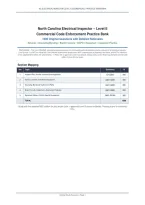
Section Mapping
Sec Topic Questions N
1 Inspector Role, Process & General Code Application Q1-Q200 200
2 Services, Feeders & Distribution Equipment Q201-Q400 200
3 Grounding, Bonding & Fault Current Paths Q401-Q600 200
4 Branch Circuits, Conductors & Overcurrent Protection Q601-Q800 200
5 Equipment, Motors, HVAC & Special Occupancies Q801-Q1000 200
TOTAL 1000
Study with the adopted NEC edition for your exam cycle + approved Level II course materials. Passing score is commonly
70%.
Original Study Resource | Page 1
, NC ELECTRICAL INSPECTOR LEVEL II (COMMERCIAL) | PRACTICE EXAM BANK
Section 1: Inspector Role, Process & General Code Application
Q1: A North Carolina Electrical Inspector Level II certificate is primarily associated with
inspection of:
A. Only one- and two-family dwellings exclusively in all cases
B. Electrical systems serving non-residential structures and related commercial-level work as
defined by NC rules [CORRECT]
C. Only low-voltage landscape lighting with no power circuits
D. Only utility transmission lines owned by the power company
Correct Answer: B
Rationale: Level II is the commercial-oriented inspector level under NC code-enforcement rules.
Q2: Code-enforcement electrical inspectors enforce:
A. Only manufacturer preferences with no adopted code
B. The adopted electrical code and applicable NC rules for the jurisdiction [CORRECT]
C. Only the contractor’s internal checklist
D. Federal tax law
Correct Answer: B
Rationale: Inspectors apply the adopted code.
Q3: When a conflict appears between the approved plans and the installed work, the
inspector should:
A. Ignore the difference
B. Require correction to approved plans/code or process a formal change as required by the
jurisdiction [CORRECT]
C. Always accept field changes without documentation
D. Only photograph the issue and leave
Correct Answer: B
Rationale: Built work must match approvals/code.
Original Study Resource | Page 2
, NC ELECTRICAL INSPECTOR LEVEL II (COMMERCIAL) | PRACTICE EXAM BANK
Q4: A rough-in inspection is typically performed:
A. After all finishes conceal the wiring
B. Before concealment, when wiring methods are still visible [CORRECT]
C. Only after the building is occupied
D. Only for service equipment
Correct Answer: B
Rationale: See the work before it is covered.
Q5: Final electrical inspection generally confirms:
A. Only that a permit was purchased
B. That the installation is complete and code-compliant for occupancy/use as required
[CORRECT]
C. Only the color of receptacles
D. That no grounding exists
Correct Answer: B
Rationale: Completeness and compliance.
Q6: The National Electrical Code is primarily a:
A. Design textbook with no enforceability when adopted
B. Installation standard that becomes enforceable when adopted by the jurisdiction
[CORRECT]
C. Only a product listing directory
D. Federal criminal statute
Correct Answer: B
Rationale: Adoption makes it enforceable.
Original Study Resource | Page 3
, NC ELECTRICAL INSPECTOR LEVEL II (COMMERCIAL) | PRACTICE EXAM BANK
Q7: Listed equipment must be installed:
A. In any manner the installer prefers
B. In accordance with its listing and the code [CORRECT]
C. Only outdoors
D. Without following instructions
Correct Answer: B
Rationale: Listing conditions matter.
Q8: Working space about electrical equipment is required to:
A. Store materials permanently
B. Provide safe access for operation and maintenance [CORRECT]
C. Be optional for services under 100A
D. Be painted only
Correct Answer: B
Rationale: Clearances protect workers.
Q9: Guarding of live parts is intended to:
A. Increase shock and arc exposure
B. Protect persons from accidental contact [CORRECT]
C. Eliminate the need for disconnects
D. Replace overcurrent protection
Correct Answer: B
Rationale: Shock/arc protection.
Q10: An inspector’s notes and reports should be:
A. Vague and undated
B. Clear, factual, and tied to code requirements [CORRECT]
C. Only verbal with no record
D. Shared as mockery on social media
Correct Answer: B
Rationale: Professional documentation.
Original Study Resource | Page 4
North Carolina Electrical Inspector – Level II
Commercial Code Enforcement Practice Bank
1000 Original Questions with Detailed Rationales
Services • Grounding/Bonding • Branch Circuits • OCPD • Equipment • Inspection Practice
DISCLAIMER – This is an ORIGINAL educational practice resource for commercial electrical inspection themes relevant to NC Electrical Inspector
Level II study. It is NOT an official NC Code Officials Qualifications Board exam, NOT a reproduction of proprietary test items, and NOT a substitute
for the adopted NEC edition, NC amendments, 11 NCAC 08, or approved Level II coursework. Always verify current Board requirements and the code
edition in force for your exam.
Section Mapping
Sec Topic Questions N
1 Inspector Role, Process & General Code Application Q1-Q200 200
2 Services, Feeders & Distribution Equipment Q201-Q400 200
3 Grounding, Bonding & Fault Current Paths Q401-Q600 200
4 Branch Circuits, Conductors & Overcurrent Protection Q601-Q800 200
5 Equipment, Motors, HVAC & Special Occupancies Q801-Q1000 200
TOTAL 1000
Study with the adopted NEC edition for your exam cycle + approved Level II course materials. Passing score is commonly
70%.
Original Study Resource | Page 1
, NC ELECTRICAL INSPECTOR LEVEL II (COMMERCIAL) | PRACTICE EXAM BANK
Section 1: Inspector Role, Process & General Code Application
Q1: A North Carolina Electrical Inspector Level II certificate is primarily associated with
inspection of:
A. Only one- and two-family dwellings exclusively in all cases
B. Electrical systems serving non-residential structures and related commercial-level work as
defined by NC rules [CORRECT]
C. Only low-voltage landscape lighting with no power circuits
D. Only utility transmission lines owned by the power company
Correct Answer: B
Rationale: Level II is the commercial-oriented inspector level under NC code-enforcement rules.
Q2: Code-enforcement electrical inspectors enforce:
A. Only manufacturer preferences with no adopted code
B. The adopted electrical code and applicable NC rules for the jurisdiction [CORRECT]
C. Only the contractor’s internal checklist
D. Federal tax law
Correct Answer: B
Rationale: Inspectors apply the adopted code.
Q3: When a conflict appears between the approved plans and the installed work, the
inspector should:
A. Ignore the difference
B. Require correction to approved plans/code or process a formal change as required by the
jurisdiction [CORRECT]
C. Always accept field changes without documentation
D. Only photograph the issue and leave
Correct Answer: B
Rationale: Built work must match approvals/code.
Original Study Resource | Page 2
, NC ELECTRICAL INSPECTOR LEVEL II (COMMERCIAL) | PRACTICE EXAM BANK
Q4: A rough-in inspection is typically performed:
A. After all finishes conceal the wiring
B. Before concealment, when wiring methods are still visible [CORRECT]
C. Only after the building is occupied
D. Only for service equipment
Correct Answer: B
Rationale: See the work before it is covered.
Q5: Final electrical inspection generally confirms:
A. Only that a permit was purchased
B. That the installation is complete and code-compliant for occupancy/use as required
[CORRECT]
C. Only the color of receptacles
D. That no grounding exists
Correct Answer: B
Rationale: Completeness and compliance.
Q6: The National Electrical Code is primarily a:
A. Design textbook with no enforceability when adopted
B. Installation standard that becomes enforceable when adopted by the jurisdiction
[CORRECT]
C. Only a product listing directory
D. Federal criminal statute
Correct Answer: B
Rationale: Adoption makes it enforceable.
Original Study Resource | Page 3
, NC ELECTRICAL INSPECTOR LEVEL II (COMMERCIAL) | PRACTICE EXAM BANK
Q7: Listed equipment must be installed:
A. In any manner the installer prefers
B. In accordance with its listing and the code [CORRECT]
C. Only outdoors
D. Without following instructions
Correct Answer: B
Rationale: Listing conditions matter.
Q8: Working space about electrical equipment is required to:
A. Store materials permanently
B. Provide safe access for operation and maintenance [CORRECT]
C. Be optional for services under 100A
D. Be painted only
Correct Answer: B
Rationale: Clearances protect workers.
Q9: Guarding of live parts is intended to:
A. Increase shock and arc exposure
B. Protect persons from accidental contact [CORRECT]
C. Eliminate the need for disconnects
D. Replace overcurrent protection
Correct Answer: B
Rationale: Shock/arc protection.
Q10: An inspector’s notes and reports should be:
A. Vague and undated
B. Clear, factual, and tied to code requirements [CORRECT]
C. Only verbal with no record
D. Shared as mockery on social media
Correct Answer: B
Rationale: Professional documentation.
Original Study Resource | Page 4


