
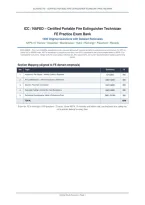
ICC/NAFED FE – CERTIFIED PORTABLE FIRE EXTINGUISHER TECHNICIAN | PRACTICE BANK
ICC / NAFED – Certified Portable Fire Extinguisher Technician
FE Practice Exam Bank
1000 Original Questions with Detailed Rationales
NFPA 10 Themes • Inspection • Maintenance • Hydro • Recharge • Placement • Records
DISCLAIMER – This is an ORIGINAL educational practice resource aligned with common portable fire extinguisher service themes. It is NOT an
official ICC or NAFED exam, NOT a reproduction of proprietary test items, and NOT a substitute for the current adopted edition of NFPA 10 or
manufacturer instructions. Always verify the exam catalog reference list, AHJ requirements, and current standards before testing or performing
service.
Section Mapping (aligned to FE domain emphasis)
Sec Topic Questions N
1 Inspection & Fire Classes – Monthly Checks & Readiness Q1-Q200 200
2 Annual Maintenance – Service Procedures & Deficiencies Q201-Q400 200
3 Selection, Placement & Installation Q401-Q600 200
4 Hydrostatic Testing & Internal (Six-Year) Maintenance Q601-Q800 200
5 Recharging, Recordkeeping, Safety & Professional Practi Q801-Q1000 200
TOTAL 1000
Exam tip: FE is time-tight (100 questions / 2 hours). Know NFPA 10 intervals and tables cold; use the book as a safety net,
not a primary lookup for every item.
Original Study Resource | Page 1
, ICC/NAFED FE – CERTIFIED PORTABLE FIRE EXTINGUISHER TECHNICIAN | PRACTICE BANK
Section 1: Inspection & Fire Classes – Monthly Checks & Readiness
Q1: NFPA 10 is the standard that primarily addresses:
A. Only fixed fire pumps
B. Portable fire extinguishers [CORRECT]
C. Only sprinkler hydraulic calculations
D. Only fire alarm programming
Correct Answer: B
Rationale: NFPA 10 covers portable extinguishers.
Q2: A visual inspection of portable extinguishers is typically required:
A. Only once every 10 years
B. At least monthly (when required by the standard/AHJ) [CORRECT]
C. Never after installation
D. Only after a fire
Correct Answer: B
Rationale: Monthly inspections are a core NFPA 10 concept.
Q3: During a monthly inspection, the extinguisher should be checked for:
A. Only the brand logo
B. Location, accessibility, pressure (if gauge), condition, and obvious damage/obstruction
[CORRECT]
C. Only the hydrostatic test year exclusively
D. Nothing if it looks red
Correct Answer: B
Rationale: Condition and readiness checks.
Original Study Resource | Page 2
, ICC/NAFED FE – CERTIFIED PORTABLE FIRE EXTINGUISHER TECHNICIAN | PRACTICE BANK
Q4: An extinguisher that is obstructed or not in its designated place should be:
A. Ignored until annual service
B. Corrected so it is accessible and properly located [CORRECT]
C. Thrown away immediately always
D. Painted a different color only
Correct Answer: B
Rationale: Accessibility is essential.
Q5: A pressure gauge reading in the recharge range generally indicates:
A. The unit is ready without further thought always
B. Pressure is outside the operable range and the unit needs service [CORRECT]
C. Hydrostatic testing is never needed
D. The extinguisher is empty of agent always
Correct Answer: B
Rationale: Recharge zone means out of service readiness.
Q6: Tamper seals are used to:
A. Decorate the handle
B. Indicate the extinguisher has not been operated and the pin is in place [CORRECT]
C. Replace the pressure gauge
D. Eliminate monthly inspections
Correct Answer: B
Rationale: Seal integrity is an inspection item.
Q7: If an extinguisher is missing its operating instructions label, the technician should:
A. Leave it as-is indefinitely
B. Correct the deficiency per standard/service practice so instructions are present and legible
[CORRECT]
C. Remove the unit from all records
D. Ignore labeling rules
Correct Answer: B
Rationale: Legible instructions are required.
Original Study Resource | Page 3
, ICC/NAFED FE – CERTIFIED PORTABLE FIRE EXTINGUISHER TECHNICIAN | PRACTICE BANK
Q8: Class A fires involve:
A. Only energized electrical equipment
B. Ordinary combustibles such as wood, paper, cloth [CORRECT]
C. Only flammable liquids
D. Only cooking oils in deep fryers exclusively
Correct Answer: B
Rationale: Class A = ordinary combustibles.
Q9: Class B fires involve:
A. Only wood and paper
B. Flammable liquids and gases [CORRECT]
C. Only energized electrical panels
D. Only metal fires
Correct Answer: B
Rationale: Class B = flammable liquids/gases.
Q10: Class C fire involvement relates to:
A. Only trash cans outdoors
B. Energized electrical equipment [CORRECT]
C. Only combustible metals
D. Only grease in commercial kitchens exclusively
Correct Answer: B
Rationale: Class C = energized electrical.
Original Study Resource | Page 4
ICC / NAFED – Certified Portable Fire Extinguisher Technician
FE Practice Exam Bank
1000 Original Questions with Detailed Rationales
NFPA 10 Themes • Inspection • Maintenance • Hydro • Recharge • Placement • Records
DISCLAIMER – This is an ORIGINAL educational practice resource aligned with common portable fire extinguisher service themes. It is NOT an
official ICC or NAFED exam, NOT a reproduction of proprietary test items, and NOT a substitute for the current adopted edition of NFPA 10 or
manufacturer instructions. Always verify the exam catalog reference list, AHJ requirements, and current standards before testing or performing
service.
Section Mapping (aligned to FE domain emphasis)
Sec Topic Questions N
1 Inspection & Fire Classes – Monthly Checks & Readiness Q1-Q200 200
2 Annual Maintenance – Service Procedures & Deficiencies Q201-Q400 200
3 Selection, Placement & Installation Q401-Q600 200
4 Hydrostatic Testing & Internal (Six-Year) Maintenance Q601-Q800 200
5 Recharging, Recordkeeping, Safety & Professional Practi Q801-Q1000 200
TOTAL 1000
Exam tip: FE is time-tight (100 questions / 2 hours). Know NFPA 10 intervals and tables cold; use the book as a safety net,
not a primary lookup for every item.
Original Study Resource | Page 1
, ICC/NAFED FE – CERTIFIED PORTABLE FIRE EXTINGUISHER TECHNICIAN | PRACTICE BANK
Section 1: Inspection & Fire Classes – Monthly Checks & Readiness
Q1: NFPA 10 is the standard that primarily addresses:
A. Only fixed fire pumps
B. Portable fire extinguishers [CORRECT]
C. Only sprinkler hydraulic calculations
D. Only fire alarm programming
Correct Answer: B
Rationale: NFPA 10 covers portable extinguishers.
Q2: A visual inspection of portable extinguishers is typically required:
A. Only once every 10 years
B. At least monthly (when required by the standard/AHJ) [CORRECT]
C. Never after installation
D. Only after a fire
Correct Answer: B
Rationale: Monthly inspections are a core NFPA 10 concept.
Q3: During a monthly inspection, the extinguisher should be checked for:
A. Only the brand logo
B. Location, accessibility, pressure (if gauge), condition, and obvious damage/obstruction
[CORRECT]
C. Only the hydrostatic test year exclusively
D. Nothing if it looks red
Correct Answer: B
Rationale: Condition and readiness checks.
Original Study Resource | Page 2
, ICC/NAFED FE – CERTIFIED PORTABLE FIRE EXTINGUISHER TECHNICIAN | PRACTICE BANK
Q4: An extinguisher that is obstructed or not in its designated place should be:
A. Ignored until annual service
B. Corrected so it is accessible and properly located [CORRECT]
C. Thrown away immediately always
D. Painted a different color only
Correct Answer: B
Rationale: Accessibility is essential.
Q5: A pressure gauge reading in the recharge range generally indicates:
A. The unit is ready without further thought always
B. Pressure is outside the operable range and the unit needs service [CORRECT]
C. Hydrostatic testing is never needed
D. The extinguisher is empty of agent always
Correct Answer: B
Rationale: Recharge zone means out of service readiness.
Q6: Tamper seals are used to:
A. Decorate the handle
B. Indicate the extinguisher has not been operated and the pin is in place [CORRECT]
C. Replace the pressure gauge
D. Eliminate monthly inspections
Correct Answer: B
Rationale: Seal integrity is an inspection item.
Q7: If an extinguisher is missing its operating instructions label, the technician should:
A. Leave it as-is indefinitely
B. Correct the deficiency per standard/service practice so instructions are present and legible
[CORRECT]
C. Remove the unit from all records
D. Ignore labeling rules
Correct Answer: B
Rationale: Legible instructions are required.
Original Study Resource | Page 3
, ICC/NAFED FE – CERTIFIED PORTABLE FIRE EXTINGUISHER TECHNICIAN | PRACTICE BANK
Q8: Class A fires involve:
A. Only energized electrical equipment
B. Ordinary combustibles such as wood, paper, cloth [CORRECT]
C. Only flammable liquids
D. Only cooking oils in deep fryers exclusively
Correct Answer: B
Rationale: Class A = ordinary combustibles.
Q9: Class B fires involve:
A. Only wood and paper
B. Flammable liquids and gases [CORRECT]
C. Only energized electrical panels
D. Only metal fires
Correct Answer: B
Rationale: Class B = flammable liquids/gases.
Q10: Class C fire involvement relates to:
A. Only trash cans outdoors
B. Energized electrical equipment [CORRECT]
C. Only combustible metals
D. Only grease in commercial kitchens exclusively
Correct Answer: B
Rationale: Class C = energized electrical.
Original Study Resource | Page 4


