
UIC PSYCH 242 – RESEARCH METHODS | EXAM 1 • EXAM 2 • FINAL PRACTICE BANK
University of Illinois Chicago
PSYCH 242 – Research Methods in Psychology
1050 Original Questions with Detailed Rationales
Exam 1: Foundations & Ethics • Exam 2: Design & Sampling • Final: Statistics & Analysis
DISCLAIMER – This is an ORIGINAL educational practice resource aligned with common UIC-style PSYCH 242 research methods themes. It is NOT
an official UIC exam and NOT a reproduction of proprietary test items. Always prioritize your UIC syllabus, lecture notes, and required readings.
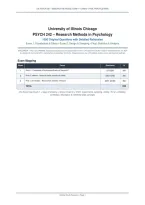
Exam Mapping
Exam Focus Questions N
1 Exam 1 – Foundations of Psychological Science & Research E Q1-Q350 350
2 Exam 2 / Midterm – Research Design, Sampling & Validity Q351-Q700 350
3 Final / Later Modules – Measurement, Statistics & Analysis Q701-Q1050 350
TOTAL 1050
UIC focus map: Exam 1 = ways of knowing + ethics | Exam 2 = IV/DV, experiments, sampling, validity | Final = reliability,
correlation, descriptive & inferential stats concepts
Original Study Resource | Page 1
, UIC PSYCH 242 – RESEARCH METHODS | EXAM 1 • EXAM 2 • FINAL PRACTICE BANK
Exam 1 – Foundations of Psychological Science & Research Ethics
Q1: Empiricism holds that knowledge should be grounded in:
A. Authority statements alone
B. Systematic observation and evidence [CORRECT]
C. Tenacity only
D. Pure intuition without checks
Correct Answer: B
Rationale: Evidence and observation anchor scientific claims.
Q2: Tenacity refers to:
A. Updating beliefs immediately with every study
B. Clinging to beliefs despite contradictory evidence [CORRECT]
C. Only peer review
D. Random assignment
Correct Answer: B
Rationale: Tenacity resists disconfirming information.
Q3: Accepting a claim because an expert said it illustrates:
A. Empiricism
B. Authority as a way of knowing [CORRECT]
C. Falsifiability
D. Operational definition
Correct Answer: B
Rationale: Authority can be useful but is not sufficient alone.
Original Study Resource | Page 2
, UIC PSYCH 242 – RESEARCH METHODS | EXAM 1 • EXAM 2 • FINAL PRACTICE BANK
Q4: A scientific theory should be:
A. Impossible to disprove
B. Falsifiable [CORRECT]
C. Based only on intuition
D. Unrelated to data
Correct Answer: B
Rationale: Falsifiability distinguishes science from dogma.
Q5: Inductive reasoning moves from:
A. General theory to specific prediction only
B. Specific observations toward broader generalizations [CORRECT]
C. Only statistics to ethics
D. Sampling to consent
Correct Answer: B
Rationale: Induction builds general ideas from cases.
Q6: Deductive reasoning moves from:
A. Cases only to no prediction
B. General principles to specific testable predictions [CORRECT]
C. Only qualitative coding
D. p-values to sampling frames
Correct Answer: B
Rationale: Deduction derives hypotheses from theory.
Q7: An operational definition specifies:
A. Why ethics boards exist only
B. How a construct will be measured or manipulated [CORRECT]
C. Only the journal name
D. The population mean exactly
Correct Answer: B
Rationale: Operations make constructs empirical.
Original Study Resource | Page 3
, UIC PSYCH 242 – RESEARCH METHODS | EXAM 1 • EXAM 2 • FINAL PRACTICE BANK
Q8: Informed consent requires:
A. Hiding all risks always
B. Adequate information and voluntary agreement to participate [CORRECT]
C. Forfeiting withdrawal rights
D. No description of procedures ever
Correct Answer: B
Rationale: Respect for persons is central.
Q9: The principle of beneficence emphasizes:
A. Ignoring risks entirely
B. Maximizing benefits and minimizing harms [CORRECT]
C. Only statistical power
D. Publishing regardless of harm
Correct Answer: B
Rationale: Risk–benefit balance matters.
Q10: Justice in research ethics concerns:
A. Only lab cleanliness
B. Fair distribution of research burdens and benefits [CORRECT]
C. Only double-blinding
D. Exclusive use of convenience samples without reflection
Correct Answer: B
Rationale: Who is asked to bear risk, and who benefits?
Original Study Resource | Page 4
University of Illinois Chicago
PSYCH 242 – Research Methods in Psychology
1050 Original Questions with Detailed Rationales
Exam 1: Foundations & Ethics • Exam 2: Design & Sampling • Final: Statistics & Analysis
DISCLAIMER – This is an ORIGINAL educational practice resource aligned with common UIC-style PSYCH 242 research methods themes. It is NOT
an official UIC exam and NOT a reproduction of proprietary test items. Always prioritize your UIC syllabus, lecture notes, and required readings.
Exam Mapping
Exam Focus Questions N
1 Exam 1 – Foundations of Psychological Science & Research E Q1-Q350 350
2 Exam 2 / Midterm – Research Design, Sampling & Validity Q351-Q700 350
3 Final / Later Modules – Measurement, Statistics & Analysis Q701-Q1050 350
TOTAL 1050
UIC focus map: Exam 1 = ways of knowing + ethics | Exam 2 = IV/DV, experiments, sampling, validity | Final = reliability,
correlation, descriptive & inferential stats concepts
Original Study Resource | Page 1
, UIC PSYCH 242 – RESEARCH METHODS | EXAM 1 • EXAM 2 • FINAL PRACTICE BANK
Exam 1 – Foundations of Psychological Science & Research Ethics
Q1: Empiricism holds that knowledge should be grounded in:
A. Authority statements alone
B. Systematic observation and evidence [CORRECT]
C. Tenacity only
D. Pure intuition without checks
Correct Answer: B
Rationale: Evidence and observation anchor scientific claims.
Q2: Tenacity refers to:
A. Updating beliefs immediately with every study
B. Clinging to beliefs despite contradictory evidence [CORRECT]
C. Only peer review
D. Random assignment
Correct Answer: B
Rationale: Tenacity resists disconfirming information.
Q3: Accepting a claim because an expert said it illustrates:
A. Empiricism
B. Authority as a way of knowing [CORRECT]
C. Falsifiability
D. Operational definition
Correct Answer: B
Rationale: Authority can be useful but is not sufficient alone.
Original Study Resource | Page 2
, UIC PSYCH 242 – RESEARCH METHODS | EXAM 1 • EXAM 2 • FINAL PRACTICE BANK
Q4: A scientific theory should be:
A. Impossible to disprove
B. Falsifiable [CORRECT]
C. Based only on intuition
D. Unrelated to data
Correct Answer: B
Rationale: Falsifiability distinguishes science from dogma.
Q5: Inductive reasoning moves from:
A. General theory to specific prediction only
B. Specific observations toward broader generalizations [CORRECT]
C. Only statistics to ethics
D. Sampling to consent
Correct Answer: B
Rationale: Induction builds general ideas from cases.
Q6: Deductive reasoning moves from:
A. Cases only to no prediction
B. General principles to specific testable predictions [CORRECT]
C. Only qualitative coding
D. p-values to sampling frames
Correct Answer: B
Rationale: Deduction derives hypotheses from theory.
Q7: An operational definition specifies:
A. Why ethics boards exist only
B. How a construct will be measured or manipulated [CORRECT]
C. Only the journal name
D. The population mean exactly
Correct Answer: B
Rationale: Operations make constructs empirical.
Original Study Resource | Page 3
, UIC PSYCH 242 – RESEARCH METHODS | EXAM 1 • EXAM 2 • FINAL PRACTICE BANK
Q8: Informed consent requires:
A. Hiding all risks always
B. Adequate information and voluntary agreement to participate [CORRECT]
C. Forfeiting withdrawal rights
D. No description of procedures ever
Correct Answer: B
Rationale: Respect for persons is central.
Q9: The principle of beneficence emphasizes:
A. Ignoring risks entirely
B. Maximizing benefits and minimizing harms [CORRECT]
C. Only statistical power
D. Publishing regardless of harm
Correct Answer: B
Rationale: Risk–benefit balance matters.
Q10: Justice in research ethics concerns:
A. Only lab cleanliness
B. Fair distribution of research burdens and benefits [CORRECT]
C. Only double-blinding
D. Exclusive use of convenience samples without reflection
Correct Answer: B
Rationale: Who is asked to bear risk, and who benefits?
Original Study Resource | Page 4


