
HEALTH INSURANCE • BILLING • REIMBURSEMENT | PRACTICE EXAM BANK
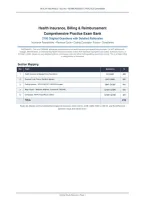
Health Insurance, Billing & Reimbursement
Comprehensive Practice Exam Bank
2100 Original Questions with Detailed Rationales
Insurance Foundations • Revenue Cycle • Coding Concepts • Payers • Compliance
DISCLAIMER – This is an ORIGINAL educational practice resource on health insurance and medical billing concepts. It is NOT affiliated with
Cengage, Michelle Green, or Understanding Health Insurance textbooks. It does NOT reproduce copyrighted case studies, workbook answers, or
SimClaim content. Always use your assigned textbook, current payer rules, and official coding guidelines as primary sources. This is not legal, billing,
or coding advice for real claims.
Section Mapping
Sec Topic Questions N
1 Health Insurance & Managed Care Foundations Q1-Q420 420
2 Revenue Cycle, Claims, Denials & Appeals Q421-Q840 420
3 Coding Systems – ICD-10-CM, CPT, HCPCS Concepts Q841-Q1260 420
4 Major Payers – Medicare, Medicaid, Commercial, TRICARE, Q1261-Q1680 420
5 Compliance, HIPAA, Fraud/Abuse & Ethics Q1681-Q2100 420
TOTAL 2100
Study tip: Master premium/deductible/copay/coinsurance, clean claims, COB, CMS-1500 vs UB-04, and the difference
between fraud and honest error.
Original Study Resource | Page 1
, HEALTH INSURANCE • BILLING • REIMBURSEMENT | PRACTICE EXAM BANK
Section 1: Health Insurance & Managed Care Foundations
Q1: Health insurance is designed primarily to:
A. Eliminate all healthcare costs for everyone always
B. Spread financial risk of medical expenses among a group [CORRECT]
C. Replace the need for medical care
D. Only pay for cosmetic procedures
Correct Answer: B
Rationale: Insurance pools risk across enrollees.
Q2: A premium is:
A. The patient’s copay only
B. The periodic payment to keep coverage in force [CORRECT]
C. Only the deductible
D. A denied claim
Correct Answer: B
Rationale: Premiums maintain the policy.
Q3: A deductible is:
A. The insurer’s only payment
B. The amount the patient pays before certain benefits apply [CORRECT]
C. Always zero in every plan
D. Only a pharmacy fee
Correct Answer: B
Rationale: Deductibles shift initial cost to the member.
Original Study Resource | Page 2
, HEALTH INSURANCE • BILLING • REIMBURSEMENT | PRACTICE EXAM BANK
Q4: A copayment is typically:
A. A fixed dollar amount paid at the time of service under many plans [CORRECT]
B. The entire hospital bill always
C. Only paid by Medicare never commercial plans
D. Identical to coinsurance in every case
Correct Answer: A
Rationale: Copays are fixed amounts; coinsurance is a percentage.
Q5: Coinsurance is typically:
A. A flat $20 only
B. A percentage of allowed charges after deductible (e.g., 20%) [CORRECT]
C. Never used in insurance
D. Only for dental
Correct Answer: B
Rationale: Coinsurance is a cost-sharing percentage.
Q6: Managed care plans generally aim to:
A. Ignore utilization entirely
B. Coordinate care and control costs through networks and utilization management
[CORRECT]
C. Ban all primary care
D. Eliminate prior authorization concepts
Correct Answer: B
Rationale: HMOs/PPOs and similar models manage cost and access.
Q7: An HMO typically features:
A. Unlimited out-of-network coverage without rules
B. A primary care gatekeeper model and in-network emphasis in classic designs [CORRECT]
C. No referral concepts ever
D. Only indemnity-style freedom without networks
Correct Answer: B
Rationale: Traditional HMOs emphasize network and PCP coordination.
Original Study Resource | Page 3
, HEALTH INSURANCE • BILLING • REIMBURSEMENT | PRACTICE EXAM BANK
Q8: A PPO typically offers:
A. No out-of-network option ever
B. A network with higher benefits in-network and some out-of-network coverage at higher cost
sharing [CORRECT]
C. Only emergency care
D. No provider directory
Correct Answer: B
Rationale: PPOs balance choice and cost.
Q9: Coordination of benefits (COB) determines:
A. Which parent likes the claim more
B. The order of payment when more than one plan covers a patient [CORRECT]
C. Only dental claims
D. Whether a claim is coded
Correct Answer: B
Rationale: COB prevents duplicate payment.
Q10: The birthday rule is commonly used to:
A. Schedule parties
B. Determine primary coverage for dependents when both parents have coverage [CORRECT]
C. Set deductibles by age only
D. Deny all pediatric claims
Correct Answer: B
Rationale: Parent with earlier birthday month/day is often primary.
Original Study Resource | Page 4
Health Insurance, Billing & Reimbursement
Comprehensive Practice Exam Bank
2100 Original Questions with Detailed Rationales
Insurance Foundations • Revenue Cycle • Coding Concepts • Payers • Compliance
DISCLAIMER – This is an ORIGINAL educational practice resource on health insurance and medical billing concepts. It is NOT affiliated with
Cengage, Michelle Green, or Understanding Health Insurance textbooks. It does NOT reproduce copyrighted case studies, workbook answers, or
SimClaim content. Always use your assigned textbook, current payer rules, and official coding guidelines as primary sources. This is not legal, billing,
or coding advice for real claims.
Section Mapping
Sec Topic Questions N
1 Health Insurance & Managed Care Foundations Q1-Q420 420
2 Revenue Cycle, Claims, Denials & Appeals Q421-Q840 420
3 Coding Systems – ICD-10-CM, CPT, HCPCS Concepts Q841-Q1260 420
4 Major Payers – Medicare, Medicaid, Commercial, TRICARE, Q1261-Q1680 420
5 Compliance, HIPAA, Fraud/Abuse & Ethics Q1681-Q2100 420
TOTAL 2100
Study tip: Master premium/deductible/copay/coinsurance, clean claims, COB, CMS-1500 vs UB-04, and the difference
between fraud and honest error.
Original Study Resource | Page 1
, HEALTH INSURANCE • BILLING • REIMBURSEMENT | PRACTICE EXAM BANK
Section 1: Health Insurance & Managed Care Foundations
Q1: Health insurance is designed primarily to:
A. Eliminate all healthcare costs for everyone always
B. Spread financial risk of medical expenses among a group [CORRECT]
C. Replace the need for medical care
D. Only pay for cosmetic procedures
Correct Answer: B
Rationale: Insurance pools risk across enrollees.
Q2: A premium is:
A. The patient’s copay only
B. The periodic payment to keep coverage in force [CORRECT]
C. Only the deductible
D. A denied claim
Correct Answer: B
Rationale: Premiums maintain the policy.
Q3: A deductible is:
A. The insurer’s only payment
B. The amount the patient pays before certain benefits apply [CORRECT]
C. Always zero in every plan
D. Only a pharmacy fee
Correct Answer: B
Rationale: Deductibles shift initial cost to the member.
Original Study Resource | Page 2
, HEALTH INSURANCE • BILLING • REIMBURSEMENT | PRACTICE EXAM BANK
Q4: A copayment is typically:
A. A fixed dollar amount paid at the time of service under many plans [CORRECT]
B. The entire hospital bill always
C. Only paid by Medicare never commercial plans
D. Identical to coinsurance in every case
Correct Answer: A
Rationale: Copays are fixed amounts; coinsurance is a percentage.
Q5: Coinsurance is typically:
A. A flat $20 only
B. A percentage of allowed charges after deductible (e.g., 20%) [CORRECT]
C. Never used in insurance
D. Only for dental
Correct Answer: B
Rationale: Coinsurance is a cost-sharing percentage.
Q6: Managed care plans generally aim to:
A. Ignore utilization entirely
B. Coordinate care and control costs through networks and utilization management
[CORRECT]
C. Ban all primary care
D. Eliminate prior authorization concepts
Correct Answer: B
Rationale: HMOs/PPOs and similar models manage cost and access.
Q7: An HMO typically features:
A. Unlimited out-of-network coverage without rules
B. A primary care gatekeeper model and in-network emphasis in classic designs [CORRECT]
C. No referral concepts ever
D. Only indemnity-style freedom without networks
Correct Answer: B
Rationale: Traditional HMOs emphasize network and PCP coordination.
Original Study Resource | Page 3
, HEALTH INSURANCE • BILLING • REIMBURSEMENT | PRACTICE EXAM BANK
Q8: A PPO typically offers:
A. No out-of-network option ever
B. A network with higher benefits in-network and some out-of-network coverage at higher cost
sharing [CORRECT]
C. Only emergency care
D. No provider directory
Correct Answer: B
Rationale: PPOs balance choice and cost.
Q9: Coordination of benefits (COB) determines:
A. Which parent likes the claim more
B. The order of payment when more than one plan covers a patient [CORRECT]
C. Only dental claims
D. Whether a claim is coded
Correct Answer: B
Rationale: COB prevents duplicate payment.
Q10: The birthday rule is commonly used to:
A. Schedule parties
B. Determine primary coverage for dependents when both parents have coverage [CORRECT]
C. Set deductibles by age only
D. Deny all pediatric claims
Correct Answer: B
Rationale: Parent with earlier birthday month/day is often primary.
Original Study Resource | Page 4


