
NR 547 – DIFFERENTIAL DIAGNOSIS PMH ACROSS THE LIFESPAN | PRACTICE BANK
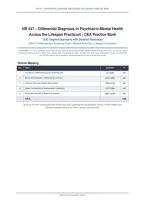
NR 547 – Differential Diagnosis in Psychiatric-Mental Health
Across the Lifespan Practicum | CEA Practice Bank
1200 Original Questions with Detailed Rationales
DSM-5-TR Reasoning • Screening Tools • Medical Rule-Outs • Lifespan Formulation
DISCLAIMER – This is an ORIGINAL educational practice resource aligned with common PMHNP differential diagnosis themes. It is NOT an official
Chamberlain University exam or CEA, NOT a reproduction of proprietary test items, and NOT clinical advice for real patients. Always use DSM-5-TR,
your NR 547 syllabus, faculty guidance, and supervised clinical training as primary sources.
Section Mapping
Sec Topic Questions N
1 Foundations of Differential Diagnosis & Screening Tools Q1-Q240 240
2 Mood & Anxiety Disorders – Differentials Across the Lif Q241-Q480 240
3 Psychosis, Substance-Related & Medical Mimics Q481-Q720 240
4 Lifespan, Neurocognitive & Developmental Considerations Q721-Q960 240
5 Clinical Reasoning, MSE & Diagnostic Formulation Q961-Q1200 240
TOTAL 1200
Study tip: Practice writing prioritized differentials with supporting/refuting evidence. Always include medical and
substance-related rule-outs for new or atypical presentations.
Original Study Resource | Page 1
, NR 547 – DIFFERENTIAL DIAGNOSIS PMH ACROSS THE LIFESPAN | PRACTICE BANK
Section 1: Foundations of Differential Diagnosis & Screening Tools
Q1: A differential diagnosis is best described as:
A. A single final diagnosis made without alternatives
B. A prioritized list of possible conditions that could explain the presentation, refined by data
[CORRECT]
C. Only a billing code
D. A treatment plan with no diagnostic reasoning
Correct Answer: B
Rationale: Differentials guide systematic evaluation and reduce premature closure.
Q2: New-onset psychiatric symptoms in a medically complex adult should prompt:
A. Immediate lifelong diagnosis without workup
B. Consideration of medical, substance, and medication contributors alongside primary
psychiatric disorders [CORRECT]
C. Ignoring labs entirely
D. Only family history review
Correct Answer: B
Rationale: Rule-outs protect against misattribution.
Q3: DSM-5-TR criteria are used to:
A. Replace all clinical judgment
B. Provide standardized diagnostic criteria that support reliable diagnosis when applied
carefully [CORRECT]
C. Eliminate the need for history
D. Only code for research with no clinical use
Correct Answer: B
Rationale: Criteria organize diagnosis; clinical context still matters.
Original Study Resource | Page 2
, NR 547 – DIFFERENTIAL DIAGNOSIS PMH ACROSS THE LIFESPAN | PRACTICE BANK
Q4: Brief screening tools are most appropriate when:
A. They replace a full diagnostic interview in every case
B. Used to detect possible problems and guide further assessment, not as sole definitive
diagnosis in complex cases [CORRECT]
C. Never used in primary or psychiatric care
D. Only scored without clinical correlation
Correct Answer: B
Rationale: Screens triage; diagnosis requires fuller evaluation when indicated.
Q5: PHQ-9 primarily screens for:
A. Bipolar mania exclusively
B. Depressive symptom severity and possible major depression [CORRECT]
C. Only psychosis
D. Personality disorders only
Correct Answer: B
Rationale: PHQ-9 is a widely used depression screen.
Q6: GAD-7 is designed to screen for:
A. Only OCD
B. Generalized anxiety symptoms [CORRECT]
C. Only PTSD
D. ADHD exclusively
Correct Answer: B
Rationale: GAD-7 targets generalized anxiety.
Original Study Resource | Page 3
, NR 547 – DIFFERENTIAL DIAGNOSIS PMH ACROSS THE LIFESPAN | PRACTICE BANK
Q7: When bipolar disorder is in the differential for depression, a useful screen is often:
A. Only a single PHQ-9 without mood history
B. Mood Disorder Questionnaire (MDQ) or careful lifetime mood history for mania/hypomania
[CORRECT]
C. Ignoring any elevated mood history
D. Only thyroid labs without history
Correct Answer: B
Rationale: Missed bipolarity changes treatment risk.
Q8: Social determinants of health matter in psychiatric formulation because:
A. They never affect mental health
B. Housing, food security, trauma exposure, discrimination, and access shape risk,
presentation, and care planning [CORRECT]
C. Only genetics matter
D. They replace DSM criteria
Correct Answer: B
Rationale: SDOH influence illness and recovery.
Q9: Laboratory evaluation in new psychiatric presentations may include:
A. Never any labs
B. Targeted tests such as TSH, B12, metabolic panel, CBC, and others based on history and
risk [CORRECT]
C. Only genetic testing always first
D. Only urine color
Correct Answer: B
Rationale: Medical mimics and contributors warrant selective labs.
Original Study Resource | Page 4
NR 547 – Differential Diagnosis in Psychiatric-Mental Health
Across the Lifespan Practicum | CEA Practice Bank
1200 Original Questions with Detailed Rationales
DSM-5-TR Reasoning • Screening Tools • Medical Rule-Outs • Lifespan Formulation
DISCLAIMER – This is an ORIGINAL educational practice resource aligned with common PMHNP differential diagnosis themes. It is NOT an official
Chamberlain University exam or CEA, NOT a reproduction of proprietary test items, and NOT clinical advice for real patients. Always use DSM-5-TR,
your NR 547 syllabus, faculty guidance, and supervised clinical training as primary sources.
Section Mapping
Sec Topic Questions N
1 Foundations of Differential Diagnosis & Screening Tools Q1-Q240 240
2 Mood & Anxiety Disorders – Differentials Across the Lif Q241-Q480 240
3 Psychosis, Substance-Related & Medical Mimics Q481-Q720 240
4 Lifespan, Neurocognitive & Developmental Considerations Q721-Q960 240
5 Clinical Reasoning, MSE & Diagnostic Formulation Q961-Q1200 240
TOTAL 1200
Study tip: Practice writing prioritized differentials with supporting/refuting evidence. Always include medical and
substance-related rule-outs for new or atypical presentations.
Original Study Resource | Page 1
, NR 547 – DIFFERENTIAL DIAGNOSIS PMH ACROSS THE LIFESPAN | PRACTICE BANK
Section 1: Foundations of Differential Diagnosis & Screening Tools
Q1: A differential diagnosis is best described as:
A. A single final diagnosis made without alternatives
B. A prioritized list of possible conditions that could explain the presentation, refined by data
[CORRECT]
C. Only a billing code
D. A treatment plan with no diagnostic reasoning
Correct Answer: B
Rationale: Differentials guide systematic evaluation and reduce premature closure.
Q2: New-onset psychiatric symptoms in a medically complex adult should prompt:
A. Immediate lifelong diagnosis without workup
B. Consideration of medical, substance, and medication contributors alongside primary
psychiatric disorders [CORRECT]
C. Ignoring labs entirely
D. Only family history review
Correct Answer: B
Rationale: Rule-outs protect against misattribution.
Q3: DSM-5-TR criteria are used to:
A. Replace all clinical judgment
B. Provide standardized diagnostic criteria that support reliable diagnosis when applied
carefully [CORRECT]
C. Eliminate the need for history
D. Only code for research with no clinical use
Correct Answer: B
Rationale: Criteria organize diagnosis; clinical context still matters.
Original Study Resource | Page 2
, NR 547 – DIFFERENTIAL DIAGNOSIS PMH ACROSS THE LIFESPAN | PRACTICE BANK
Q4: Brief screening tools are most appropriate when:
A. They replace a full diagnostic interview in every case
B. Used to detect possible problems and guide further assessment, not as sole definitive
diagnosis in complex cases [CORRECT]
C. Never used in primary or psychiatric care
D. Only scored without clinical correlation
Correct Answer: B
Rationale: Screens triage; diagnosis requires fuller evaluation when indicated.
Q5: PHQ-9 primarily screens for:
A. Bipolar mania exclusively
B. Depressive symptom severity and possible major depression [CORRECT]
C. Only psychosis
D. Personality disorders only
Correct Answer: B
Rationale: PHQ-9 is a widely used depression screen.
Q6: GAD-7 is designed to screen for:
A. Only OCD
B. Generalized anxiety symptoms [CORRECT]
C. Only PTSD
D. ADHD exclusively
Correct Answer: B
Rationale: GAD-7 targets generalized anxiety.
Original Study Resource | Page 3
, NR 547 – DIFFERENTIAL DIAGNOSIS PMH ACROSS THE LIFESPAN | PRACTICE BANK
Q7: When bipolar disorder is in the differential for depression, a useful screen is often:
A. Only a single PHQ-9 without mood history
B. Mood Disorder Questionnaire (MDQ) or careful lifetime mood history for mania/hypomania
[CORRECT]
C. Ignoring any elevated mood history
D. Only thyroid labs without history
Correct Answer: B
Rationale: Missed bipolarity changes treatment risk.
Q8: Social determinants of health matter in psychiatric formulation because:
A. They never affect mental health
B. Housing, food security, trauma exposure, discrimination, and access shape risk,
presentation, and care planning [CORRECT]
C. Only genetics matter
D. They replace DSM criteria
Correct Answer: B
Rationale: SDOH influence illness and recovery.
Q9: Laboratory evaluation in new psychiatric presentations may include:
A. Never any labs
B. Targeted tests such as TSH, B12, metabolic panel, CBC, and others based on history and
risk [CORRECT]
C. Only genetic testing always first
D. Only urine color
Correct Answer: B
Rationale: Medical mimics and contributors warrant selective labs.
Original Study Resource | Page 4


