
NURS 5434 – FAMILY III (FNP 3) | PRACTICE EXAM BANK
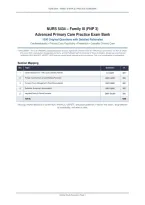
NURS 5434 – Family III (FNP 3)
Advanced Primary Care Practice Exam Bank
1000 Original Questions with Detailed Rationales
Cardiometabolic • Primary Care Psychiatry • Prevention • Complex Chronic Care
DISCLAIMER – This is an ORIGINAL educational practice resource aligned with common Family III / FNP primary-care themes. It is NOT an official
UTA exam, NOT a reproduction of proprietary test items, and NOT affiliated with the University of Texas at Arlington. Always use current clinical
guidelines (ADA, AHA/ACC, USPSTF, ACIP) and your course faculty materials as primary sources. This is not clinical advice for real patients.
Section Mapping
Sec Topic Questions N
1 Cardiometabolic Care – HTN, Lipids, Diabetes, ASCVD Q1-Q200 200
2 Primary Care Psychiatry & Adult Wellness/Prevention Q201-Q400 200
3 Complex Chronic Management & Prescribing Judgment Q401-Q600 200
4 Guidelines, Screening & Immunizations Q601-Q800 200
5 Integrated Family III Clinical Scenarios Q801-Q1000 200
TOTAL 1000
Study tip: Anchor decisions in current ADA, AHA/ACC, USPSTF, and psych guidelines. Practice “first action,” drug selection
by comorbidity, and when to refer.
Original Study Resource | Page 1
, NURS 5434 – FAMILY III (FNP 3) | PRACTICE EXAM BANK
Section 1: Cardiometabolic Care – HTN, Lipids, Diabetes, ASCVD
Q1: First-line lifestyle counseling for most adults with elevated BP includes:
A. High sodium and inactivity
B. DASH-style diet, weight management, physical activity, limited alcohol [CORRECT]
C. Only caffeine loading
D. Ignoring BMI
Correct Answer: B
Rationale: Lifestyle modification is foundational in HTN care.
Q2: A patient with BP 190/120 who stopped meds weeks ago—first step is typically:
A. Send home without assessment
B. Assess for target organ damage and urgency/emergency features [CORRECT]
C. Only restart home meds without evaluation
D. Ignore symptoms
Correct Answer: B
Rationale: Hypertensive urgency/emergency assessment guides disposition.
Q3: Sodium intake goal often discussed for hypertensive patients is near:
A. 5,000 mg/day unrestricted
B. Approximately 1,500–2,300 mg/day depending on guideline context and individualization
[CORRECT]
C. Zero sodium forever with no food
D. Only processed foods
Correct Answer: B
Rationale: Lower sodium supports BP control.
Original Study Resource | Page 2
, NURS 5434 – FAMILY III (FNP 3) | PRACTICE EXAM BANK
Q4: ACE inhibitors / ARBs are commonly preferred in HTN when:
A. Never with diabetes or CKD considerations
B. Compelling indications such as diabetes with albuminuria, CKD, or HFrEF among others
[CORRECT]
C. Only for children under 5 exclusively
D. Contraindicated in all adults
Correct Answer: B
Rationale: Guideline-directed therapy matches comorbidities.
Q5: Statin therapy intensity is guided by:
A. Random preference only
B. ASCVD risk category, LDL-C, and presence of clinical ASCVD per cholesterol guidelines
[CORRECT]
C. Only patient age under 20 always
D. Never checking lipids
Correct Answer: B
Rationale: Risk-based statin decisions.
Q6: For many adults with T2DM without contraindications, initial pharmacotherapy often
includes:
A. Only insulin from day one always
B. Metformin plus lifestyle measures [CORRECT]
C. Only sulfonylurea exclusively for everyone
D. No glucose-lowering therapy ever
Correct Answer: B
Rationale: Metformin remains a common first-line agent.
Original Study Resource | Page 3
, NURS 5434 – FAMILY III (FNP 3) | PRACTICE EXAM BANK
Q7: SGLT2 inhibitors or GLP-1 RAs may be preferred when:
A. No cardiorenal benefit is desired
B. ASCVD, HF, or CKD benefit is a priority per diabetes guidelines [CORRECT]
C. Only for type 1 diabetes exclusively without indication
D. Contraindicated in all CKD
Correct Answer: B
Rationale: Outcome benefits drive agent selection.
Q8: A1C targets are:
A. Exactly 12% for all adults
B. Individualized, often near <7% for many non-pregnant adults with adjustment for
hypoglycemia risk [CORRECT]
C. Only 4% mandatory for frail elders
D. Never monitored
Correct Answer: B
Rationale: Individualize glycemic goals.
Q9: Stable angina is typically:
A. Pain at rest only with no pattern
B. Exertional and relieved by rest or nitroglycerin [CORRECT]
C. Only pleuritic
D. Never activity-related
Correct Answer: B
Rationale: Demand ischemia pattern.
Original Study Resource | Page 4
NURS 5434 – Family III (FNP 3)
Advanced Primary Care Practice Exam Bank
1000 Original Questions with Detailed Rationales
Cardiometabolic • Primary Care Psychiatry • Prevention • Complex Chronic Care
DISCLAIMER – This is an ORIGINAL educational practice resource aligned with common Family III / FNP primary-care themes. It is NOT an official
UTA exam, NOT a reproduction of proprietary test items, and NOT affiliated with the University of Texas at Arlington. Always use current clinical
guidelines (ADA, AHA/ACC, USPSTF, ACIP) and your course faculty materials as primary sources. This is not clinical advice for real patients.
Section Mapping
Sec Topic Questions N
1 Cardiometabolic Care – HTN, Lipids, Diabetes, ASCVD Q1-Q200 200
2 Primary Care Psychiatry & Adult Wellness/Prevention Q201-Q400 200
3 Complex Chronic Management & Prescribing Judgment Q401-Q600 200
4 Guidelines, Screening & Immunizations Q601-Q800 200
5 Integrated Family III Clinical Scenarios Q801-Q1000 200
TOTAL 1000
Study tip: Anchor decisions in current ADA, AHA/ACC, USPSTF, and psych guidelines. Practice “first action,” drug selection
by comorbidity, and when to refer.
Original Study Resource | Page 1
, NURS 5434 – FAMILY III (FNP 3) | PRACTICE EXAM BANK
Section 1: Cardiometabolic Care – HTN, Lipids, Diabetes, ASCVD
Q1: First-line lifestyle counseling for most adults with elevated BP includes:
A. High sodium and inactivity
B. DASH-style diet, weight management, physical activity, limited alcohol [CORRECT]
C. Only caffeine loading
D. Ignoring BMI
Correct Answer: B
Rationale: Lifestyle modification is foundational in HTN care.
Q2: A patient with BP 190/120 who stopped meds weeks ago—first step is typically:
A. Send home without assessment
B. Assess for target organ damage and urgency/emergency features [CORRECT]
C. Only restart home meds without evaluation
D. Ignore symptoms
Correct Answer: B
Rationale: Hypertensive urgency/emergency assessment guides disposition.
Q3: Sodium intake goal often discussed for hypertensive patients is near:
A. 5,000 mg/day unrestricted
B. Approximately 1,500–2,300 mg/day depending on guideline context and individualization
[CORRECT]
C. Zero sodium forever with no food
D. Only processed foods
Correct Answer: B
Rationale: Lower sodium supports BP control.
Original Study Resource | Page 2
, NURS 5434 – FAMILY III (FNP 3) | PRACTICE EXAM BANK
Q4: ACE inhibitors / ARBs are commonly preferred in HTN when:
A. Never with diabetes or CKD considerations
B. Compelling indications such as diabetes with albuminuria, CKD, or HFrEF among others
[CORRECT]
C. Only for children under 5 exclusively
D. Contraindicated in all adults
Correct Answer: B
Rationale: Guideline-directed therapy matches comorbidities.
Q5: Statin therapy intensity is guided by:
A. Random preference only
B. ASCVD risk category, LDL-C, and presence of clinical ASCVD per cholesterol guidelines
[CORRECT]
C. Only patient age under 20 always
D. Never checking lipids
Correct Answer: B
Rationale: Risk-based statin decisions.
Q6: For many adults with T2DM without contraindications, initial pharmacotherapy often
includes:
A. Only insulin from day one always
B. Metformin plus lifestyle measures [CORRECT]
C. Only sulfonylurea exclusively for everyone
D. No glucose-lowering therapy ever
Correct Answer: B
Rationale: Metformin remains a common first-line agent.
Original Study Resource | Page 3
, NURS 5434 – FAMILY III (FNP 3) | PRACTICE EXAM BANK
Q7: SGLT2 inhibitors or GLP-1 RAs may be preferred when:
A. No cardiorenal benefit is desired
B. ASCVD, HF, or CKD benefit is a priority per diabetes guidelines [CORRECT]
C. Only for type 1 diabetes exclusively without indication
D. Contraindicated in all CKD
Correct Answer: B
Rationale: Outcome benefits drive agent selection.
Q8: A1C targets are:
A. Exactly 12% for all adults
B. Individualized, often near <7% for many non-pregnant adults with adjustment for
hypoglycemia risk [CORRECT]
C. Only 4% mandatory for frail elders
D. Never monitored
Correct Answer: B
Rationale: Individualize glycemic goals.
Q9: Stable angina is typically:
A. Pain at rest only with no pattern
B. Exertional and relieved by rest or nitroglycerin [CORRECT]
C. Only pleuritic
D. Never activity-related
Correct Answer: B
Rationale: Demand ischemia pattern.
Original Study Resource | Page 4


