
NUR 234 – MENTAL HEALTH NURSING | PRACTICE EXAMS 1–3 & FINAL
NUR 234 – Mental Health Nursing
Practice Exams 1, 2, 3 & Final Review
1000 Original Questions with Detailed Rationales
Therapeutic Communication • Mood & Anxiety • Psychosis • Substance Use • Crisis
DISCLAIMER – This is an ORIGINAL educational practice resource aligned with common mental health nursing concepts taught in courses such as
NUR 234. It is NOT an official ECPI (or other school) exam, not a reproduction of any proprietary test bank, and not affiliated with any college or
publisher. Always use your current syllabus, required textbook, and instructor materials as primary sources.
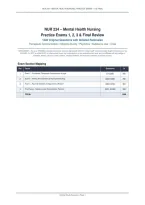
Exam Section Mapping
Sec Focus Questions N
1 Exam 1 – Foundations, Therapeutic Communication & Legal Q1-Q250 250
2 Exam 2 – Anxiety, Mood Disorders & Psychopharmacology Q251-Q500 250
3 Exam 3 – Psychotic Disorders, Antipsychotics & Related Q501-Q750 250
4 Final Review – Substance Use, Neurocognitive, Personali Q751-Q1000 250
TOTAL 1000
Original Study Resource | Page 1
, NUR 234 – MENTAL HEALTH NURSING | PRACTICE EXAMS 1–3 & FINAL
Section 1: Exam 1 – Foundations, Therapeutic Communication & Legal/Ethical Issues
Q1: The therapeutic use of self in psychiatric nursing is most closely associated with the
work of:
A. Florence Nightingale only
B. Hildegard Peplau [CORRECT]
C. Only Sigmund Freud
D. Only B.F. Skinner
Correct Answer: B
Rationale: Peplau emphasized the nurse–client relationship and the therapeutic use of self as central to
psychiatric nursing practice.
Q2: Therapeutic communication is best defined as:
A. Casual social talk
B. Purposeful, client-centered interaction that builds trust and promotes positive change
[CORRECT]
C. Giving unsolicited advice
D. Avoiding emotional topics
Correct Answer: B
Rationale: Therapeutic communication is intentional and focused on the client’s needs and growth.
Q3: An example of a non-therapeutic technique is:
A. Clarifying
B. False reassurance or changing the subject inappropriately [CORRECT]
C. Reflecting feelings
D. Using open-ended questions
Correct Answer: B
Rationale: False reassurance and abrupt topic changes block exploration of feelings and trust.
Original Study Resource | Page 2
, NUR 234 – MENTAL HEALTH NURSING | PRACTICE EXAMS 1–3 & FINAL
Q4: Mental health is best understood as:
A. Complete absence of all stress
B. A dynamic state of well-being involving adaptation and the ability to cope with life’s
demands [CORRECT]
C. Only the absence of a psychiatric diagnosis
D. A fixed, unchanging trait
Correct Answer: B
Rationale: Mental health exists on a continuum and involves successful adaptation and functioning.
Q5: Self-awareness is important for the psychiatric nurse because:
A. It is irrelevant to care
B. The nurse’s values, biases, and reactions influence the therapeutic relationship [CORRECT]
C. Only the client needs self-awareness
D. It replaces clinical knowledge
Correct Answer: B
Rationale: Understanding one’s own reactions supports professional, nonjudgmental care.
Q6: The nurse–client relationship is characterized by:
A. Friendship and social reciprocity
B. Trust, respect, empathy, and clear professional boundaries [CORRECT]
C. Meeting the nurse’s personal needs
D. Avoiding all emotional content
Correct Answer: B
Rationale: Professional therapeutic relationships are goal-directed and boundaried.
Original Study Resource | Page 3
, NUR 234 – MENTAL HEALTH NURSING | PRACTICE EXAMS 1–3 & FINAL
Q7: Legal and ethical issues in mental health nursing include:
A. Ignoring confidentiality
B. Confidentiality, informed consent, duty to protect, and appropriate use of involuntary
measures when legally justified [CORRECT]
C. Sharing all information publicly
D. Never documenting risk
Correct Answer: B
Rationale: Nurses balance autonomy, safety, and legal obligations.
Q8: Stigma related to mental illness can lead to:
A. Improved help-seeking always
B. Delayed treatment, discrimination, and reduced quality of life [CORRECT]
C. No impact on care
D. Only positive social effects
Correct Answer: B
Rationale: Stigma remains a major barrier to accessing mental health care.
Q9: The nursing process in psychiatric care emphasizes:
A. Only medication administration
B. Assessment, diagnosis/analysis, planning, implementation, and evaluation with clinical
judgment [CORRECT]
C. Ignoring psychosocial data
D. Only physical tasks
Correct Answer: B
Rationale: Holistic application of the nursing process guides psychiatric nursing care.
Original Study Resource | Page 4
NUR 234 – Mental Health Nursing
Practice Exams 1, 2, 3 & Final Review
1000 Original Questions with Detailed Rationales
Therapeutic Communication • Mood & Anxiety • Psychosis • Substance Use • Crisis
DISCLAIMER – This is an ORIGINAL educational practice resource aligned with common mental health nursing concepts taught in courses such as
NUR 234. It is NOT an official ECPI (or other school) exam, not a reproduction of any proprietary test bank, and not affiliated with any college or
publisher. Always use your current syllabus, required textbook, and instructor materials as primary sources.
Exam Section Mapping
Sec Focus Questions N
1 Exam 1 – Foundations, Therapeutic Communication & Legal Q1-Q250 250
2 Exam 2 – Anxiety, Mood Disorders & Psychopharmacology Q251-Q500 250
3 Exam 3 – Psychotic Disorders, Antipsychotics & Related Q501-Q750 250
4 Final Review – Substance Use, Neurocognitive, Personali Q751-Q1000 250
TOTAL 1000
Original Study Resource | Page 1
, NUR 234 – MENTAL HEALTH NURSING | PRACTICE EXAMS 1–3 & FINAL
Section 1: Exam 1 – Foundations, Therapeutic Communication & Legal/Ethical Issues
Q1: The therapeutic use of self in psychiatric nursing is most closely associated with the
work of:
A. Florence Nightingale only
B. Hildegard Peplau [CORRECT]
C. Only Sigmund Freud
D. Only B.F. Skinner
Correct Answer: B
Rationale: Peplau emphasized the nurse–client relationship and the therapeutic use of self as central to
psychiatric nursing practice.
Q2: Therapeutic communication is best defined as:
A. Casual social talk
B. Purposeful, client-centered interaction that builds trust and promotes positive change
[CORRECT]
C. Giving unsolicited advice
D. Avoiding emotional topics
Correct Answer: B
Rationale: Therapeutic communication is intentional and focused on the client’s needs and growth.
Q3: An example of a non-therapeutic technique is:
A. Clarifying
B. False reassurance or changing the subject inappropriately [CORRECT]
C. Reflecting feelings
D. Using open-ended questions
Correct Answer: B
Rationale: False reassurance and abrupt topic changes block exploration of feelings and trust.
Original Study Resource | Page 2
, NUR 234 – MENTAL HEALTH NURSING | PRACTICE EXAMS 1–3 & FINAL
Q4: Mental health is best understood as:
A. Complete absence of all stress
B. A dynamic state of well-being involving adaptation and the ability to cope with life’s
demands [CORRECT]
C. Only the absence of a psychiatric diagnosis
D. A fixed, unchanging trait
Correct Answer: B
Rationale: Mental health exists on a continuum and involves successful adaptation and functioning.
Q5: Self-awareness is important for the psychiatric nurse because:
A. It is irrelevant to care
B. The nurse’s values, biases, and reactions influence the therapeutic relationship [CORRECT]
C. Only the client needs self-awareness
D. It replaces clinical knowledge
Correct Answer: B
Rationale: Understanding one’s own reactions supports professional, nonjudgmental care.
Q6: The nurse–client relationship is characterized by:
A. Friendship and social reciprocity
B. Trust, respect, empathy, and clear professional boundaries [CORRECT]
C. Meeting the nurse’s personal needs
D. Avoiding all emotional content
Correct Answer: B
Rationale: Professional therapeutic relationships are goal-directed and boundaried.
Original Study Resource | Page 3
, NUR 234 – MENTAL HEALTH NURSING | PRACTICE EXAMS 1–3 & FINAL
Q7: Legal and ethical issues in mental health nursing include:
A. Ignoring confidentiality
B. Confidentiality, informed consent, duty to protect, and appropriate use of involuntary
measures when legally justified [CORRECT]
C. Sharing all information publicly
D. Never documenting risk
Correct Answer: B
Rationale: Nurses balance autonomy, safety, and legal obligations.
Q8: Stigma related to mental illness can lead to:
A. Improved help-seeking always
B. Delayed treatment, discrimination, and reduced quality of life [CORRECT]
C. No impact on care
D. Only positive social effects
Correct Answer: B
Rationale: Stigma remains a major barrier to accessing mental health care.
Q9: The nursing process in psychiatric care emphasizes:
A. Only medication administration
B. Assessment, diagnosis/analysis, planning, implementation, and evaluation with clinical
judgment [CORRECT]
C. Ignoring psychosocial data
D. Only physical tasks
Correct Answer: B
Rationale: Holistic application of the nursing process guides psychiatric nursing care.
Original Study Resource | Page 4


