
NU 160 – MENTAL HEALTH CONCEPTS | PRACTICE EXAMS 1–5 & FINAL
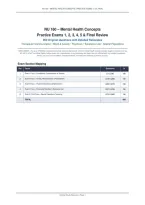
NU 160 – Mental Health Concepts
Practice Exams 1, 2, 3, 4, 5 & Final Review
950 Original Questions with Detailed Rationales
Therapeutic Communication • Mood & Anxiety • Psychosis • Substance Use • Special Populations
DISCLAIMER – This is an ORIGINAL educational practice resource aligned with common mental health nursing concepts taught in courses such as
NU 160. It is NOT an official Galen College exam, not a reproduction of any proprietary test bank, and not affiliated with any college or publisher.
Always use your current syllabus, required textbook, and instructor materials as primary sources.
Exam Section Mapping
Sec Focus Questions N
1 Exam 1 Focus – Foundations, Communication & Theories Q1-Q190 190
2 Exam 2 Focus – Anxiety, Mood Disorders & Psychopharm Q191-Q380 190
3 Exam 3 Focus – Psychotic Disorders & Antipsychotic C Q381-Q570 190
4 Exam 4 Focus – Personality Disorders & Substance Use Q571-Q760 190
5 Exam 5 / Final Focus – Special Populations, Neurocog Q761-Q950 190
TOTAL 950
Original Study Resource | Page 1
, NU 160 – MENTAL HEALTH CONCEPTS | PRACTICE EXAMS 1–5 & FINAL
Section 1: Exam 1 Focus – Foundations, Communication & Theories
Q1: The primary focus of mental health nursing includes:
A. Only administering medications
B. Therapeutic communication, psychosocial adaptation, and holistic care of persons with
mental health alterations [CORRECT]
C. Ignoring the nurse–patient relationship
D. Only physical assessment
Correct Answer: B
Rationale: Mental health nursing emphasizes therapeutic relationships, behavioral manifestations, and
adaptation across the lifespan.
Q2: Therapeutic communication is best described as:
A. Casual social conversation only
B. Purposeful, client-centered interaction that promotes understanding, trust, and positive
change [CORRECT]
C. Giving advice without listening
D. Avoiding all emotional topics
Correct Answer: B
Rationale: Therapeutic communication is intentional and focused on the client’s needs and growth.
Q3: An example of a non-therapeutic communication technique is:
A. Open-ended questions
B. Giving false reassurance or changing the subject inappropriately [CORRECT]
C. Reflecting feelings
D. Clarifying
Correct Answer: B
Rationale: False reassurance and abrupt topic changes block exploration of feelings.
Original Study Resource | Page 2
, NU 160 – MENTAL HEALTH CONCEPTS | PRACTICE EXAMS 1–5 & FINAL
Q4: Mental health is best viewed as:
A. The complete absence of stress
B. A dynamic state of well-being involving successful adaptation and the ability to cope with
life’s demands [CORRECT]
C. Only the absence of psychiatric diagnosis
D. A fixed trait that never changes
Correct Answer: B
Rationale: Mental health exists on a continuum and involves adaptation and functioning.
Q5: Self-awareness in the nurse is important because:
A. It is irrelevant to care
B. The nurse’s own values, biases, and behaviors influence the therapeutic relationship
[CORRECT]
C. Only the client needs self-awareness
D. It replaces clinical knowledge
Correct Answer: B
Rationale: Understanding one’s own reactions supports professional, nonjudgmental care.
Q6: Erikson’s theory emphasizes:
A. Only biological drives
B. Psychosocial stages of development with key conflicts across the lifespan [CORRECT]
C. Classical conditioning only
D. Ignoring social context
Correct Answer: B
Rationale: Erikson described eight stages with developmental tasks and crises.
Original Study Resource | Page 3
, NU 160 – MENTAL HEALTH CONCEPTS | PRACTICE EXAMS 1–5 & FINAL
Q7: Defense mechanisms are:
A. Always pathological and must be eliminated
B. Unconscious strategies that protect the ego from anxiety; can be adaptive or maladaptive
[CORRECT]
C. Only conscious choices
D. Irrelevant in nursing assessment
Correct Answer: B
Rationale: Nurses assess whether defenses help or hinder functioning.
Q8: Cultural competence in mental health care requires:
A. Assuming all clients share the same beliefs
B. Respecting cultural and spiritual influences on mental health and help-seeking [CORRECT]
C. Ignoring culture completely
D. Only using one assessment tool for everyone
Correct Answer: B
Rationale: Culture shapes expression of distress, stigma, and preferred supports.
Q9: The nurse–patient relationship is built primarily on:
A. Friendship and social reciprocity
B. Trust, respect, empathy, and professional boundaries [CORRECT]
C. The nurse’s personal needs
D. Avoiding all emotional content
Correct Answer: B
Rationale: Professional therapeutic relationships are goal-directed and boundaried.
Original Study Resource | Page 4
NU 160 – Mental Health Concepts
Practice Exams 1, 2, 3, 4, 5 & Final Review
950 Original Questions with Detailed Rationales
Therapeutic Communication • Mood & Anxiety • Psychosis • Substance Use • Special Populations
DISCLAIMER – This is an ORIGINAL educational practice resource aligned with common mental health nursing concepts taught in courses such as
NU 160. It is NOT an official Galen College exam, not a reproduction of any proprietary test bank, and not affiliated with any college or publisher.
Always use your current syllabus, required textbook, and instructor materials as primary sources.
Exam Section Mapping
Sec Focus Questions N
1 Exam 1 Focus – Foundations, Communication & Theories Q1-Q190 190
2 Exam 2 Focus – Anxiety, Mood Disorders & Psychopharm Q191-Q380 190
3 Exam 3 Focus – Psychotic Disorders & Antipsychotic C Q381-Q570 190
4 Exam 4 Focus – Personality Disorders & Substance Use Q571-Q760 190
5 Exam 5 / Final Focus – Special Populations, Neurocog Q761-Q950 190
TOTAL 950
Original Study Resource | Page 1
, NU 160 – MENTAL HEALTH CONCEPTS | PRACTICE EXAMS 1–5 & FINAL
Section 1: Exam 1 Focus – Foundations, Communication & Theories
Q1: The primary focus of mental health nursing includes:
A. Only administering medications
B. Therapeutic communication, psychosocial adaptation, and holistic care of persons with
mental health alterations [CORRECT]
C. Ignoring the nurse–patient relationship
D. Only physical assessment
Correct Answer: B
Rationale: Mental health nursing emphasizes therapeutic relationships, behavioral manifestations, and
adaptation across the lifespan.
Q2: Therapeutic communication is best described as:
A. Casual social conversation only
B. Purposeful, client-centered interaction that promotes understanding, trust, and positive
change [CORRECT]
C. Giving advice without listening
D. Avoiding all emotional topics
Correct Answer: B
Rationale: Therapeutic communication is intentional and focused on the client’s needs and growth.
Q3: An example of a non-therapeutic communication technique is:
A. Open-ended questions
B. Giving false reassurance or changing the subject inappropriately [CORRECT]
C. Reflecting feelings
D. Clarifying
Correct Answer: B
Rationale: False reassurance and abrupt topic changes block exploration of feelings.
Original Study Resource | Page 2
, NU 160 – MENTAL HEALTH CONCEPTS | PRACTICE EXAMS 1–5 & FINAL
Q4: Mental health is best viewed as:
A. The complete absence of stress
B. A dynamic state of well-being involving successful adaptation and the ability to cope with
life’s demands [CORRECT]
C. Only the absence of psychiatric diagnosis
D. A fixed trait that never changes
Correct Answer: B
Rationale: Mental health exists on a continuum and involves adaptation and functioning.
Q5: Self-awareness in the nurse is important because:
A. It is irrelevant to care
B. The nurse’s own values, biases, and behaviors influence the therapeutic relationship
[CORRECT]
C. Only the client needs self-awareness
D. It replaces clinical knowledge
Correct Answer: B
Rationale: Understanding one’s own reactions supports professional, nonjudgmental care.
Q6: Erikson’s theory emphasizes:
A. Only biological drives
B. Psychosocial stages of development with key conflicts across the lifespan [CORRECT]
C. Classical conditioning only
D. Ignoring social context
Correct Answer: B
Rationale: Erikson described eight stages with developmental tasks and crises.
Original Study Resource | Page 3
, NU 160 – MENTAL HEALTH CONCEPTS | PRACTICE EXAMS 1–5 & FINAL
Q7: Defense mechanisms are:
A. Always pathological and must be eliminated
B. Unconscious strategies that protect the ego from anxiety; can be adaptive or maladaptive
[CORRECT]
C. Only conscious choices
D. Irrelevant in nursing assessment
Correct Answer: B
Rationale: Nurses assess whether defenses help or hinder functioning.
Q8: Cultural competence in mental health care requires:
A. Assuming all clients share the same beliefs
B. Respecting cultural and spiritual influences on mental health and help-seeking [CORRECT]
C. Ignoring culture completely
D. Only using one assessment tool for everyone
Correct Answer: B
Rationale: Culture shapes expression of distress, stigma, and preferred supports.
Q9: The nurse–patient relationship is built primarily on:
A. Friendship and social reciprocity
B. Trust, respect, empathy, and professional boundaries [CORRECT]
C. The nurse’s personal needs
D. Avoiding all emotional content
Correct Answer: B
Rationale: Professional therapeutic relationships are goal-directed and boundaried.
Original Study Resource | Page 4


