
AHIP 2027 MODULES 1–5 – PRACTICE EXAM
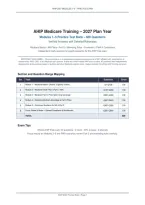
AHIP Medicare Training – 2027 Plan Year
Modules 1–5 Practice Test Bank – 600 Questions
Verified Answers with Detailed Rationales
Medicare Basics • MA Plans • Part D • Marketing Rules • Enrollment • FWA & Compliance
Independent study resource for agents preparing for the AHIP final exam
IMPORTANT DISCLAIMER – This practice bank is an independent educational resource and is NOT affiliated with, endorsed by, or
sponsored by AHIP, CMS, or any Medicare plan sponsor. It does not contain official AHIP exam content. All questions were independently
developed for study purposes based on publicly described Medicare program topics. Always complete the official AHIP training and exam.
Section and Question Range Mapping
Sec Topic Questions Count
1 Module 1 – Medicare Basics: Choices, Eligibility & Bene... Q1-Q100 100
2 Module 2 – Medicare Health Plans (Part C / MA) Q101-Q200 100
3 Module 3 – Medicare Part D: Prescription Drug Coverage Q201-Q300 100
4 Module 4 – Marketing Medicare Advantage & Part D Plans Q301-Q400 100
5 Module 5 – Enrollment Guidance for MA & Part D Q401-Q500 100
6 Fraud, Waste & Abuse + General Compliance & Nondiscrimi... Q501-Q600 100
TOTAL 600
Exam Tips
Official AHIP final exam: 50 questions • 2 hours • 90% to pass • 3 attempts
Focus heavily on Modules 3–5 and FWA scenarios; review Part D and marketing rules carefully.
AHIP 2027 Practice Bank | Page 1
, AHIP 2027 MODULES 1–5 – PRACTICE EXAM
Section 1: Module 1 – Medicare Basics: Choices, Eligibility & Benefits
Q1: Medicare Part A primarily covers which of the following?
A. Outpatient physician services only
B. Inpatient hospital care, skilled nursing facility care (limited), hospice, and some home
health [CORRECT]
C. Prescription drugs only
D. Dental and vision only
Correct Answer: B
Rationale: Part A covers inpatient hospital, limited SNF, hospice, and certain home health services.
Q2: Medicare Part B primarily covers:
A. Inpatient hospital stays only
B. Outpatient care, physician services, preventive services, and durable medical
equipment [CORRECT]
C. Long-term custodial care
D. Only prescription drugs
Correct Answer: B
Rationale: Part B covers outpatient and physician services, many preventive services, and DME.
Q3: To be eligible for premium-free Part A, an individual generally must:
A. Be any age with no work history
B. Have sufficient work credits (or a spouse who does) or meet other qualifying criteria
such as certain disability or ESRD rules [CORRECT]
C. Only be over age 80
D. Never have worked
Correct Answer: B
Rationale: Premium-free Part A generally requires sufficient Medicare-covered employment or qualifying
conditions.
AHIP 2027 Practice Bank | Page 2
, AHIP 2027 MODULES 1–5 – PRACTICE EXAM
Q4: The Initial Enrollment Period (IEP) for Medicare generally includes:
A. Only the month of the 65th birthday
B. A 7-month period surrounding the month the individual turns 65 (or qualifies by
disability) [CORRECT]
C. Only January of each year
D. No fixed period
Correct Answer: B
Rationale: The IEP is typically the 3 months before, the birthday month, and 3 months after turning 65.
Q5: IRMAA refers to:
A. A type of Medigap plan
B. Income-Related Monthly Adjustment Amount – higher Part B and Part D premiums for
higher-income beneficiaries [CORRECT]
C. A special enrollment period only
D. A formulary exception process
Correct Answer: B
Rationale: IRMAA is an additional premium amount based on income for Part B and Part D.
Q6: Which statement about Medigap (Medicare Supplement) insurance is generally
correct?
A. Medigap plans are the same as Medicare Advantage plans
B. Medigap policies help pay some out-of-pocket costs left by Original Medicare and are
standardized in most states [CORRECT]
C. Medigap covers long-term custodial care
D. Medigap replaces Part A and Part B entirely
Correct Answer: B
Rationale: Medigap supplements Original Medicare cost-sharing and follows standardized plan designs
in most states.
AHIP 2027 Practice Bank | Page 3
, AHIP 2027 MODULES 1–5 – PRACTICE EXAM
Q7: A person who does not enroll in Part B when first eligible and lacks creditable
coverage may face:
A. No consequences
B. A late enrollment penalty that can increase the Part B premium permanently
[CORRECT]
C. Automatic free Part D
D. Only a one-month delay
Correct Answer: B
Rationale: Late enrollment in Part B without creditable coverage can result in a lasting premium penalty.
Q8: Which of the following is generally true about Medicare eligibility at age 65?
A. Everyone automatically gets Part D for free
B. Most people become eligible for Part A and may enroll in Part B; enrollment rules
depend on whether they are already receiving Social Security benefits [CORRECT]
C. No one under 70 can enroll
D. Eligibility requires private insurance first
Correct Answer: B
Rationale: Age 65 is the primary eligibility point; enrollment mechanics depend on Social Security status
and other factors.
Q9: Original Medicare consists of:
A. Only Part C
B. Part A and Part B [CORRECT]
C. Only Part D
D. Only Medigap
Correct Answer: B
Rationale: Original Medicare is Part A (Hospital) and Part B (Medical).
AHIP 2027 Practice Bank | Page 4
AHIP Medicare Training – 2027 Plan Year
Modules 1–5 Practice Test Bank – 600 Questions
Verified Answers with Detailed Rationales
Medicare Basics • MA Plans • Part D • Marketing Rules • Enrollment • FWA & Compliance
Independent study resource for agents preparing for the AHIP final exam
IMPORTANT DISCLAIMER – This practice bank is an independent educational resource and is NOT affiliated with, endorsed by, or
sponsored by AHIP, CMS, or any Medicare plan sponsor. It does not contain official AHIP exam content. All questions were independently
developed for study purposes based on publicly described Medicare program topics. Always complete the official AHIP training and exam.
Section and Question Range Mapping
Sec Topic Questions Count
1 Module 1 – Medicare Basics: Choices, Eligibility & Bene... Q1-Q100 100
2 Module 2 – Medicare Health Plans (Part C / MA) Q101-Q200 100
3 Module 3 – Medicare Part D: Prescription Drug Coverage Q201-Q300 100
4 Module 4 – Marketing Medicare Advantage & Part D Plans Q301-Q400 100
5 Module 5 – Enrollment Guidance for MA & Part D Q401-Q500 100
6 Fraud, Waste & Abuse + General Compliance & Nondiscrimi... Q501-Q600 100
TOTAL 600
Exam Tips
Official AHIP final exam: 50 questions • 2 hours • 90% to pass • 3 attempts
Focus heavily on Modules 3–5 and FWA scenarios; review Part D and marketing rules carefully.
AHIP 2027 Practice Bank | Page 1
, AHIP 2027 MODULES 1–5 – PRACTICE EXAM
Section 1: Module 1 – Medicare Basics: Choices, Eligibility & Benefits
Q1: Medicare Part A primarily covers which of the following?
A. Outpatient physician services only
B. Inpatient hospital care, skilled nursing facility care (limited), hospice, and some home
health [CORRECT]
C. Prescription drugs only
D. Dental and vision only
Correct Answer: B
Rationale: Part A covers inpatient hospital, limited SNF, hospice, and certain home health services.
Q2: Medicare Part B primarily covers:
A. Inpatient hospital stays only
B. Outpatient care, physician services, preventive services, and durable medical
equipment [CORRECT]
C. Long-term custodial care
D. Only prescription drugs
Correct Answer: B
Rationale: Part B covers outpatient and physician services, many preventive services, and DME.
Q3: To be eligible for premium-free Part A, an individual generally must:
A. Be any age with no work history
B. Have sufficient work credits (or a spouse who does) or meet other qualifying criteria
such as certain disability or ESRD rules [CORRECT]
C. Only be over age 80
D. Never have worked
Correct Answer: B
Rationale: Premium-free Part A generally requires sufficient Medicare-covered employment or qualifying
conditions.
AHIP 2027 Practice Bank | Page 2
, AHIP 2027 MODULES 1–5 – PRACTICE EXAM
Q4: The Initial Enrollment Period (IEP) for Medicare generally includes:
A. Only the month of the 65th birthday
B. A 7-month period surrounding the month the individual turns 65 (or qualifies by
disability) [CORRECT]
C. Only January of each year
D. No fixed period
Correct Answer: B
Rationale: The IEP is typically the 3 months before, the birthday month, and 3 months after turning 65.
Q5: IRMAA refers to:
A. A type of Medigap plan
B. Income-Related Monthly Adjustment Amount – higher Part B and Part D premiums for
higher-income beneficiaries [CORRECT]
C. A special enrollment period only
D. A formulary exception process
Correct Answer: B
Rationale: IRMAA is an additional premium amount based on income for Part B and Part D.
Q6: Which statement about Medigap (Medicare Supplement) insurance is generally
correct?
A. Medigap plans are the same as Medicare Advantage plans
B. Medigap policies help pay some out-of-pocket costs left by Original Medicare and are
standardized in most states [CORRECT]
C. Medigap covers long-term custodial care
D. Medigap replaces Part A and Part B entirely
Correct Answer: B
Rationale: Medigap supplements Original Medicare cost-sharing and follows standardized plan designs
in most states.
AHIP 2027 Practice Bank | Page 3
, AHIP 2027 MODULES 1–5 – PRACTICE EXAM
Q7: A person who does not enroll in Part B when first eligible and lacks creditable
coverage may face:
A. No consequences
B. A late enrollment penalty that can increase the Part B premium permanently
[CORRECT]
C. Automatic free Part D
D. Only a one-month delay
Correct Answer: B
Rationale: Late enrollment in Part B without creditable coverage can result in a lasting premium penalty.
Q8: Which of the following is generally true about Medicare eligibility at age 65?
A. Everyone automatically gets Part D for free
B. Most people become eligible for Part A and may enroll in Part B; enrollment rules
depend on whether they are already receiving Social Security benefits [CORRECT]
C. No one under 70 can enroll
D. Eligibility requires private insurance first
Correct Answer: B
Rationale: Age 65 is the primary eligibility point; enrollment mechanics depend on Social Security status
and other factors.
Q9: Original Medicare consists of:
A. Only Part C
B. Part A and Part B [CORRECT]
C. Only Part D
D. Only Medigap
Correct Answer: B
Rationale: Original Medicare is Part A (Hospital) and Part B (Medical).
AHIP 2027 Practice Bank | Page 4


