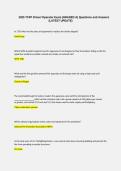
Prepare for the 2025 TCFP Driver/Operator certification examination with this comprehensive study resource featuring practice questions and answers designed to support review of important Driver/Operator concepts.
The Texas Commission on Fire Protection (TCFP) maintains Driver/Operator certification requirements and publishes curriculum and performance-skill materials for the discipline. TCFP's materials include Driver/Operator-Pumper requirements and performance skills involving apparatus inspections, operation, pump operations, and related competencies.
This resource is designed to help candidates organize their preparation, reinforce key concepts, and become more familiar with the types of knowledge areas associated with Driver/Operator training.
What You Can Review
Driver/Operator responsibilities require more than simply driving an emergency vehicle. Candidates need knowledge of fire apparatus, safe vehicle operation, pump operations, water supply, hydraulic principles, inspections, maintenance, and emergency response considerations.
Practice topics may include:
Fire apparatus operations
Driver/operator responsibilities
Emergency vehicle operation
Apparatus inspection
Preventive maintenance
Vehicle safety
Pump operation
Fire pump components
Pump panel operations
Water supply
Hydraulics
Friction loss
Pressure calculations
Pump discharge pressure
Nozzle pressure
Appliance pressure
Relay pumping
Drafting operations
Hydrant operations
Water shuttle concepts
Hose operations
Apparatus positioning
Safe backing procedures
Braking systems
Steering systems
Tires
Electrical systems
Fuel systems
Cooling systems
Hydraulic systems
Oil and fluid checks
Belts and mechanical components
Tools and equipment
Built-in safety systems
Apparatus documentation
Operational checks
Deficiency reporting
Driver/operator safety
Incident-scene positioning
Traffic hazards
Personal protective equipment
Communications
Pump troubleshooting
Fireground water supply
Safe apparatus placement
Driver/Operator Certification Preparation
The TCFP certification pathway includes specific eligibility and training requirements. For Driver/Operator-Pumper certification, TCFP states that candidates must hold an applicable basic fire-protection certification, complete a commission-approved Driver/Operator-Pumper training program, and qualify and pass the DOP examination unless an applicable exemption applies.
Because certification requirements are official regulatory requirements, candidates should always verify their individual eligibility, examination status, and current requirements directly through TCFP.
This study resource is intended to supplement formal training and help candidates organize their review.
Apparatus Inspection and Maintenance
A major part of Driver/Operator responsibilities involves ensuring that the apparatus is operational and ready for service.
The TCFP Driver/Operator-Pumper performance standards include visual and operational checks of components such as batteries, braking systems, coolant systems, electrical systems, fuel, hydraulic fluids, oil, tires, steering systems, belts, tools, appliances, equipment, and built-in safety features. The standards also include documenting inspections and reporting deficiencies.
Practice questions can help candidates review these inspection responsibilities and understand why systematic apparatus checks are important.
Pump Operations
Pump operations are an important part of Driver/Operator-Pumper training. Candidates should understand pump controls, water supply, pressure management, discharge operations, and safe pump operation.
Question-based review can reinforce concepts such as:
Pump controls
Intake and discharge operations
Priming
Drafting
Water supply
Pump pressure
Nozzle pressure
Friction loss
Elevation pressure
Appliance loss
Pump discharge pressure
Hose-line operations
Water-flow considerations
The goal of practice is to help learners connect calculations and operational concepts with real fireground situations.
Hydraulic Calculations
Hydraulic principles are an important component of fire service water delivery. Driver/Operators may need to understand how pressure, flow, hose length, elevation, appliances, and friction affect fire streams.
Practice questions can help candidates review calculations and understand how changes in one factor can affect the overall pumping operation.
Candidates should use the formulas, procedures, and calculation methods specified by their training program and applicable standards.
Emergency Vehicle Operations
Safe driving is a fundamental Driver/Operator responsibility.
Study topics can include:
Emergency vehicle safety
Apparatus positioning
Intersection hazards
Vehicle control
Braking
Turning
Backing
Visibility
Spotter communication
Roadway hazards
Traffic awareness
Safe response procedures
Apparatus placement at incidents
The purpose of question-based practice is to reinforce safe decision-making and help candidates recognize potential operational hazards.
Fireground Apparatus Positioning
Apparatus placement can influence both firefighter safety and operational effectiveness. Driver/Operators need to consider the incident location, terrain, access routes, overhead hazards, traffic, water supply, hose deployment, and the operational needs of other apparatus.
Practice questions can help candidates review factors that should be considered when positioning an apparatus at an emergency scene.
Water Supply Operations
Driver/Operators may be responsible for establishing and maintaining an adequate water supply for firefighting operations.
Review areas can include:
Hydrant connections
Water sources
Drafting
Relay operations
Supply lines
Pump intakes
Water shuttle concepts
Water-flow management
Supply pressure
Fireground water coordination
Understanding these concepts helps candidates connect apparatus operation with the overall water-supply strategy.
Pump Troubleshooting
Driver/Operators may encounter operational problems involving pumps, water supply, pressure, valves, controls, or other apparatus components.
Practice questions can help students review troubleshooting concepts and identify appropriate steps when an apparatus does not perform as expected.
Candidates should always follow their department's procedures, manufacturer's instructions, training requirements, and applicable safety standards when operating or troubleshooting equipment.
Equipment and Safety
Driver/Operators work with complex emergency apparatus and equipment. Safe operation requires familiarity with tools, appliances, hoses, fittings, controls, and built-in safety features.
Study questions can help reinforce:
Equipment identification
Equipment inspection
Proper storage
Apparatus safety
Personal protective equipment
Operational readiness
Equipment documentation
Deficiency reporting
Safe work practices
Active Learning Through Practice Questions
Instead of simply rereading study material, candidates can use practice questions to actively recall information.
A useful study process is:
Review the relevant training material.
Answer practice questions without looking at the answers.
Mark questions that were difficult.
Review the underlying concept.
Reattempt the questions.
Create a list of topics requiring additional study.
Repeat the process until the major subject areas have been reviewed.
This approach can make preparation more structured and help candidates focus on areas where additional study is needed.
Useful for Individual or Group Study
The resource can be used independently or with a fire-service study group.
Individual candidates can work through questions according to topic. Groups can discuss pump operations, hydraulics, apparatus inspection, emergency driving, and fireground scenarios.
Group discussion can also provide opportunities for candidates to explain how they reached an answer and compare their reasoning with classmates or instructors.
Key Benefits
This study resource can help candidates:
Review Driver/Operator concepts
Reinforce apparatus knowledge
Practice pump-operation questions
Review hydraulic principles
Study water-supply concepts
Review emergency vehicle operations
Reinforce apparatus inspection procedures
Practice safety-related questions
Identify knowledge gaps
Organize examination preparation
Review fireground operations
Reinforce terminology
Prepare for coursework assessments
Support certification examination preparation
Build a consistent study routine
Official TCFP Resources
TCFP provides official curriculum, performance-skills, testing, and certification information. The commission's Driver/Operator materials include both Driver/Operator-Aerial and Driver/Operator-Pumper pathways, while its certification pages describe prerequisites, training, testing, and application requirements.
Candidates should use current TCFP information as the authoritative source for certification requirements and examination procedures. TCFP also provides official testing information and lists available Driver/Operator testing options.
Important Study Disclaimer
This product is intended as a supplementary examination-preparation and study resource. It should not be represented as an official TCFP publication unless specifically authorized by TCFP.
It should not be treated as a substitute for commission-approved training, department instruction, manufacturer documentation, applicable NFPA standards, or current TCFP requirements.
The phrase “2025” identifies the intended study year and does not guarantee that the material reproduces the official examination or contains questions appearing on a live certification test.
Candidates should verify current requirements directly with TCFP before taking the examination because certification curricula, standards, testing procedures, and requirements may be updated.
Ideal For
Firefighter students | Driver/Operator candidates | Driver/Operator-Pumper candidates | Driver/Operator-Aerial candidates | Fire service professionals | Fire academy students | Fire department personnel | Fire apparatus operators | Fire pump operators | TCFP certification candidates | Fire service study groups
Final Product Summary
The 2025 TCFP Driver/Operator Exam Questions and Answers study resource provides a structured way to review important Driver/Operator concepts and reinforce knowledge before certification-related assessments.
With coverage of apparatus inspection, emergency vehicle operations, pump operations, hydraulics, water supply, equipment, maintenance, safety, and fireground operations, the resource can be incorporated into a broader Driver/Operator preparation plan.
For the strongest preparation, combine practice-question review with commission-approved training, hands-on apparatus practice, instructor guidance, department procedures, current TCFP materials, and applicable industry standards.
Content preview
2025 TCFP Driver/ Operator Exam (GRADED A) Questions and Answers
(LATEST UPDATE)
In 1720 what was the piece of equipment to replace the bucket brigade?
Hand Pump
Which NFPA standard required new fire apparatus to be designed so that all members riding on the fire
apparatus would be provided a seated area inside an enclosed cab?
NFPA 1500
What was the first gasoline powered fire apparatus to discharge water by using a large soda acid
extinguisher?
Chemical Wagon
The real breakthrough for today's modern fire apparatus came with the introduction of the
which carried a booster tank, had a pump capacity of 250 gallons per minute
or greater, and carried 21/2 inch and 11/2 inch hoses used for water supply and firefighting.
Triple-combustion pumper
Which national organization writes codes and standards for fire protection?
National Fire Protection Association (NFPA)
In the early years of U.S. firefighting history, a was used to pull, down a burning building and prevent the
fire from spreading to nearby structures.
Fire hook
,The first mechanized fire pumps were generally fueled by:
Coal
In the early 1900's what material did the city of Philadelphia use to develop a municipal water supply
system?
Wood
In the early years of U.S. history, many cities employed watchmen to walk the streets at night looking
for:
fires
Auxiliary braking systems incorporated into apparatus design to supplement the service brakes include
all of the following EXCEPT:
antilock braking system (ABS)
Growing concerns for firefighter safety during the progression of fire apparatus resulted in the adoption
of standard NFPA:
1500
What was the system used by colonial-era firefighters in which leather buckets were passed from
person to person to assist in extinguishing a fire?
bucket brigade
,The second leading cause of firefighter fatalities is injuries sustained while:
responding or returning from the fireground
Which of the following is/are the most important aspect of fire apparatus crash prevention?
Driver/ Operator Skill and experience
What term was used to identify the fire fighter charged with operating the steam engine?
Engineer
What type of system uses sensors on each wheel to control brake application in the event of a sudden or
emergency stop?
antilock braking system
NFPA standards are generally based on .
Consensus
What term identified the person who sat on the rear of a vehicle to help maneuver a long ladder cart
through the streets?
Tillerman
With the advent of steam-powered pumps (called steamers) in the mid-1800s,
replaced fire fighters in moving equipment to the fireground.
horses
, A small truck constructed with a large soda acid extinguisher and 50 ft or more of small hose (booster
line size).
Chemical Wagon
A water pump mounted on the fire apparatus in addition to a fire pump and used for firefighting either
in conjunction with or independent of the fire pump.
Booster Pump
A piston-driven, positive-displacement pump that is pushed up and down by fire fighters manning poles
at the side of the pump.
Hand pump
A water pump with a rated capacity of 250 GPM or greater at 150 psi.
Fire pump
A truck that carries water in a tank generally used for the booster line and commonly called the booster
tank.
Triple-combination pumper
Which NFPA standard requires fire apparatus manufacturers to install seat belt warning devices that
verify a fire fighter is seated and belted?
NFPA 1901