

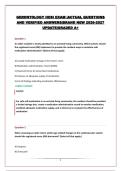
Question 1
An older resident is newly admitted to an assisted living community. Which actions should
the registered nurse (RN) implement to provide the resident ways to maintain safe
medication administration? (Select all that apply)
A) Locked medication storage in the client's room
B) Medication administration record (MAR)
C) Payment forms for prescribed medications
D) Delivery of adequate supply of medication
E) List of findings indicating medication effectiveness
CORRECT ANSWER
A,B,D,E
For safe self-medication in an assisted living community, the resident should be provided
a locked storage box, create a medication administration record to monitor medication,
establish adequate medication supply, and a reference to evaluate the effectiveness of
medication
Question 2
When assessing an older client, which age-related changes in the cardiovascular system
should the registered nurse (RN) document? (Select all that apply.)
A) Dyspnea
B) Chest pain
1
,C) Cardiac murmurs
D) Widening pulse pressure
E) Irregular heart rate
CORRECT ANSWER
C,D
For older clients the expected age-related changes in the cardiovascular system include
murmurs and widening pulse pressure
Question 3
An older client who recently moved into an assisted living community refuses to eat or
join any activities. When evaluating the client further, what should the registered nurse
(RN) focus on during the next examination?
A) Anxiety
B) Depression
C) Exhaustion
D) Confusion
CORRECT ANSWER
B
Depression is a symptom that an older client is likely to experience with a sudden change
in living accommodations when a loss of personal identity can create low self-esteem
Question 4
2
, The registered nurse (RN) is caring for an elderly client with functional incontinence who
lives in an assisted living community. The client is alert and mildly confused and can self
ambulate. Which nursing intervention should the RN implement?
A) Offer assistance with toileting q2 hours
B) Use protective disposal undergarment instead of underwear
C) Ask if the client has attempted to void q2 hours
D) Obtain a prescription for intermittent catherization
CORRECT ANSWER
A
Maintaining independence and self-esteem is important for an older client with
incontinence. Toilet assistance decreases the client's chances of accidents and
embarrassment by introducing a toilet training program
Question 5
The healthcare provider prescribes a new medication, atorvastatin (Lipitor, for an older
client who arrives at the clinic for an annual physical examination. What common side
effect should the registered nurse (RN) advise the client to observe for with this
medication?
A) Constipation
B) Headaches
C) Muscle weakness
D) Nausea and vomiting
CORRECT ANSWER
B
3
An older resident is newly admitted to an assisted living community. Which actions should
the registered nurse (RN) implement to provide the resident ways to maintain safe
medication administration? (Select all that apply)
A) Locked medication storage in the client's room
B) Medication administration record (MAR)
C) Payment forms for prescribed medications
D) Delivery of adequate supply of medication
E) List of findings indicating medication effectiveness
CORRECT ANSWER
A,B,D,E
For safe self-medication in an assisted living community, the resident should be provided
a locked storage box, create a medication administration record to monitor medication,
establish adequate medication supply, and a reference to evaluate the effectiveness of
medication
Question 2
When assessing an older client, which age-related changes in the cardiovascular system
should the registered nurse (RN) document? (Select all that apply.)
A) Dyspnea
B) Chest pain
1
,C) Cardiac murmurs
D) Widening pulse pressure
E) Irregular heart rate
CORRECT ANSWER
C,D
For older clients the expected age-related changes in the cardiovascular system include
murmurs and widening pulse pressure
Question 3
An older client who recently moved into an assisted living community refuses to eat or
join any activities. When evaluating the client further, what should the registered nurse
(RN) focus on during the next examination?
A) Anxiety
B) Depression
C) Exhaustion
D) Confusion
CORRECT ANSWER
B
Depression is a symptom that an older client is likely to experience with a sudden change
in living accommodations when a loss of personal identity can create low self-esteem
Question 4
2
, The registered nurse (RN) is caring for an elderly client with functional incontinence who
lives in an assisted living community. The client is alert and mildly confused and can self
ambulate. Which nursing intervention should the RN implement?
A) Offer assistance with toileting q2 hours
B) Use protective disposal undergarment instead of underwear
C) Ask if the client has attempted to void q2 hours
D) Obtain a prescription for intermittent catherization
CORRECT ANSWER
A
Maintaining independence and self-esteem is important for an older client with
incontinence. Toilet assistance decreases the client's chances of accidents and
embarrassment by introducing a toilet training program
Question 5
The healthcare provider prescribes a new medication, atorvastatin (Lipitor, for an older
client who arrives at the clinic for an annual physical examination. What common side
effect should the registered nurse (RN) advise the client to observe for with this
medication?
A) Constipation
B) Headaches
C) Muscle weakness
D) Nausea and vomiting
CORRECT ANSWER
B
3


