

WGU D635
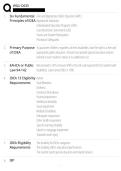
1. Six Fundamental Free and Appropriate Public Education (FAPE)
Principles of IDEA Appropriate Evaluation
Individualized Education Programs (IEPs)
Least Restrictive Environment (LRE)
Parent and Student Participation
Procedural Safeguards
2. Primary Purpose To guarantee children, regardless of their disabilities, have the right to a free and
of IDEA appropriate public education. Schools must provide special education services
tailored to each student's needs at no additional cost.
3. EAHCA or Public Was enacted in 1975 it ensures FAPE in the LRE and required IEPs for students with
Law 94-142 disabilities. Later named IDEA in 1990.
4. IDEA 13 Eligibility Autism
Requirements Deaf-Blindness
Deafness
Emotional Disturbance
Hearing impairment
Intellectual disability
Visual impairment
Multiple Disabilities
Orthopedic impairment
Other health impairment
Specific learning disability
Speech or language impairment
Traumatic brain injury
5. IDEA Eligibility The disability fits IDEA's categories
Requirements The disability affects educational performance
The student needs special education and related services
6. IEP
1/8
, WGU D635
Individualized Education Program: provides personalized support to students,
ensuring access to high-quality education.
Educators use IEPs to accommodate various learning needs.
Each IEP is developed under IDEA and is updated regularly updated to reflect
student's progress and changing needs
7. Parts of an IEP 1. Present levels of performance
2. Annual goals for academic and skill development
3. Methods for tracking progress and timeline reports
4. Required special education services and accommodations
5. The extent of participation in regular classroom activities
6. Testing accommodations or alternative assessments
7. Start dates, frequency, and location of services
8. Role and Re- 1. Develop lesson plans that facilitate learning and engagement for all students
sponsibilities of
General Educa- 2. Monitor the progress of all students regularly
tion Teacher
3. Communicate effectively with students and their families
4. Collaborate with special education teacher to develop and implement necessary
accommodations, modifications, and adaptations for students with disabilities
5. Work with the special education teacher to create a support plan benefitting all
students, organize paraprofessional' schedules and supervise their activities in the
general education classroom
6. Regularly update the special education teacher on the performance of students
with disabilities in class, and collaborate to assign midterm and final grades
9. Role and Re- 1. Establish high expectations for students with exceptionalities to achieve optimal
sponsibilities of learning outcomes while respecting their individual backgrounds and dignity.
2/8
1. Six Fundamental Free and Appropriate Public Education (FAPE)
Principles of IDEA Appropriate Evaluation
Individualized Education Programs (IEPs)
Least Restrictive Environment (LRE)
Parent and Student Participation
Procedural Safeguards
2. Primary Purpose To guarantee children, regardless of their disabilities, have the right to a free and
of IDEA appropriate public education. Schools must provide special education services
tailored to each student's needs at no additional cost.
3. EAHCA or Public Was enacted in 1975 it ensures FAPE in the LRE and required IEPs for students with
Law 94-142 disabilities. Later named IDEA in 1990.
4. IDEA 13 Eligibility Autism
Requirements Deaf-Blindness
Deafness
Emotional Disturbance
Hearing impairment
Intellectual disability
Visual impairment
Multiple Disabilities
Orthopedic impairment
Other health impairment
Specific learning disability
Speech or language impairment
Traumatic brain injury
5. IDEA Eligibility The disability fits IDEA's categories
Requirements The disability affects educational performance
The student needs special education and related services
6. IEP
1/8
, WGU D635
Individualized Education Program: provides personalized support to students,
ensuring access to high-quality education.
Educators use IEPs to accommodate various learning needs.
Each IEP is developed under IDEA and is updated regularly updated to reflect
student's progress and changing needs
7. Parts of an IEP 1. Present levels of performance
2. Annual goals for academic and skill development
3. Methods for tracking progress and timeline reports
4. Required special education services and accommodations
5. The extent of participation in regular classroom activities
6. Testing accommodations or alternative assessments
7. Start dates, frequency, and location of services
8. Role and Re- 1. Develop lesson plans that facilitate learning and engagement for all students
sponsibilities of
General Educa- 2. Monitor the progress of all students regularly
tion Teacher
3. Communicate effectively with students and their families
4. Collaborate with special education teacher to develop and implement necessary
accommodations, modifications, and adaptations for students with disabilities
5. Work with the special education teacher to create a support plan benefitting all
students, organize paraprofessional' schedules and supervise their activities in the
general education classroom
6. Regularly update the special education teacher on the performance of students
with disabilities in class, and collaborate to assign midterm and final grades
9. Role and Re- 1. Establish high expectations for students with exceptionalities to achieve optimal
sponsibilities of learning outcomes while respecting their individual backgrounds and dignity.
2/8


