
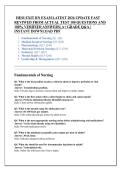
HESI EXIT RN EXAM LATEST 2026 UPDATE FAST
REVIWED FROM ACTUAL TEST 100 QUESTIONS AND
100% VERIFIED ANSWERS| A+ GRADE Q&A |
INSTANT DOWNLOAD PDF
1. Fundamentals of Nursing (Q1–Q8)
2. Medical-Surgical Nursing (Q9–Q20)
3. Pharmacology (Q21–Q30)
4. Maternal-Newborn Nursing (Q31–Q36)
5. Pediatrics (Q37–Q42)
6. Mental Health (Q43–Q46)
7. Leadership & Management (Q47–Q50)
Fundamentals of Nursing
Q1. What is the best position to place a client in shock to improve perfusion to vital
organs?
Answer: Trendelenburg position.
Italic: Elevates legs to increase venous return and improve cardiac output.
Q2. What is the first action when a client begins to choke and cannot speak?
Answer: Perform abdominal thrusts (Heimlich maneuver).
Italic: Clears airway obstruction rapidly.
Q3. What is the normal range for adult pulse rate?
Answer: 60–100 beats per minute.
Italic: Falls within physiologic norms for adults at rest.
Q4. What is the most appropriate nursing action before administering oral medications?
Answer: Verify client identity using two identifiers.
Italic: Prevents medication errors.
Q5. What is the minimum acceptable urine output per hour in adults?
Answer: 30 mL/hour.
Italic: Indicates adequate kidney perfusion.
Q6. What site should be used for intramuscular injections in adults?
Answer: Ventrogluteal site.
Italic: Safest site with least risk of nerve injury.
, Q7. What is the priority nursing intervention for a client with diaphoresis and chest pain?
Answer: Obtain a 12-lead ECG.
Italic: Assess for myocardial ischemia.
Q8. What is the goal of sterile technique?
Answer: Eliminate all microorganisms from an area.
Italic: Prevents infection during invasive procedures.
Medical-Surgical Nursing
Q9. What is the earliest sign of hypoxia?
Answer: Restlessness.
Italic: Indicates inadequate oxygen to tissues.
Q10. What lab value is most important to monitor in a client receiving heparin?
Answer: Activated partial thromboplastin time (aPTT).
Italic: Monitors anticoagulant effect.
Q11. What condition is indicated by Kussmaul respirations?
Answer: Metabolic acidosis.
Italic: Deep rapid breathing compensates for acidosis.
Q12. What is the priority action for a client with suspected stroke?
Answer: Obtain a non-contrast head CT immediately.
Italic: Differentiates ischemic vs hemorrhagic stroke.
Q13. What electrolyte imbalance is associated with peaked T waves on ECG?
Answer: Hyperkalemia.
Italic: Characteristic ECG change.
Q14. What is the primary nursing concern for a client with gastrointestinal bleeding?
Answer: Maintain hemodynamic stability.
Italic: Prevent shock from blood loss.
Q15. What assessment finding indicates increased intracranial pressure?
Answer: Decreasing level of consciousness.
Italic: Early and critical sign.
Q16. What is the main risk of prolonged immobility?
Answer: Deep vein thrombosis.
Italic: Stasis increases clot formation.
REVIWED FROM ACTUAL TEST 100 QUESTIONS AND
100% VERIFIED ANSWERS| A+ GRADE Q&A |
INSTANT DOWNLOAD PDF
1. Fundamentals of Nursing (Q1–Q8)
2. Medical-Surgical Nursing (Q9–Q20)
3. Pharmacology (Q21–Q30)
4. Maternal-Newborn Nursing (Q31–Q36)
5. Pediatrics (Q37–Q42)
6. Mental Health (Q43–Q46)
7. Leadership & Management (Q47–Q50)
Fundamentals of Nursing
Q1. What is the best position to place a client in shock to improve perfusion to vital
organs?
Answer: Trendelenburg position.
Italic: Elevates legs to increase venous return and improve cardiac output.
Q2. What is the first action when a client begins to choke and cannot speak?
Answer: Perform abdominal thrusts (Heimlich maneuver).
Italic: Clears airway obstruction rapidly.
Q3. What is the normal range for adult pulse rate?
Answer: 60–100 beats per minute.
Italic: Falls within physiologic norms for adults at rest.
Q4. What is the most appropriate nursing action before administering oral medications?
Answer: Verify client identity using two identifiers.
Italic: Prevents medication errors.
Q5. What is the minimum acceptable urine output per hour in adults?
Answer: 30 mL/hour.
Italic: Indicates adequate kidney perfusion.
Q6. What site should be used for intramuscular injections in adults?
Answer: Ventrogluteal site.
Italic: Safest site with least risk of nerve injury.
, Q7. What is the priority nursing intervention for a client with diaphoresis and chest pain?
Answer: Obtain a 12-lead ECG.
Italic: Assess for myocardial ischemia.
Q8. What is the goal of sterile technique?
Answer: Eliminate all microorganisms from an area.
Italic: Prevents infection during invasive procedures.
Medical-Surgical Nursing
Q9. What is the earliest sign of hypoxia?
Answer: Restlessness.
Italic: Indicates inadequate oxygen to tissues.
Q10. What lab value is most important to monitor in a client receiving heparin?
Answer: Activated partial thromboplastin time (aPTT).
Italic: Monitors anticoagulant effect.
Q11. What condition is indicated by Kussmaul respirations?
Answer: Metabolic acidosis.
Italic: Deep rapid breathing compensates for acidosis.
Q12. What is the priority action for a client with suspected stroke?
Answer: Obtain a non-contrast head CT immediately.
Italic: Differentiates ischemic vs hemorrhagic stroke.
Q13. What electrolyte imbalance is associated with peaked T waves on ECG?
Answer: Hyperkalemia.
Italic: Characteristic ECG change.
Q14. What is the primary nursing concern for a client with gastrointestinal bleeding?
Answer: Maintain hemodynamic stability.
Italic: Prevent shock from blood loss.
Q15. What assessment finding indicates increased intracranial pressure?
Answer: Decreasing level of consciousness.
Italic: Early and critical sign.
Q16. What is the main risk of prolonged immobility?
Answer: Deep vein thrombosis.
Italic: Stasis increases clot formation.


