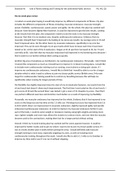
1. Energy Management
a) When feeling lethargic or flat the first thing I do whether I’m at home or in public is drink water
and ask myself why I’m feeling this way. Once I figure out the root of my low energy levels I will
typically try to focus by doing breathing exercises, light stretching and listen to some upbeat
music. However, if I’m not at home or unable to do so in the moment (usually I would just be at
dance now), I would splash cold water on my face and do a quick pat down/shake out of my body.
b) I recognize that my body and/ or mind needs a break from training when I’m having difficulty to
focus, I start to have a shorter attention span or I get easily distracted by something I shouldn’t be
concentrating on at the moment.
c) Some symptoms of burnout can include exhaustion, lack of motivation, decreasing quality of
performance, chronic stress...
d) In order for me to give myself a rest day I would begin with listening to mental cues: sudden
bursts of stress and/or anxiety over my responsibilities, in need of new goals and constant
negative moods. Then I would listen to physical cues: stiffness, chronic muscle soreness and
extreme fatigue before agreeing with my subconscious that I need a rest day.
e) When it comes to motivating myself in preparation for training or competing I reflect on my most
recent work and set SMART goals accordingly. Also practicing self-confidence/positive self-talk
by mentally telling myself phrases like, “You’re going to work so hard in class tonight,” and
“You’re going to have so much fun,” or ‘So excited to feel that way again.” I also try to replace
negative thoughts and outcomes with positive ones by reconnecting with my values and beliefs: A
successful mindset means nothing without a successful work ethic. Everything you do is for you
and only you...
f) Things I do to relax my mind when nervousness strikes: Slow breathing, affirmations of my
intellectuality and capabilities,trying to release physical tension throughout my body and
remembering my intentions and positive self talk. If able to do so I will also talk with a friend
who’s in the same setting/situation at that moment.
` 2. Visualization
a) Mental rehearsal of me performing an activity
How When
Close eyes, go through each detail from Before going to sleep
beginning to end
Gets distracted and zones into a visualization Anytime during the day
of my version of a “perfect” performance
Ex. Competition: Mental pre planning of my Anytime during the day before or of in which
hair, makeup, outfit, demeanour, how I I compete
rehearse, waiting time backstage (prayers,
handshakes), facial performance on stage
b) Mental rehearsal of how I feel while performing
a) When feeling lethargic or flat the first thing I do whether I’m at home or in public is drink water
and ask myself why I’m feeling this way. Once I figure out the root of my low energy levels I will
typically try to focus by doing breathing exercises, light stretching and listen to some upbeat
music. However, if I’m not at home or unable to do so in the moment (usually I would just be at
dance now), I would splash cold water on my face and do a quick pat down/shake out of my body.
b) I recognize that my body and/ or mind needs a break from training when I’m having difficulty to
focus, I start to have a shorter attention span or I get easily distracted by something I shouldn’t be
concentrating on at the moment.
c) Some symptoms of burnout can include exhaustion, lack of motivation, decreasing quality of
performance, chronic stress...
d) In order for me to give myself a rest day I would begin with listening to mental cues: sudden
bursts of stress and/or anxiety over my responsibilities, in need of new goals and constant
negative moods. Then I would listen to physical cues: stiffness, chronic muscle soreness and
extreme fatigue before agreeing with my subconscious that I need a rest day.
e) When it comes to motivating myself in preparation for training or competing I reflect on my most
recent work and set SMART goals accordingly. Also practicing self-confidence/positive self-talk
by mentally telling myself phrases like, “You’re going to work so hard in class tonight,” and
“You’re going to have so much fun,” or ‘So excited to feel that way again.” I also try to replace
negative thoughts and outcomes with positive ones by reconnecting with my values and beliefs: A
successful mindset means nothing without a successful work ethic. Everything you do is for you
and only you...
f) Things I do to relax my mind when nervousness strikes: Slow breathing, affirmations of my
intellectuality and capabilities,trying to release physical tension throughout my body and
remembering my intentions and positive self talk. If able to do so I will also talk with a friend
who’s in the same setting/situation at that moment.
` 2. Visualization
a) Mental rehearsal of me performing an activity
How When
Close eyes, go through each detail from Before going to sleep
beginning to end
Gets distracted and zones into a visualization Anytime during the day
of my version of a “perfect” performance
Ex. Competition: Mental pre planning of my Anytime during the day before or of in which
hair, makeup, outfit, demeanour, how I I compete
rehearse, waiting time backstage (prayers,
handshakes), facial performance on stage
b) Mental rehearsal of how I feel while performing