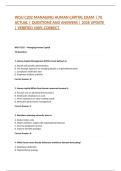
WGU C202 MANAGING HUMAN CAPITAL EXAM | 70
ACTUAL | QUESTIONS AND ANSWERS | 2026 UPDATE
| VERIFIED 100% CORRECT
WGU C202 – Managing Human Capital
70 Questions
1. Human Capital Management (HCM) is best defined as:
A. Payroll and benefits administration
B. The strategic approach to managing people as organizational assets
C. Compliance with labor laws
D. Employee relations activities
Correct Answer: B
2. Human capital differs from human resources because it:
A. Focuses only on administrative functions
B. Emphasizes employees as costs
C. Views employees as value-creating assets
D. Eliminates performance management
Correct Answer: C
3. Workforce planning primarily aims to:
A. Reduce labor costs
B. Match workforce supply with organizational demand
C. Increase employee turnover
D. Improve benefits packages
Correct Answer: B
4. Which factor most directly influences workforce demand forecasting?
A. Employee satisfaction
B. Organizational strategy
, C. Union contracts
D. Payroll budget
Correct Answer: B
5. A skills gap analysis is used to:
A. Measure employee satisfaction
B. Identify future leadership needs
C. Compare current employee skills with future needs
D. Calculate compensation equity
Correct Answer: C
6. Succession planning focuses on:
A. Replacing entry-level employees
B. Preparing internal candidates for key leadership roles
C. Outsourcing management positions
D. Reducing turnover
Correct Answer: B
7. Which recruiting method targets current employees for advancement?
A. External recruiting
B. Contingent staffing
C. Internal recruiting
D. Employment branding
Correct Answer: C
8. Employment branding is used to:
A. Market products
B. Improve payroll efficiency
C. Attract and retain talent
D. Increase union membership
Correct Answer: C
9. Which selection tool has the highest predictive validity for job performance?
A. Unstructured interviews
B. Personality tests
C. Cognitive ability tests
D. Reference checks
ACTUAL | QUESTIONS AND ANSWERS | 2026 UPDATE
| VERIFIED 100% CORRECT
WGU C202 – Managing Human Capital
70 Questions
1. Human Capital Management (HCM) is best defined as:
A. Payroll and benefits administration
B. The strategic approach to managing people as organizational assets
C. Compliance with labor laws
D. Employee relations activities
Correct Answer: B
2. Human capital differs from human resources because it:
A. Focuses only on administrative functions
B. Emphasizes employees as costs
C. Views employees as value-creating assets
D. Eliminates performance management
Correct Answer: C
3. Workforce planning primarily aims to:
A. Reduce labor costs
B. Match workforce supply with organizational demand
C. Increase employee turnover
D. Improve benefits packages
Correct Answer: B
4. Which factor most directly influences workforce demand forecasting?
A. Employee satisfaction
B. Organizational strategy
, C. Union contracts
D. Payroll budget
Correct Answer: B
5. A skills gap analysis is used to:
A. Measure employee satisfaction
B. Identify future leadership needs
C. Compare current employee skills with future needs
D. Calculate compensation equity
Correct Answer: C
6. Succession planning focuses on:
A. Replacing entry-level employees
B. Preparing internal candidates for key leadership roles
C. Outsourcing management positions
D. Reducing turnover
Correct Answer: B
7. Which recruiting method targets current employees for advancement?
A. External recruiting
B. Contingent staffing
C. Internal recruiting
D. Employment branding
Correct Answer: C
8. Employment branding is used to:
A. Market products
B. Improve payroll efficiency
C. Attract and retain talent
D. Increase union membership
Correct Answer: C
9. Which selection tool has the highest predictive validity for job performance?
A. Unstructured interviews
B. Personality tests
C. Cognitive ability tests
D. Reference checks