NR 305 Week 1 Discussion, Exploring the Nurses Role in Health Assessment
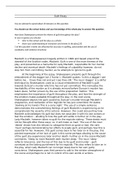
Week 1: Exploring the Nurse’s Role in Health Assessment (graded) 7070 unread replies. replies. This week's graded topics relate to the following Course Outcomes (COs). • (CO #1) - Utilize prior knowledge of theories and principles of nursing and related disciplines to explain expected client behaviors, while differentiating between normal findings, variations, and abnormalities. (PO #1) • (CO #5) - Explore the professional responsibilities involved in conducting a comprehensive health assessment and provide appropriate documentation. (PO #6) The nursing process is utilized in a variety of nursing roles and health care settings. Whether you are working in direct patient care, telehealth, or in a leadership role - the basic model is the same! Take this opportunity to share how the nursing process is utilized in your own practice settings! Hint: Your assigned readings will be helpful in formulating your answers. Please answer the following question in your initial post: Describe how you apply the first step (assessment) of the nursing process in your current practice setting. If you are not currently practicing as an RN, you may use an example from a prior clinical or work experience. Include the following information: • Briefly describe your practice setting and the typical patient population. • Provide examples of key subjective and objective data points you collect. • Describe how you document your findings. Is there technology involved? • Describe your process of data analysis. What is the end result of this process? (i.e., Do you formulate nursing diagnoses and care plans, collaborate with others and/or make referrals?) According to Weber and Kelley (2018) “Assessment is the first and most critical phase of the nursing process. If data collection is inadequate or inaccurate, incorrect nursing judgments may be made that adversely affect the remaining phases of the process: diagnosis, planning, implementation, and evaluation.” Currently I work on a 35 bed Acute Orthopedic trauma unit. The typical patient population varies but our most prominent population is post-operative patients following trauma. Our most common trauma is motor vehicle accidents and geriatric hip fractures due to falls. Patient length of stay is usually 3-5 days. During my initial assessment my subjective data would begin with verifying my current health history data and health concern according to the patient. I would also question the patient about current concerns or goals for the day. My objective data points include current set of vital signs, laboratory/radiology results and physical appearance of the patient, as well as a comprehensive physical assessment including fall risk and Braden scale. I document my findings in an electronic health record called Cerner works. I typically do my comprehensive physical assessment at the start of shift and then a focused assessment of lines/drains, wound/incision, vascular assessment and pain every four hours. After collecting and comparing my data from all sources I would formulate nursing plans of care and interventions needed. I would spend the rest of my shift focusing on patient and plan of care goals. The video from our lesson confirms the alarming trend I see during shift work. Doctors and nurses seem to be focused on computer data rather than the patient themselves. According to Lichstein (2015) “On the typical medical service, newly admitted patients are presented in a conference room or hallway where computers are readily accessible, and visits to the bedside tend to be brief—mainly for the attending physician to meet the patient and confirm important findings.” Typically I round with my physicians to report any abnormal or new concerns with the patient present. I find all too often the art of bedside rounding and assessment is fading. I try and encourage physician conversations with the patient to promote a sense of presence of the medical team. I believe bedside assessment improves patient outcomes and relevant information for plan of care. References Lichstein, P. R. (2015). Returning to the Bedside: Notes From a Clinical Educator. North Carolina Medical Journal, 76(3), pg.174. Retrieved from Weber, J.R. & Kelley, J.H. (2018). Health assessment in nursing (6th ed.). Philadelphia, PA: pg.3
Escuela, estudio y materia
- Institución
-
Chamberlain College Nursing
- Grado
-
NR 305 (NR305)
Información del documento
- Subido en
- 22 de enero de 2021
- Número de páginas
- 2
- Escrito en
- 2020/2021
- Tipo
- Caso
- Profesor(es)
- Professor
- Grado
- A+
Temas
- nr 305 week 1 discussion
-
exploring the nurses role in health assessment
-
week 1 exploring the nurse’s role in health assessment graded 7070 unread replies125125 replies this weeks graded topi

Documento también disponible en un lote