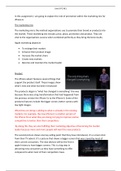
TCI (Therapeutic Crisis Intervention)
Training STUDY GUIDE
1. setting condition: anything that makes a challenging behavior more or less likely to happen
-organizational
-environmental
-Program related
-Personal
-Relationship based
2. a young person's inability to cope results in change in behavior: a crisis occurs when....
3. SUPPORT environmentally and emotionally to reduce stress and risk: first goal of crisis intervention
4. TEACH children better ways to cope with stress: 2nd goal of crisis intervention
5. baseline triggering event escalation phase outburst recovery: stress model of crisis
6. baseline, agitation, aggression, violence: stress model of crisis behaviors/staff intervention
7. higher order no change lower order: types of recovery phase
8. higher order: recovery phase where we are educators, we teach how to cope (educator)
9. no change: recovery phase where we are fire fighters, we resolve immediate situation but there is no long-term
change (fire fighter).
10. lower: recovery phase where we are abusers, the person is less able to man- age/cope and there is more distrust
toward others (abuser)
11. what am i feeling now?
This study source was downloaded by 100000899495562 from CourseHero.com on 06-07-2025 08:15:39 GMT -05:00
1/
4
https://www.coursehero.com/file/249934740/7167174-5docx/
Training STUDY GUIDE
1. setting condition: anything that makes a challenging behavior more or less likely to happen
-organizational
-environmental
-Program related
-Personal
-Relationship based
2. a young person's inability to cope results in change in behavior: a crisis occurs when....
3. SUPPORT environmentally and emotionally to reduce stress and risk: first goal of crisis intervention
4. TEACH children better ways to cope with stress: 2nd goal of crisis intervention
5. baseline triggering event escalation phase outburst recovery: stress model of crisis
6. baseline, agitation, aggression, violence: stress model of crisis behaviors/staff intervention
7. higher order no change lower order: types of recovery phase
8. higher order: recovery phase where we are educators, we teach how to cope (educator)
9. no change: recovery phase where we are fire fighters, we resolve immediate situation but there is no long-term
change (fire fighter).
10. lower: recovery phase where we are abusers, the person is less able to man- age/cope and there is more distrust
toward others (abuser)
11. what am i feeling now?
This study source was downloaded by 100000899495562 from CourseHero.com on 06-07-2025 08:15:39 GMT -05:00
1/
4
https://www.coursehero.com/file/249934740/7167174-5docx/