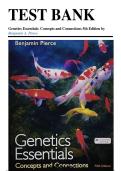
Test Bank:
Genetics Essentials Concepts And Connections
Benjamin A Pierce
5th Edition
,Table Of Content
Chapter 1: Introduction To Genetics
Chapter 2: Chromosomes And Cellular Reproduction
Chapter 3: Basic Principles Of Heredity
Chapter 4: Extensions And Modifications Of Basic Principles
Chapter 5: Linkage, Recombination, And Eukaryotic Gene Mapping
Chapter 6: Chromosome Variation
Chapter 7: Bacterial And Viral Genetic Systems
Chapter 8: Dna: The Chemical Nature Of The Gene
Chapter 9: Dna Replication And Recombination
Chapter 10: From Dna To Proteins: Transcription And Rna Processing
Chapter 11: From Dna To Proteins: Translation
Chapter 12: Control Of Gene Expression
Chapter 13: Gene Mutations, Transposable Elements, And Dna Repair
Chapter 14: Molecular Genetic Analysis And Biotechnology
Chapter 15: Genomics And Proteomics
Chapter 16: Cancer Genetics
Chapter 17: Quantitative Genetics
Chapter 18: Population And Evolutionary Genetics
,Test Bank For
Chapter 1: Introduction To Genetics
Multiple Choice Questions
1. Which One Of The Following Pairings Between The Sub Discipline Of Genetics And The
Phenomenon Is Incorrect?
a. Evolution—Population Genetics
b. Gene Regulation—Molecular Genetics
c. Allelic Frequency Alteration—Population Genetics
d. Arrangement Of Genes On Chromosome—Transmission Genetics
e. Chemical Nature Of The Gene—Transmission Genetics
Selected
Answer: E
Section: 1.1
Comprehension Question
2. Which One Of The Following Topic Of Resgeneearch Belongs To The Discipline Of Transmission Genetics?
a. Inheritance Pattern Of Gene Alleles
b. Mechanism Of Dna Replication
c. Gene Expression Patterns
d. Evolution
e. Chemical Modification Of Nucleic Acids
Selected
Answer: A
Section: 1.1
Comprehension Question
3. The Complete Genetic Makeup Of An Organism Is Referred To As Its
a. Chromosome.
b. Alleles.
c. Locus.
d. Genome.
e. Phenotype.
Selected Answer: D
Section: 1.1
Comprehension Question
4. Identify A True Statement From The Descriptions Concerning Genetics Below.
a. The Theory Of Pangenesis States That All Living Organisms Are Composed Of Cells.
b. Bacteria And Viruses Are Not Useful In Studying Genes And Inheritance Because They Are
Structurally And Metabolically Different From Eukaryotic Cells.
c. Charles Darwin Accurately Described The Laws Of Inheritance In His Landmark Book, On The
Origin Of Species.
d. Many Human Traits, Such As Skin And Hair Color, Are Determined By More Than A Single Gene.
, e. Evolution Can Occur Without Genetic Changes In The Population.
Selected Answer: D
Section: 1.1
Comprehension Question
5. Identify A False Statement From The Descriptions Of Genetics Below.
a. Humans First Applied Genetics To The Domestication Of Plants And Animals Between
Approximately 10,000 And 12,000 Years Ago.
b. Some Viruses Use Rna To Carry Their Genetic Information.
c. Albinism Results From A Mutation In The Genes That Control The Synthesis And Storage Of Melanin.
d. All Human Traits That Display Blending Inheritance Are Affected By Single Gene.
e. The Process By Which Genetic Information Is Copied And Decoded Is Similar For All Forms Of Life.
Selected Answer: D
Section: 1.1
Comprehension Question
6. Which Of The Following Species Is Considered A Model Genetic Organism?
a. The Plant, Linaria Vulgaris
b. The Deer Mouse, Peromyscus Maniculatus
c. The Worm, Caenorhabditis Elegans
d. The Frog, Hyla Chrysoscelis
e. The Chimpanzee, Pan Troglodytes
Selected
Answer: C
Section: 1.1
Comprehension Question
7. Which Of The Following Would Serve The Least Well As A Model For Understanding Basic
Mechanisms Of Inheritance?
a. Fruit Flies
b. Humans
c. Yeast
d. Mice
e. Zebrafish
Selected Answer: B
Section: 1.1
Comprehension Question
8. Which Of The Following Statements Is True?
a. Each Subdiscipline Of Genetics Is Very Specific As To What Is Explored And Does Not
Overlap With The Other Subdisciplines.
b. All Phenotypes Or Traits Are Always Determined By Multiple Genes.
c. Albinism Rises From The Overexpression Of The Gene That Controls The Synthesis And
Storage Of Melanin.
d. Humans Make Excellent Model Organisms, As A Variety Of Traits Are Well-Defined.
e. None Of The Statements Above Are True.
Genetics Essentials Concepts And Connections
Benjamin A Pierce
5th Edition
,Table Of Content
Chapter 1: Introduction To Genetics
Chapter 2: Chromosomes And Cellular Reproduction
Chapter 3: Basic Principles Of Heredity
Chapter 4: Extensions And Modifications Of Basic Principles
Chapter 5: Linkage, Recombination, And Eukaryotic Gene Mapping
Chapter 6: Chromosome Variation
Chapter 7: Bacterial And Viral Genetic Systems
Chapter 8: Dna: The Chemical Nature Of The Gene
Chapter 9: Dna Replication And Recombination
Chapter 10: From Dna To Proteins: Transcription And Rna Processing
Chapter 11: From Dna To Proteins: Translation
Chapter 12: Control Of Gene Expression
Chapter 13: Gene Mutations, Transposable Elements, And Dna Repair
Chapter 14: Molecular Genetic Analysis And Biotechnology
Chapter 15: Genomics And Proteomics
Chapter 16: Cancer Genetics
Chapter 17: Quantitative Genetics
Chapter 18: Population And Evolutionary Genetics
,Test Bank For
Chapter 1: Introduction To Genetics
Multiple Choice Questions
1. Which One Of The Following Pairings Between The Sub Discipline Of Genetics And The
Phenomenon Is Incorrect?
a. Evolution—Population Genetics
b. Gene Regulation—Molecular Genetics
c. Allelic Frequency Alteration—Population Genetics
d. Arrangement Of Genes On Chromosome—Transmission Genetics
e. Chemical Nature Of The Gene—Transmission Genetics
Selected
Answer: E
Section: 1.1
Comprehension Question
2. Which One Of The Following Topic Of Resgeneearch Belongs To The Discipline Of Transmission Genetics?
a. Inheritance Pattern Of Gene Alleles
b. Mechanism Of Dna Replication
c. Gene Expression Patterns
d. Evolution
e. Chemical Modification Of Nucleic Acids
Selected
Answer: A
Section: 1.1
Comprehension Question
3. The Complete Genetic Makeup Of An Organism Is Referred To As Its
a. Chromosome.
b. Alleles.
c. Locus.
d. Genome.
e. Phenotype.
Selected Answer: D
Section: 1.1
Comprehension Question
4. Identify A True Statement From The Descriptions Concerning Genetics Below.
a. The Theory Of Pangenesis States That All Living Organisms Are Composed Of Cells.
b. Bacteria And Viruses Are Not Useful In Studying Genes And Inheritance Because They Are
Structurally And Metabolically Different From Eukaryotic Cells.
c. Charles Darwin Accurately Described The Laws Of Inheritance In His Landmark Book, On The
Origin Of Species.
d. Many Human Traits, Such As Skin And Hair Color, Are Determined By More Than A Single Gene.
, e. Evolution Can Occur Without Genetic Changes In The Population.
Selected Answer: D
Section: 1.1
Comprehension Question
5. Identify A False Statement From The Descriptions Of Genetics Below.
a. Humans First Applied Genetics To The Domestication Of Plants And Animals Between
Approximately 10,000 And 12,000 Years Ago.
b. Some Viruses Use Rna To Carry Their Genetic Information.
c. Albinism Results From A Mutation In The Genes That Control The Synthesis And Storage Of Melanin.
d. All Human Traits That Display Blending Inheritance Are Affected By Single Gene.
e. The Process By Which Genetic Information Is Copied And Decoded Is Similar For All Forms Of Life.
Selected Answer: D
Section: 1.1
Comprehension Question
6. Which Of The Following Species Is Considered A Model Genetic Organism?
a. The Plant, Linaria Vulgaris
b. The Deer Mouse, Peromyscus Maniculatus
c. The Worm, Caenorhabditis Elegans
d. The Frog, Hyla Chrysoscelis
e. The Chimpanzee, Pan Troglodytes
Selected
Answer: C
Section: 1.1
Comprehension Question
7. Which Of The Following Would Serve The Least Well As A Model For Understanding Basic
Mechanisms Of Inheritance?
a. Fruit Flies
b. Humans
c. Yeast
d. Mice
e. Zebrafish
Selected Answer: B
Section: 1.1
Comprehension Question
8. Which Of The Following Statements Is True?
a. Each Subdiscipline Of Genetics Is Very Specific As To What Is Explored And Does Not
Overlap With The Other Subdisciplines.
b. All Phenotypes Or Traits Are Always Determined By Multiple Genes.
c. Albinism Rises From The Overexpression Of The Gene That Controls The Synthesis And
Storage Of Melanin.
d. Humans Make Excellent Model Organisms, As A Variety Of Traits Are Well-Defined.
e. None Of The Statements Above Are True.