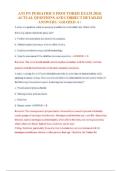
1. Which of the following is a classic sign of hyperthyroidism?
A. Weight gain
B. Cold intolerance
C. Tachycardia
D. Bradycardia
Answer: C) Tachycardia
Rationale: Hyperthyroidism is characterized by an overproduction
of thyroid hormones, leading to symptoms like tachycardia, heat
intolerance, and weight loss.
2. Which of the following is the most likely cause of anaphylactic
shock?
A. Blood loss
B. Allergic reaction
C. Bacterial infection
D. Spinal cord injury
Answer: B) Allergic reaction
Rationale: Anaphylactic shock is a severe allergic reaction that
causes vasodilation and fluid leakage, leading to hypotension and
shock.
3. Which of the following is a common sign of hypovolemic
shock?
A. Bradycardia
B. Tachycardia
C. Warm skin
D. Hypertension
Answer: B) Tachycardia
Rationale: In hypovolemic shock, blood volume decreases, and the
body compensates by increasing the heart rate (tachycardia) to
maintain blood flow to vital organs.
,4. What is the most common cause of secondary hypertension?
A. Excessive salt intake
B. Renal disease
C. High cholesterol levels
D. Alcohol consumption
Answer: B) Renal disease
Rationale: Secondary hypertension is often caused by another
condition, with renal disease being a leading factor due to
impaired kidney function affecting fluid balance and blood
pressure regulation.
5. What is the main cause of type 2 diabetes?
A. Insulin resistance
B. Insulin deficiency
C. Autoimmune destruction of beta cells
D. Excessive glucagon secretion
Answer: A) Insulin resistance
Rationale: Type 2 diabetes is primarily caused by insulin
resistance, where the body’s cells do not respond effectively to
insulin, leading to elevated blood glucose levels.
6. A patient with diabetes mellitus presents with polyuria,
polydipsia, and weight loss. What condition might these
symptoms indicate?
A. Diabetic ketoacidosis (DKA)
B. Hyperosmolar hyperglycemic state (HHS)
C. Hypoglycemia
D. Hypertension
Answer: A) Diabetic ketoacidosis (DKA)
Rationale: DKA occurs when insulin deficiency causes increased
glucose production and fat breakdown, leading to ketosis and
elevated blood glucose levels, which cause symptoms like
, polyuria, polydipsia, and weight loss.
7. What is a classic symptom of Parkinson’s disease?
A. Muscle rigidity
B. Hypotension
C. Polyuria
D. Weight gain
Answer: A) Muscle rigidity
Rationale: Parkinson’s disease is characterized by symptoms such
as muscle rigidity, tremors, and bradykinesia due to a loss of
dopaminergic neurons in the brain.
8. A patient is being treated for acute pancreatitis. What is a
common complication of this condition?
A. Renal failure
B. Chronic diarrhea
C. Hyperglycemia
D. Gallstones
Answer: A) Renal failure
Rationale: Acute pancreatitis can lead to systemic complications,
including renal failure, due to inflammation and the release of
digestive enzymes into the bloodstream.
9. Which electrolyte imbalance is most commonly associated with
chronic alcoholism?
A. Hyperkalemia
B. Hypokalemia
C. Hypercalcemia
D. Hypomagnesemia
Answer: D) Hypomagnesemia
Rationale: Chronic alcoholism leads to malabsorption of nutrients,
including magnesium, resulting in hypomagnesemia.
A. Weight gain
B. Cold intolerance
C. Tachycardia
D. Bradycardia
Answer: C) Tachycardia
Rationale: Hyperthyroidism is characterized by an overproduction
of thyroid hormones, leading to symptoms like tachycardia, heat
intolerance, and weight loss.
2. Which of the following is the most likely cause of anaphylactic
shock?
A. Blood loss
B. Allergic reaction
C. Bacterial infection
D. Spinal cord injury
Answer: B) Allergic reaction
Rationale: Anaphylactic shock is a severe allergic reaction that
causes vasodilation and fluid leakage, leading to hypotension and
shock.
3. Which of the following is a common sign of hypovolemic
shock?
A. Bradycardia
B. Tachycardia
C. Warm skin
D. Hypertension
Answer: B) Tachycardia
Rationale: In hypovolemic shock, blood volume decreases, and the
body compensates by increasing the heart rate (tachycardia) to
maintain blood flow to vital organs.
,4. What is the most common cause of secondary hypertension?
A. Excessive salt intake
B. Renal disease
C. High cholesterol levels
D. Alcohol consumption
Answer: B) Renal disease
Rationale: Secondary hypertension is often caused by another
condition, with renal disease being a leading factor due to
impaired kidney function affecting fluid balance and blood
pressure regulation.
5. What is the main cause of type 2 diabetes?
A. Insulin resistance
B. Insulin deficiency
C. Autoimmune destruction of beta cells
D. Excessive glucagon secretion
Answer: A) Insulin resistance
Rationale: Type 2 diabetes is primarily caused by insulin
resistance, where the body’s cells do not respond effectively to
insulin, leading to elevated blood glucose levels.
6. A patient with diabetes mellitus presents with polyuria,
polydipsia, and weight loss. What condition might these
symptoms indicate?
A. Diabetic ketoacidosis (DKA)
B. Hyperosmolar hyperglycemic state (HHS)
C. Hypoglycemia
D. Hypertension
Answer: A) Diabetic ketoacidosis (DKA)
Rationale: DKA occurs when insulin deficiency causes increased
glucose production and fat breakdown, leading to ketosis and
elevated blood glucose levels, which cause symptoms like
, polyuria, polydipsia, and weight loss.
7. What is a classic symptom of Parkinson’s disease?
A. Muscle rigidity
B. Hypotension
C. Polyuria
D. Weight gain
Answer: A) Muscle rigidity
Rationale: Parkinson’s disease is characterized by symptoms such
as muscle rigidity, tremors, and bradykinesia due to a loss of
dopaminergic neurons in the brain.
8. A patient is being treated for acute pancreatitis. What is a
common complication of this condition?
A. Renal failure
B. Chronic diarrhea
C. Hyperglycemia
D. Gallstones
Answer: A) Renal failure
Rationale: Acute pancreatitis can lead to systemic complications,
including renal failure, due to inflammation and the release of
digestive enzymes into the bloodstream.
9. Which electrolyte imbalance is most commonly associated with
chronic alcoholism?
A. Hyperkalemia
B. Hypokalemia
C. Hypercalcemia
D. Hypomagnesemia
Answer: D) Hypomagnesemia
Rationale: Chronic alcoholism leads to malabsorption of nutrients,
including magnesium, resulting in hypomagnesemia.