Pro serve AGLC – Questions & Expert Solutions
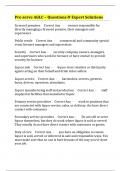
Licensed premises Correct Ans - owners responsible for
directly managing a licensed premise, their managers and
supervisors
Public resale Correct Ans - commercial and community special
event licensee managers and supervisors
Security Correct Ans - security company owners, managers,
and supervisors who work for licensee or have contact to provide
security for licensee
Liquor sale Correct Ans - liquor store retailers or third party
agents acting on their behalf and drink ticket sellers.
Liquor service Correct Ans - bartenders, servers, gresters,
hosts, drivers, operators, attendants.
Liquor manufacturing staff and production Correct Ans - staff
emplyed at facilities that manufactor liquor.
Primary service providers Correct Ans - work in positions that
are connected with liquor service, sales, or delivery. the have direct
contact with costumers
Secondary service providers Correct Ans - Do not sell or serve
liquor themselves, but they do work where liquor is sold or served.
They usually do not have direct contact with customers or guests.
Duty of care Correct Ans - you have an obligation to ensure
liquor is sold, served or delivered in safe and responsible ways. You
must make sure that no one is hurt because of the way you've done
your job.
, Duty of care Correct Ans - When following laws and policies to
do business or have an event.
When licensee staff report a problem with someone who may be
intoxicated by liquor or a drug.
To help staff or volunteers to slow liquor service as needed, and to
stop or refuse liquor service to people who appear intoxicated.
To help staff or volunteers respond to situations caused by
customers' problem behavior or guests who may be intoxicated.
To step in with a customer or guest who appears intoxicated but
insists on driving.
Training staff to make sure that liquor is not sold, served or given to
minors.
Duty of care for workers Correct Ans - A customer or guest
appears intoxicated when entering your place of work or the special
event you're volunteering at.
You have to stop or refuse liquor service to a customer or guest.
A customer who appears intoxicated leaves your place of work or
special event.
A guest who appears intoxicated tries to buy liquor or asks another
guest to buy or order liquor after service was stopped.
When a young-looking guest asks for a drink or drink ticket, tries to
buy liquor, or accepts delivery of liquor for someone else.
When you need to ask a customer who may be intoxicated to leave
your event or place of work.
You can exercise duty of care to your customers by: Correct Ans -
preventing them from getting intoxicated and
keeping them safe from harm and preventing them from doing harm
to other people.
Licensed premises Correct Ans - owners responsible for
directly managing a licensed premise, their managers and
supervisors
Public resale Correct Ans - commercial and community special
event licensee managers and supervisors
Security Correct Ans - security company owners, managers,
and supervisors who work for licensee or have contact to provide
security for licensee
Liquor sale Correct Ans - liquor store retailers or third party
agents acting on their behalf and drink ticket sellers.
Liquor service Correct Ans - bartenders, servers, gresters,
hosts, drivers, operators, attendants.
Liquor manufacturing staff and production Correct Ans - staff
emplyed at facilities that manufactor liquor.
Primary service providers Correct Ans - work in positions that
are connected with liquor service, sales, or delivery. the have direct
contact with costumers
Secondary service providers Correct Ans - Do not sell or serve
liquor themselves, but they do work where liquor is sold or served.
They usually do not have direct contact with customers or guests.
Duty of care Correct Ans - you have an obligation to ensure
liquor is sold, served or delivered in safe and responsible ways. You
must make sure that no one is hurt because of the way you've done
your job.
, Duty of care Correct Ans - When following laws and policies to
do business or have an event.
When licensee staff report a problem with someone who may be
intoxicated by liquor or a drug.
To help staff or volunteers to slow liquor service as needed, and to
stop or refuse liquor service to people who appear intoxicated.
To help staff or volunteers respond to situations caused by
customers' problem behavior or guests who may be intoxicated.
To step in with a customer or guest who appears intoxicated but
insists on driving.
Training staff to make sure that liquor is not sold, served or given to
minors.
Duty of care for workers Correct Ans - A customer or guest
appears intoxicated when entering your place of work or the special
event you're volunteering at.
You have to stop or refuse liquor service to a customer or guest.
A customer who appears intoxicated leaves your place of work or
special event.
A guest who appears intoxicated tries to buy liquor or asks another
guest to buy or order liquor after service was stopped.
When a young-looking guest asks for a drink or drink ticket, tries to
buy liquor, or accepts delivery of liquor for someone else.
When you need to ask a customer who may be intoxicated to leave
your event or place of work.
You can exercise duty of care to your customers by: Correct Ans -
preventing them from getting intoxicated and
keeping them safe from harm and preventing them from doing harm
to other people.