Hierarchical Databases
Introduction to Hierarchical Databases
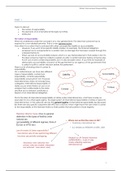
A Hierarchical Database organizes data in a tree-like structure, where each data
element (or record) is connected to a parent record and can have one or more
child records. The relationships between data are represented using a hierarchy,
much like a folder structure on a computer. This model is one of the earliest
database models and was used primarily in mainframe systems. It is still relevant
in specific use cases, such as XML data storage and certain business applications.
Key Features:
Parent-Child Relationship: Records are organized in a tree structure, with a
root element and child elements branching out.
Single Parent: Each child record has only one parent, and each parent can
have multiple children.
Hierarchical Structure: The structure follows a strict hierarchy, where data
is organized in levels, starting from the root node down to the leaves.
Characteristics of Hierarchical Databases
1. Tree-Like Structure:
o Data is represented in a tree format, with each record having a
parent node and zero or more child nodes. This tree structure makes
it easy to visualize and navigate complex datasets that have a natural
hierarchical order.
2. Fixed Relationships:
o The relationships between data elements are predefined. Each child
node can only have one parent, which can make it challenging to
represent more complex relationships or cross-references between
records.
3. Efficient for Specific Use Cases:
, o Hierarchical databases are highly efficient for applications where the
data has a strict hierarchical relationship, such as organizational
charts, file systems, or product categories.
4. Data Integrity:
o The parent-child relationships help maintain data integrity. When a
parent record is deleted, its child records are usually deleted as well,
ensuring that no orphaned data exists in the system.
5. Data Redundancy:
o Hierarchical databases can lead to redundancy in certain situations.
Since each child node only has one parent, it can be challenging to
share data across multiple parts of the hierarchy without duplicating
it.
Benefits of Hierarchical Databases
1. Efficient for Simple Relationships:
o For datasets that naturally fit a hierarchical model (e.g.,
organizational structures, directory services, taxonomies),
hierarchical databases can provide fast and efficient access to data.
2. Data Integrity:
o The strict parent-child relationship ensures that data integrity is
preserved, as each child record is tightly coupled with its parent. This
makes hierarchical databases suitable for applications where
maintaining consistent relationships is critical.
3. Easy Navigation:
o Navigating hierarchical data is intuitive, as it mirrors the structure of
real-world hierarchies. This makes it easy for users to understand and
interact with data that follows a clear hierarchy.
4. Fast Lookups:
o Hierarchical databases can provide fast lookups for data that fits the
hierarchical model. Searching for data within a specific branch or
subtree is often quick because of the structure.
Introduction to Hierarchical Databases
A Hierarchical Database organizes data in a tree-like structure, where each data
element (or record) is connected to a parent record and can have one or more
child records. The relationships between data are represented using a hierarchy,
much like a folder structure on a computer. This model is one of the earliest
database models and was used primarily in mainframe systems. It is still relevant
in specific use cases, such as XML data storage and certain business applications.
Key Features:
Parent-Child Relationship: Records are organized in a tree structure, with a
root element and child elements branching out.
Single Parent: Each child record has only one parent, and each parent can
have multiple children.
Hierarchical Structure: The structure follows a strict hierarchy, where data
is organized in levels, starting from the root node down to the leaves.
Characteristics of Hierarchical Databases
1. Tree-Like Structure:
o Data is represented in a tree format, with each record having a
parent node and zero or more child nodes. This tree structure makes
it easy to visualize and navigate complex datasets that have a natural
hierarchical order.
2. Fixed Relationships:
o The relationships between data elements are predefined. Each child
node can only have one parent, which can make it challenging to
represent more complex relationships or cross-references between
records.
3. Efficient for Specific Use Cases:
, o Hierarchical databases are highly efficient for applications where the
data has a strict hierarchical relationship, such as organizational
charts, file systems, or product categories.
4. Data Integrity:
o The parent-child relationships help maintain data integrity. When a
parent record is deleted, its child records are usually deleted as well,
ensuring that no orphaned data exists in the system.
5. Data Redundancy:
o Hierarchical databases can lead to redundancy in certain situations.
Since each child node only has one parent, it can be challenging to
share data across multiple parts of the hierarchy without duplicating
it.
Benefits of Hierarchical Databases
1. Efficient for Simple Relationships:
o For datasets that naturally fit a hierarchical model (e.g.,
organizational structures, directory services, taxonomies),
hierarchical databases can provide fast and efficient access to data.
2. Data Integrity:
o The strict parent-child relationship ensures that data integrity is
preserved, as each child record is tightly coupled with its parent. This
makes hierarchical databases suitable for applications where
maintaining consistent relationships is critical.
3. Easy Navigation:
o Navigating hierarchical data is intuitive, as it mirrors the structure of
real-world hierarchies. This makes it easy for users to understand and
interact with data that follows a clear hierarchy.
4. Fast Lookups:
o Hierarchical databases can provide fast lookups for data that fits the
hierarchical model. Searching for data within a specific branch or
subtree is often quick because of the structure.