Webast International Responsibility
PART 1
Topics to discuss:
• The notion of responsibility
• The elements of an International Wrongful Act (IWA)
• Attribution
The notion of responsibility
What we understand under the concept is at a very general level. The idea that someone has to
respond for a non-desired behavior. That is a very general notion.
Very often it is a notion that is confused with other concepts like: liability or accountability.
• However, if we want to be specific liability implies, for example, the financial obligation
someone has to compensate for a certain harm or damage that has been caused through the
undesired behavior.
• When we look at accountability instead, which is a very fashionable term; that relates in fact to
the idea someone might be called to explain or justify a certain behavior before someone else.
And it can involve a state responsibility, but it is also broader notion. If you think for example of
democratic accountability: a branch of the government or an agency of the government that
is called to justify a certain decision before the parliament.
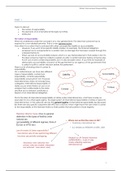
There is a lot of blurring when it comes to
responsibility.
On a national level, we have also different
types of responsibility: contractual
responsibility, criminal responsibility,
responsibility ensuing from tort. However,
international law does not include those
categories. International responsibility of
states occurs when there is an act or an
omission that is attributable to the state
and that act or omission constitutes a
breach of an international obligation.
That is the idea of international responsibility of states under international law. And there is really no
equivalent in any other legal regime. The legal system of international responsibility of states is typical to
international law. In this webcast will only the general regime of international responsibility be discussed.
But there are also specific subsystems like WTO-law or EU-law which might have the rules when it comes
to the responsibility of the Member States or State parties that are parties to those regimes.
1
, Webast International Responsibility
Where can we find these general rules on state responsibility?
• Very first answer is customary international law. The regime on international responsibility is quiet
an old one. And one that started developing especially around 1920s. However, at some point
the international communities started feeling the need for a systematization of all the rules
related to international responsibility of states. The project of the ILC started with codifying
already existing customary international law rules on state responsibility. Now we have the ILC
Articles on State Responsibility (ARSIWA/ARS). They are adopted by the UN General Assembly
and mostly reflecting customary international law.
• There are some rules within the ARS that are considered to be an expression of what is defined
as progressive development of international law. So, rules that are included in the General
Assembly Resolution are not yet customary international rules.
• To be clear: the resolution that has been adopted by the General Assembly including the ILC
Articles is non-binding per se. However, the rules contained into this resolution are mostly
reflecting customary international law.
The way that general regime of international responsibility of states is organized is around the division of
primary and secondary rules
• By primary rules we understand the substantive rules (e.g. prohibition of genocide)
o International law does not have a code for substantive rules (there is no Civil Code or
Penal Code). There are many different rules included in lots of different treaties.
• Secondary rules are rules on rules. These are rules that regulate the creation, interpretation and
the enforcement of primary rules.
• And that is also what we have in law of responsibility.
Distinction between Law of Treaties and State Responsibility
the Law of Treaties is there to understand when a State is bound by a certain treaty obligation and how
this should be interpreted. What happens when a treaty obligation is breached? There is a certain
overlap, because the Law on State Responsibility also looks at the consequences of international
responsibility from the violation of a treaty obligation.
However, those are two distinct regimes → e.g. A state can decide when faced with a material breach
of an international obligation included in a treaty to either suspend or terminate the treaty, if certain
requirements are fulfilled. This is on the VCLT. However, nothing prevents a state from requesting a
reparation deriving from material breach it has been faced with. Reparation relates to the law of state
responsibility.
Conclusion: These two regimes interact but they are logically and normatively distinct.
International Wrongful Acts (IWA)
Articles 1, 2 and 12 ASR: states responsible for an internationally wrongful act = two foundational
principles and three elements:
a) An act or an omission that is attributable to the State (subjective element) …
b) …That constitutes a breach of an international obligation (objective element) …
IWA o It can be a breach of a treaty obligation but also customary law obligation
c) …In the absence of any valid justifications of non-performance
o Circumstances precluding wrongfulness
We have 2 foundational principles
- The first one is that an act or omission is attributable to the state
- The second one is that that act/omission constitutes an IWA
o And for this to happen, you need two elements: (1) breach, (2) no valid justification
NB: What constitutes IWA = determined in terms of international law, not by domestic law (art. 3 ASR)
Attribution to the state; conduct of organs of the state
The state is an abstract entity: its acts are always carried out by organs (representatives)
General rule: state will be responsible for behaviour of its organs (art. 4 ARS) including for
• Conduct of organs placed at the disposal of a state by another state (art. 6 ARS)
o E.g. a state does not have enough marines and it requires a neighbouring state to
‘borrow’ a group of marines to conduct certain activities in its territorial sea. During
these activities a breach of an international obligation occurs via the marines that
2
PART 1
Topics to discuss:
• The notion of responsibility
• The elements of an International Wrongful Act (IWA)
• Attribution
The notion of responsibility
What we understand under the concept is at a very general level. The idea that someone has to
respond for a non-desired behavior. That is a very general notion.
Very often it is a notion that is confused with other concepts like: liability or accountability.
• However, if we want to be specific liability implies, for example, the financial obligation
someone has to compensate for a certain harm or damage that has been caused through the
undesired behavior.
• When we look at accountability instead, which is a very fashionable term; that relates in fact to
the idea someone might be called to explain or justify a certain behavior before someone else.
And it can involve a state responsibility, but it is also broader notion. If you think for example of
democratic accountability: a branch of the government or an agency of the government that
is called to justify a certain decision before the parliament.
There is a lot of blurring when it comes to
responsibility.
On a national level, we have also different
types of responsibility: contractual
responsibility, criminal responsibility,
responsibility ensuing from tort. However,
international law does not include those
categories. International responsibility of
states occurs when there is an act or an
omission that is attributable to the state
and that act or omission constitutes a
breach of an international obligation.
That is the idea of international responsibility of states under international law. And there is really no
equivalent in any other legal regime. The legal system of international responsibility of states is typical to
international law. In this webcast will only the general regime of international responsibility be discussed.
But there are also specific subsystems like WTO-law or EU-law which might have the rules when it comes
to the responsibility of the Member States or State parties that are parties to those regimes.
1
, Webast International Responsibility
Where can we find these general rules on state responsibility?
• Very first answer is customary international law. The regime on international responsibility is quiet
an old one. And one that started developing especially around 1920s. However, at some point
the international communities started feeling the need for a systematization of all the rules
related to international responsibility of states. The project of the ILC started with codifying
already existing customary international law rules on state responsibility. Now we have the ILC
Articles on State Responsibility (ARSIWA/ARS). They are adopted by the UN General Assembly
and mostly reflecting customary international law.
• There are some rules within the ARS that are considered to be an expression of what is defined
as progressive development of international law. So, rules that are included in the General
Assembly Resolution are not yet customary international rules.
• To be clear: the resolution that has been adopted by the General Assembly including the ILC
Articles is non-binding per se. However, the rules contained into this resolution are mostly
reflecting customary international law.
The way that general regime of international responsibility of states is organized is around the division of
primary and secondary rules
• By primary rules we understand the substantive rules (e.g. prohibition of genocide)
o International law does not have a code for substantive rules (there is no Civil Code or
Penal Code). There are many different rules included in lots of different treaties.
• Secondary rules are rules on rules. These are rules that regulate the creation, interpretation and
the enforcement of primary rules.
• And that is also what we have in law of responsibility.
Distinction between Law of Treaties and State Responsibility
the Law of Treaties is there to understand when a State is bound by a certain treaty obligation and how
this should be interpreted. What happens when a treaty obligation is breached? There is a certain
overlap, because the Law on State Responsibility also looks at the consequences of international
responsibility from the violation of a treaty obligation.
However, those are two distinct regimes → e.g. A state can decide when faced with a material breach
of an international obligation included in a treaty to either suspend or terminate the treaty, if certain
requirements are fulfilled. This is on the VCLT. However, nothing prevents a state from requesting a
reparation deriving from material breach it has been faced with. Reparation relates to the law of state
responsibility.
Conclusion: These two regimes interact but they are logically and normatively distinct.
International Wrongful Acts (IWA)
Articles 1, 2 and 12 ASR: states responsible for an internationally wrongful act = two foundational
principles and three elements:
a) An act or an omission that is attributable to the State (subjective element) …
b) …That constitutes a breach of an international obligation (objective element) …
IWA o It can be a breach of a treaty obligation but also customary law obligation
c) …In the absence of any valid justifications of non-performance
o Circumstances precluding wrongfulness
We have 2 foundational principles
- The first one is that an act or omission is attributable to the state
- The second one is that that act/omission constitutes an IWA
o And for this to happen, you need two elements: (1) breach, (2) no valid justification
NB: What constitutes IWA = determined in terms of international law, not by domestic law (art. 3 ASR)
Attribution to the state; conduct of organs of the state
The state is an abstract entity: its acts are always carried out by organs (representatives)
General rule: state will be responsible for behaviour of its organs (art. 4 ARS) including for
• Conduct of organs placed at the disposal of a state by another state (art. 6 ARS)
o E.g. a state does not have enough marines and it requires a neighbouring state to
‘borrow’ a group of marines to conduct certain activities in its territorial sea. During
these activities a breach of an international obligation occurs via the marines that
2