Essentials of
Pediatric
Nursing -
Chapter 19
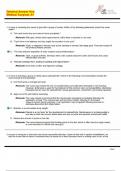
, The parent of a 12-year-old child with Reye syndrome approaches the nurse wanting to
know how this happened to the child, saying, "I never give my children aspirin!" What
could the nurse say to begin educating the parent? - "Sometimes it is hard to tell what
products may contain aspirin."
Explanation:
Salicylates are in a wide variety of products, so consumers must read the small print
very carefully or they will miss the warning. Two common medications containing
salicylates are bismuth subsalicylate and effervescent heartburn relief anti-acid. The
parent needs to be receptive to further education, and raising the possibility the child
was responsible does not accomplish that goal. The nurse should not state the obvious,
but also should not minimize the situation. Encouraging the parent to ask for information
and offering explanations in terms the parent will understand are important, but this
response does not address the parent's assertion. Telling the parent not to worry is
offering platitudes and false reassurance. Giving the description of what complications
that could happen with the disease would be inappropriate. This would only exacerbate
the parent's concern, and it does not address how the child ingested salicylates.
A 1-year-old infant has just undergone surgery to correct craniosynostosis. Which
comment is the best psychosocial intervention for the parents? - "The surgery was
successful. Do you have any questions?"
Explanation:
Often what parents need most is someone to listen to their concerns. Although this is a
good time for education, the parents are more concerned about the success of the
surgery than their infant's appearance. Watching the hemoglobin, hematocrit and
swelling are important nursing functions but they do not address the parents
psychosocial needs. The parents do not need to to be taught statistics about their
infant's condition. They more than likely know this from health care provider visits, the
internet and parent support groups. Following surgery this knowledge is not what
parents are concerned about. Parents want to know their infant is safe and well.
The nurse is educating the family of a 7-year-old with epilepsy about care and safety for
this child. What comment will be most valuable in helping the parent and the child cope?
- "Use this information to teach family and friends."
Explanation:
Families need and want information they can share with relatives, childcare providers,
and teachers. Wearing a helmet and having a monitor in the room are precautions that
may need to be modified as the child matures. The boy may be able to bike ride and
swim with proper precautions.
The nurse is educating parents of a male infant with Chiari type II malformation. Which
statement about their child's condition is most accurate? - "Take your time feeding your
baby."
Pediatric
Nursing -
Chapter 19
, The parent of a 12-year-old child with Reye syndrome approaches the nurse wanting to
know how this happened to the child, saying, "I never give my children aspirin!" What
could the nurse say to begin educating the parent? - "Sometimes it is hard to tell what
products may contain aspirin."
Explanation:
Salicylates are in a wide variety of products, so consumers must read the small print
very carefully or they will miss the warning. Two common medications containing
salicylates are bismuth subsalicylate and effervescent heartburn relief anti-acid. The
parent needs to be receptive to further education, and raising the possibility the child
was responsible does not accomplish that goal. The nurse should not state the obvious,
but also should not minimize the situation. Encouraging the parent to ask for information
and offering explanations in terms the parent will understand are important, but this
response does not address the parent's assertion. Telling the parent not to worry is
offering platitudes and false reassurance. Giving the description of what complications
that could happen with the disease would be inappropriate. This would only exacerbate
the parent's concern, and it does not address how the child ingested salicylates.
A 1-year-old infant has just undergone surgery to correct craniosynostosis. Which
comment is the best psychosocial intervention for the parents? - "The surgery was
successful. Do you have any questions?"
Explanation:
Often what parents need most is someone to listen to their concerns. Although this is a
good time for education, the parents are more concerned about the success of the
surgery than their infant's appearance. Watching the hemoglobin, hematocrit and
swelling are important nursing functions but they do not address the parents
psychosocial needs. The parents do not need to to be taught statistics about their
infant's condition. They more than likely know this from health care provider visits, the
internet and parent support groups. Following surgery this knowledge is not what
parents are concerned about. Parents want to know their infant is safe and well.
The nurse is educating the family of a 7-year-old with epilepsy about care and safety for
this child. What comment will be most valuable in helping the parent and the child cope?
- "Use this information to teach family and friends."
Explanation:
Families need and want information they can share with relatives, childcare providers,
and teachers. Wearing a helmet and having a monitor in the room are precautions that
may need to be modified as the child matures. The boy may be able to bike ride and
swim with proper precautions.
The nurse is educating parents of a male infant with Chiari type II malformation. Which
statement about their child's condition is most accurate? - "Take your time feeding your
baby."