

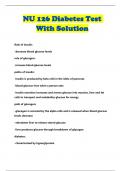
NU 126 Diabetes Test
With Solution
Role of insulin:
-decrease blood glucose levels
role of glucagon:
-increase blood glucose levels
patho of insulin:
-insulin is produced by beta cells in the islets of pancreas
-blood glucose rises when a person eats
-insulin secretion increases and moves glucose into muscles, liver and fat
cells to transport and metabolize glucose for energy
path of glucagon:
-glucagon is secreted by the alpha cells and is released when blood glucose
levels decrease
-stimulates liver to release stored glucose
-liver produces glucose through breakdown of glycogen
diabetes:
-characterized by hyperglycemia
,-disorder of carb, fat, and protein metabolism
glucose regulation:
-maintaining optimal blood glucose levels
diabetes can result from:
-abnormal insulin secretion by the pancreas
-impairment in the body's ability to use insulin
-impaired liver functioning
types of diabetes:
-type 1
-type 2
-type 3
-latent autoimmune diabetes of adults
-GD
-prediabetes
type 1 DM:
*NO INSULIN PRODUCTION*
-typically affects young children/early puberty
, -from beta cell destruction leading to absolute insulin deficiency
-glucose derived from food cannot be stored in the liver
-genetic disposition
-will need insulin injections for life
-ketosis prone
type 2 DM:
*SOME INSULIN PRODUCTION*
-results from lifestyle, fmh
-decreased sensitivity to insulin and impaired beta cell function result in
decreased insulin production
-may develop hyperglycemic hyperosmolar syndrome
in DM2, insulin resistance can lead to:
With Solution
Role of insulin:
-decrease blood glucose levels
role of glucagon:
-increase blood glucose levels
patho of insulin:
-insulin is produced by beta cells in the islets of pancreas
-blood glucose rises when a person eats
-insulin secretion increases and moves glucose into muscles, liver and fat
cells to transport and metabolize glucose for energy
path of glucagon:
-glucagon is secreted by the alpha cells and is released when blood glucose
levels decrease
-stimulates liver to release stored glucose
-liver produces glucose through breakdown of glycogen
diabetes:
-characterized by hyperglycemia
,-disorder of carb, fat, and protein metabolism
glucose regulation:
-maintaining optimal blood glucose levels
diabetes can result from:
-abnormal insulin secretion by the pancreas
-impairment in the body's ability to use insulin
-impaired liver functioning
types of diabetes:
-type 1
-type 2
-type 3
-latent autoimmune diabetes of adults
-GD
-prediabetes
type 1 DM:
*NO INSULIN PRODUCTION*
-typically affects young children/early puberty
, -from beta cell destruction leading to absolute insulin deficiency
-glucose derived from food cannot be stored in the liver
-genetic disposition
-will need insulin injections for life
-ketosis prone
type 2 DM:
*SOME INSULIN PRODUCTION*
-results from lifestyle, fmh
-decreased sensitivity to insulin and impaired beta cell function result in
decreased insulin production
-may develop hyperglycemic hyperosmolar syndrome
in DM2, insulin resistance can lead to:


