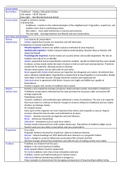
Conservatism
Key thinkers Traditional – Hobbes, Oakeshott & Burke
One nation – NO KT Disraeli
New right – Neo liberals Rand and Nozick
Conservatism Sought to conserve society.
3 dichotomies
- Traditional – reaction to the rational principles of the enlightenment. Pragmatism, empiricism, and
tradition were vital in maintaining society.
- One-nation – more state interference in society and economy.
- The new right – marriage between neo-liberals and neo-conservatives.
Core ideas and principles
Human - Core feature of conservatism.
imperfection - Hobbes argued than humans are imperfect and self-interested.
3 categories on human imperfection:
- Morally imperfect: humans are selfish creatures motivated by base impulses.
- Intellectually imperfect: reality is beyond rational understanding. Abstract ideas or theories will
always be flawed.
- Psychologically imperfect: Human nature are security driven and socially dependant. We rely on
tradition and culture for an identity.
- Hobbes argued that human imperfection cannot be avoided. He did not think that they were wholly
irrational, as they would realise the state of nature as hell on earth and need protection. Therefore
would look for authority. Allowing society to develop.
- Humans desire power and are distrustful of each other.
- Burke argued with Hobbes that humans are imperfect but disagreed over extent. He believed they
were ruthlessly individualistic; imperfection compels them to band together in communities. People
more likely to fail than succeed. Change should be cautious and empirically led.
- Oakeshott more in agreement with Burke. Humans are fragile and fallible but capable of
benevolence.
- Society is organic and consists of traditions and customs.
Organic - Society is not created but emerges and grows. State precedes society. Grounded in empiricism.
society/state - Traditional conservatives: believed that the state provides the necessary order and society will
emerge organically
- Maintaining society
- Customs, traditions, and institutions give individuals a sense of rootedness. The stat is an organism
that must evolve to continue to flourish. Change to conserve influences traditional and one nation.
- Inaction can damage society.
- An unequal society
- Some parts of the organism are more important than others and inequality is natural. Organic
society is hierarchal natural order each individual has its place.
- Hobbes – absolute monarchy arranged by rank and influence.
- Burke – aristocracy should lead.
- Oakeshott – institutions such as Lords from reform.
- Society remains hierarchal even with modern democracy. Paternalism of Noblesse oblige can be
found in post war one-nation conservatism and neo-conservatism.
Pragmatism - Core value.
- Pragmatic thinkers informed by empiricism, distrust of abstract theories.
- Disraeli – Artisan Dwellings act 1875 dealt with slum clearance in a pragmatic fashion.
- Burke’s change to conserve influenced conservative PMs: Disraeli and Peel.
- All these changes derived from empiricism and with the aim of making society more stable.
Tradition - Traditions are wisdom from the past.
- Religion is the most important tradition
- Burke argued atheism must be suppressed.
- For burke traditions were vital as they embodied continuity
- Tradition, custom and habit should govern human nature.
- Oakeshott believed abandoning tradition is dangerous.
- Many examples to demonstrate the damaging consequences of long-standing tradition being
Key thinkers Traditional – Hobbes, Oakeshott & Burke
One nation – NO KT Disraeli
New right – Neo liberals Rand and Nozick
Conservatism Sought to conserve society.
3 dichotomies
- Traditional – reaction to the rational principles of the enlightenment. Pragmatism, empiricism, and
tradition were vital in maintaining society.
- One-nation – more state interference in society and economy.
- The new right – marriage between neo-liberals and neo-conservatives.
Core ideas and principles
Human - Core feature of conservatism.
imperfection - Hobbes argued than humans are imperfect and self-interested.
3 categories on human imperfection:
- Morally imperfect: humans are selfish creatures motivated by base impulses.
- Intellectually imperfect: reality is beyond rational understanding. Abstract ideas or theories will
always be flawed.
- Psychologically imperfect: Human nature are security driven and socially dependant. We rely on
tradition and culture for an identity.
- Hobbes argued that human imperfection cannot be avoided. He did not think that they were wholly
irrational, as they would realise the state of nature as hell on earth and need protection. Therefore
would look for authority. Allowing society to develop.
- Humans desire power and are distrustful of each other.
- Burke argued with Hobbes that humans are imperfect but disagreed over extent. He believed they
were ruthlessly individualistic; imperfection compels them to band together in communities. People
more likely to fail than succeed. Change should be cautious and empirically led.
- Oakeshott more in agreement with Burke. Humans are fragile and fallible but capable of
benevolence.
- Society is organic and consists of traditions and customs.
Organic - Society is not created but emerges and grows. State precedes society. Grounded in empiricism.
society/state - Traditional conservatives: believed that the state provides the necessary order and society will
emerge organically
- Maintaining society
- Customs, traditions, and institutions give individuals a sense of rootedness. The stat is an organism
that must evolve to continue to flourish. Change to conserve influences traditional and one nation.
- Inaction can damage society.
- An unequal society
- Some parts of the organism are more important than others and inequality is natural. Organic
society is hierarchal natural order each individual has its place.
- Hobbes – absolute monarchy arranged by rank and influence.
- Burke – aristocracy should lead.
- Oakeshott – institutions such as Lords from reform.
- Society remains hierarchal even with modern democracy. Paternalism of Noblesse oblige can be
found in post war one-nation conservatism and neo-conservatism.
Pragmatism - Core value.
- Pragmatic thinkers informed by empiricism, distrust of abstract theories.
- Disraeli – Artisan Dwellings act 1875 dealt with slum clearance in a pragmatic fashion.
- Burke’s change to conserve influenced conservative PMs: Disraeli and Peel.
- All these changes derived from empiricism and with the aim of making society more stable.
Tradition - Traditions are wisdom from the past.
- Religion is the most important tradition
- Burke argued atheism must be suppressed.
- For burke traditions were vital as they embodied continuity
- Tradition, custom and habit should govern human nature.
- Oakeshott believed abandoning tradition is dangerous.
- Many examples to demonstrate the damaging consequences of long-standing tradition being