Advanced Pharmacology verified and guaranteed pass
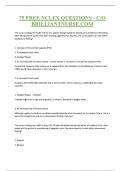
Advanced Pharmacology verified and guaranteed pass A 38-year-old pregnant patient admits to the Nurse Practitioner that she is an alcoholic and has been consuming alcohol during her pregnancy. The nurse knows that using alcohol during pregnancy may result in a child who presents with a high-pitched cry microcephaly an electrolyte imbalance thrombocytopenia - microcephaly An immunocompromised patient in a critical care setting has developed a respiratory infection that has been attributed to methicillin-resistant Staphylococcus aureus (MRSA). The nurse should anticipate that the patient will require treatment with ciprofloxacin clindamycin vancomycin an antistaphylococcic penicillin - vancomycin A patient has endocarditis and is taking gentamicin. The Nurse Practitioner will be sure to monitor which of the following? Potassium level Creatinine clearance Serum albumin level Prothrombin time - creatinine clearance A male patient is trying to decide if he should use finasteride (Proscar) to treat benign prostatic hypertrophy (BPH). When providing information about the drug, the nurse will include which of the following as a risk associated with finasteride therapy? Excess fluid volume related to potential effects of drug therapy Hypercalcemia related to drug therapy, immobility, and breast cancer Sexual dysfunction related to erectile dysfunction Prostatic neoplasia - prostatic neoplasia Baby Jasmine is a 5 mth old breastfed infant with a fever. Treatment for her fever may include: Acetaminophen suppository "baby" aspirin Ibuprofen suppository Alternating acetaminophen and ibuprofen - alternating acetaminophen and ibuprofen A 66-year-old woman has experienced a significant decline in her quality of life as a result of worsening rheumatoid arthritis. Her physician has prescribed etanercept and the APRN is responsible for facilitating this new aspect of the patient's drug regimen. This will involve the administration of weekly subcutaneous injections daily, oral administration weekly administration of an enteric coated tablet daily, outpatient intravenous therapy - weekly subcutaneous injections Phenytoin decreases folic acid absorption by altering in the pH of the stomach Increasing gastric emptying time Inhibiting intestinal enzymes require for folic acid absorption Chelation of the folic acid into inactive ingredients - inhibiting intestinal enzymes require for folic acid absorption Ms. Lewis Is in 74-year-old female who presents to your clinic for routine visit today. You review her medical record and notice she is prescribed aspirin therapy. You provide patient education regarding the signs of aspirin toxicity. An early sign of aspirin toxicity is: Tremors Vomiting Tinnitus Black, tarry stools - Vomiting A 34-year-old male has been diagnosed with TB and will be started on INH therapy. The medication history reveals that he currently takes antacids on a regular basis. The nurse will instruct the patient to take antacids during the day and INH only at night antacids before meals and INH 1 or 2 hours after meals INH before meals and antacids 1 or 2 hours after meals antacids not less than 1 hour before or 2 hours after taking INH - antacids not less than 1 hour before or 2 hours after taking INH The NP has just placed Mr. Johnson on a selective serotonin reuptake inhibitor. What symptoms should be reviewed with the patient who is newly prescribed this class of medication? They will no longer have dreams they could feel a bit of nausea, but this will resolve in about a week or so They Will have excessive flatus They may have insomnia but only for about a week - they may have insomnia but only for about a week The nurse practitioner, Jill, is deciding what medication to put her patient on. She recognizes that the mechanism of action of triptans is as: a Selective serotonin receptor agonist A dopamine antagonist A vasoconstrictor An inhibitor of leukotriene synthesis - a selective serotonin receptor agonist When planning care for a patient who is receiving filgrastim (Neupogen) for a non-myeloid malignancy, the nurse should formulate which of the following patient outcomes? (Select all that apply.) The patient will not develop an infection The patient will not experience bone pain The patient will be able to self-administer filgrastim at home The patient will not develop febrile neutropenia The patient will not retain fluid - The patient will not develop an infection The patient will not experience bone pain The patient will be able to self-administer filgrastim at home The patient will not develop febrile neutropenia What is the best initial treatment plan for a sleep disorder in the older adult patient? Medicate with amitriptyline (Elavil) Medicate with trazodone (Desyrel) Decrease noise and light in the environment Discuss the importance of naps daily - Decrease noise and light in the environment A 46-year-old man is receiving a quinupristin/dalfopristin IV infusion for a lifethreatening infection. Which of the following would be most important for the nurse to monitor? Increased heart rate Breathlessness Infiltration, edema, or phlebitis at the infusion site Nausea and vomiting - Infiltration, edema, or phlebitis at the infusion site A Nurse Practitioner will instruct a patient taking allopurinol to take each dose at night first thing in the morning after a meal before a meal - after a meal Nurse Practitioner
Escuela, estudio y materia
- Institución
- Advanced Pharmacology
- Grado
- Advanced Pharmacology
Información del documento
- Subido en
- 15 de junio de 2024
- Número de páginas
- 35
- Escrito en
- 2023/2024
- Tipo
- Examen
- Contiene
- Preguntas y respuestas
Temas
- advanced pharmacology
-
advanced pharmacology verified and guaranteed pass
-
advanced pharmacology verified
-
advanced pharmacology verified and guaranteed pass
-
advanced pharmacology verified and guarantee