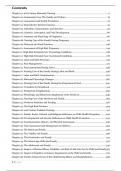
Test Bank Maternal Child Nursing Care 2nd Edition Ward HisleyContents
Chapter 01: 21st Century Maternity Nursing ....................................................................................... 2 Chapter 02: Community Care: The Family and Culture .................................................................... 16 Chapter 03: Assessment and Health Promotion ................................................................................ 25 Chapter 04: Reproductive System Concerns...................................................................................... 42 Chapter 05: Infertility, Contraception, and Abortion ........................................................................ 62 Chapter 06: Genetics, Conception, and Fetal Development ............................................................. 80 Chapter 07: Anatomy and Physiology of Pregnancy .......................................................................... 96 Chapter 08: Nursing Care of the Family During Pregnancy ............................................................. 111 Chapter 09: Maternal and Fetal Nutrition ....................................................................................... 128 Chapter 10: Assessment of High Risk Pregnancy ............................................................................ 144 Chapter 11: High Risk Perinatal Care: Preexisting Conditions ........................................................ 158 Chapter 12: High Risk Perinatal Care: Gestational Conditions ....................................................... 178 Chapter 13: Labor and Birth Processes ............................................................................................ 199 Chapter 14: Pain Management ..........................................................................................................211 Chapter 15: Fetal Assessment During Labor ................................................................................... 228 Chapter 16: Nursing Care of the Family During Labor and Birth ....................................................246 Chapter 17: Labor and Birth Complications ..................................................................................... 270 Chapter 18: Maternal Physiologic Changes ...................................................................................... 287 Chapter 19: Nursing Care of the Family During the Postpartum Period ........................................ 300 Chapter 20: Transition to Parenthood ............................................................................................. 314 Chapter 21: Postpartum Complications ........................................................................................... 329 Chapter 22: Physiologic and Behavioral Adaptations of the Newborn ............................................ 346 Chapter 23: Nursing Care of the Newborn and Family .................................................................... 365 Chapter 24: Newborn Nutrition and Feeding .................................................................................. 376 Chapter 25: The High Risk Newborn ............................................................................................... 394 Chapter 26: 21st Century Pediatric Nursing .................................................................................... 417 Chapter 27: Family, Social, Cultural, and Religious Influences on Child Health Promotion ..........424 Chapter 28: Developmental and Genetic Influences on Child Health Promotion........................... 432 Chapter 29: Communication, History, and Physical Assessment ....................................................446 Chapter 30: Pain Assessment and Management in Children .......................................................... 465 Chapter 31: The Infant and Family .................................................................................................. 476 Chapter 32: The Toddler and Family .............................................................................................. 496 Chapter 33: The Preschooler and Family ......................................................................................... 514 Chapter 34: The School-Age Child and Family ................................................................................ 527 Chapter 35: The Adolescent and Family .......................................................................................... 542 Chapter 36: Impact of Chronic Illness, Disability, and End-of-Life Care for the Child and Family 563 Chapter 37: Impact of Cognitive or Sensory Impairment on the Child and Family ........................ 579 Chapter 38: Family-Centered Care of the Child During Illness and Hospitalization ......................598
1 | P a g eChapter 39: Pediatric Variations of Nursing Interventions ............................................................ 609
Chapter 40: Respiratory Dysfunction .............................................................................................. 631
Chapter 41: Gastrointestinal Dysfunction ....................................................................................... 648
Chapter 42: Cardiovascular Dysfunction ........................................................................................ 669
Chapter 43: Hematologic and Immunologic Dysfunction ............................................................... 693
Chapter 44: Cancer ........................................................................................................................... 715
Chapter 45: Genitourinary Dysfunction ........................................................................................... 738
Chapter 46: Cerebral Dysfunction .................................................................................................... 753
Chapter 47: Endocrine Dysfunction ................................................................................................. 773
Chapter 48: Musculoskeletal or Articular Dysfunction ...................................................................788
Chapter 49: Neuromuscular or Muscular Dysfunction ................................................................... 803
Chapter 01: 21st Century Maternity Nursing
MULTIPLE CHOICE
1.
When providing care for a pregnant woman, the nurse should be aware that one of the
most frequently reported maternal medical risk factors is:
a.
Diabetes mellitus.
b.
ANS: A
The most frequently reported maternal medical risk factors are diabetes and hypertension
associated with pregnancy. Both of these conditions are associated with maternal obesity. There
are no studies that indicate MVP is among the most frequently reported maternal risk factors.
Hypertension associated with pregnancy, not chronic hypertension, is one of the most frequently
reported maternal medical risk factors. Although anemia is a concern in pregnancy, it is not one
of the most frequently reported maternal medical risk factors in pregnancy.
PTS: 1 DIF: Cognitive Level: Knowledge REF: 6
OBJ: Nursing Process: Assessment MSC: Client Needs: Physiologic Integrity
2.
Mitral valve prolapse (MVP).
c. Chronic hypertension.
d.
Anemia.
To ensure optimal outcomes for the patient, the contemporary maternity nurse must
incorporate both teamwork and communication with clinicians into her care delivery, The SBAR
technique of communication is an easy-to-remember mechanism for communication. Which of
the following correctly defines this acronym?
a.
b.
c.
d.
ANS: B
2 | P a g e
Situation, baseline assessment, response
Situation, background, assessment, recommendation
Subjective background, assessment, recommendation
Situation, background, anticipated recommendationThe situation, background, assessment, recommendation (SBAR) technique provides a specific
framework for communication among health care providers. Failure to communicate is one of the
major reasons for errors in health care. The SBAR technique has the potential to serve as a means
to reduce errors.
PTS: 1 DIF: Cognitive Level: Comprehension REF: 14
OBJ: Nursing Process: Assessment, Planning
MSC: Client Needs: Safe and Effective Care Environment
3. The role of the professional nurse caring for childbearing families has evolved to emphasize:
a.
Providing care to patients directly at the bedside.
b.
c.
d.
ANS: C
Professional nurses are part of the team of health care providers who collaboratively care for
patients throughout the childbearing cycle. Providing care to patients directly at the bedside is
one of the nurses tasks; however, it does not encompass the concept of the evolved professional
nurse. Throughout the prenatal period, nurses care for women in clinics and physicians offices
and teach classes to help families prepare for childbirth. Nurses also care for childbearing families
in birthing centers and in the home. Nurses have been critically important in developing
strategies to improve the well-being of women and their infants and have led the efforts to
implement clinical practice guidelines using an evidence-based approach. Maternity patients have
experienced a decreased, rather than an increased, length of stay over the past 2 decades.
PTS: 1 DIF: Cognitive Level: Comprehension REF: 1
OBJ: Nursing Process: Implementation
MSC: Client Needs: Safe and Effective Care Environment
4. A 23-year-old African-American woman is pregnant with her first child. Based on the statistics
for infant mortality, which plan is most important for the nurse to implement?
a.
Perform a nutrition assessment.
b.
c.
d.
ANS: D
Consistent prenatal care is the best method of preventing or controlling risk factors associated
with infant mortality. Nutritional status is an important modifiable risk factor, but a nutrition
3 | P a g e
Refer the woman to a social worker.
Advise the woman to see an obstetrician, not a midwife.
Explain to the woman the importance of keeping her prenatal care appointments.
Primarily hospital care of maternity patients.
Practice using an evidence-based approach.
Planning patient care to cover longer hospital sment is not the most important action a nurse should take in this situation. The patient
may need assistance from a social worker at some time during her pregnancy, but a referral to a
social worker is not the most important aspect the nurse should address at this time. If the
woman has identifiable high-risk problems, her health care may need to be provided by a
physician. However, it cannot be assumed that all African-American women have high-risk
issues. In addition, advising the woman to see an obstetrician is not the most important aspect
on which the nurse should focus at this time, and it is not appropriate for a nurse to advise or
manage the type of care a patient is to receive.
PTS: 1 DIF: Cognitive Level: Comprehension REF: 6
OBJ: Nursing Process: Planning MSC: Client Needs: Health Promotion and Maintenance
5. During a prenatal intake interview, the nurse is in the process of obtaining an initial assessment
of a 21-year- old Hispanic patient with limited English proficiency. It is important for the nurse
to:
a.
b.
c.
d.
ANS: D
Nurses contribute to health literacy by using simple, common words; avoiding jargon; and
evaluating whether the patient understands the discussion. Speaking slowly and clearly and
focusing on what is important increase understanding. Most patient education materials are
written at too high a level for the average adult and may not be useful for a client with limited
English proficiency.
PTS: 1 DIF: Cognitive Level: Application REF: 5
OBJ: Nursing Process: Evaluation MSC: Client Needs: Health Promotion and Maintenance
6. When managing health care for pregnant women at a prenatal clinic, the nurse should
recognize that the most significant barrier to access to care is the pregnant womans:
a.
b.
ANS: D
The most significant barrier to health care access is the inability to pay for services; this is
compounded by the fact that many physicians refuse to care for women who cannot pay.
Although adolescent pregnant clients statistically receive less prenatal care, age is not the most
significant barrier. Significant disparities in morbidity and mortality rates exist for minority
women; however, minority status is not the most significant barrier to access of care. Disparities
in educational level are associated with morbidity and mortality rates; however, educational level
is not the most significant barrier to access of care.
PTS: 1 DIF: Cognitive Level: Knowledge REF: 5
OBJ: Nursing Process: Assessment
4 | P a g e
Age.
Minority status.
c. Educational level.
d.
Inability to pay.
Use maternity jargon in order for the patient to become familiar with these terms.
Speak quickly and efficiently to expedite the visit.
Provide the patient with handouts.
Assess whether the patient understands the discussion.MSC: Client Needs: Safe and Effective Care Environment
7. What is the primary role of practicing nurses in the research process?
a.
Designing research studies
b.
c.
d.
ANS: C
When problems are identified, research can be conducted properly. Research of health care issues
leads to evidence-based practice guidelines. Designing research studies is only one factor of the
research process. Data collection is one factor of research. Financial support is necessary to
conduct research, but it is not the primary role of the nurse in the research process.
PTS: 1 DIF: Cognitive Level: Comprehension REF: 9
OBJ: Nursing Process: Diagnosis, Evaluation
MSC: Client Needs: Safe and Effective Care Environment
8. When the nurse is unsure about how to perform a patient care procedure, the best action would
be to:
a.
Ask another nurse.
b.
c.
d.
ANS: D
It is always best to follow the agencys policies and procedures manual when seeking information
on correct patient procedures. These policies should reflect the current standards of care and
state guidelines. Each nurse is responsible for her own practice. Relying on another nurse may not
always be safe practice. Each nurse is obligated to follow the standards of care for safe client care
delivery. Physicians are responsible for their own client care activity. Nurses may follow safe
orders from physicians, but they are also responsible for the activities that they as nurses are to
carry out. Information provided in a nursing textbook is basic information for general knowledge.
Furthermore, the information in a textbook may not reflect the current standard of care or
individual state or hospital policies.
PTS: 1 DIF: Cognitive Level: Comprehension REF: 11
OBJ: Nursing Process: Implementation MSC: Client Needs: Physiologic Integrity
9. From the nurses perspective, what measure should be the focus of the health care system to
reduce the rate of infant mortality further?
5 | P a g e
Discuss the procedure with the patients physician.
Look up the procedure in a nursing textbook.
Consult the agency procedure manual and follow the guidelines for the procedure.
Collecting data for other researchers
Identifying researchable problems
Seeking funding to support research studiesa.
b.
c.
d.
ANS: A
Early prenatal care allows for early diagnosis and appropriate interventions to reduce the rate of
infant mortality. An increased length of stay has been shown to foster improved self-care and
parental education. However, it does not prevent the incidence of leading causes of infant
mortality rates, such as low birth weight. Early prevention and diagnosis reduce the rate of infant
mortality. NICUs offer care to high-risk infants after they are born. Expanding the number of
NICUs would offer better access for high-risk care, but this factor is not the primary focus for
further reduction of infant mortality rates. A mandate that all pregnant women receive obstetric
care would be nearly impossible to enforce. Furthermore, certified nurse-midwives (CNMs) have
demonstrated reliable, safe care for pregnant women.
PTS: 1 DIF: Cognitive Level: Comprehension REF: 10
OBJ: Nursing Process: Implementation MSC: Client Needs: Health Promotion and Maintenance
10. Alternative and complementary therapies:
a.
Replace conventional Western modalities of treatment.
b.
c.
d.
ANS: C
Many popular alternative healing modalities offer human-centered care based on philosophies
that recognize the value of the patients input and honor the individuals beliefs, values, and
desires. Alternative and complementary therapies are part of an integrative approach to health
care. An increasing number of American adults are seeking alternative and complementary health
care options. Alternative healing modalities offer an holistic approach to health, focusing on the
whole person, not just the disease.
PTS: 1 DIF: Cognitive Level: Comprehension REF: 4
OBJ: Nursing Process: Planning MSC: Client Needs: Physiologic Integrity
11. A 38-year-old Hispanic woman delivered a 9-pound, 6-ounce girl vaginally after being in
labor for 43 hours. The baby died 3 days later from sepsis. On what grounds would the woman
potentially have a legitimate legal case for negligence?
a.
She is Hispanic.
b.
She delivered a girl.
6 | P a g e
c. The standards of care were not met.
d.
She refused fetal monitoring.
Are used by only a small number of American adults.
Recognize the value of clients input into their health care.
Focus primarily on the disease an individual is experiencing.
Implementing programs to ensure womens early participation in ongoing prenatal care
Increasing the length of stay in a hospital after vaginal birth from 2 to 3 days
Expanding the number of neonatal intensive care units (NICUs)
Mandating that all pregnant women receive care from an obstetricianANS: C
Not meeting the standards of care is a legitimate factor for a case of negligence. The clients race is
not a factor for a case of negligence. The infants gender is not a factor for a case of negligence.
Although fetal monitoring is the standard of care, the client has the right to refuse treatment. This
refusal is not a case for negligence; however, informed consent should be properly obtained, and
the client should sign an against medical advice form for refusal of any treatment that is within
the standard of care.
PTS: 1 DIF: Cognitive Level: Comprehension REF: 12
OBJ: Nursing Process: Planning MSC: Client Needs: Health Promotion and Maintenance
12. A newly graduated nurse is attempting to understand the reason for increasing health care
spending in the United States. Her research finds that these costs are much higher compared with
other developed countries as a result of:
a.
b.
c.
d.
ANS: A
Health care is one of the fastest growing sectors of the U.S. economy. Currently, 17.4% of the
gross domestic product is spent on health care. Higher spending in the United States compared
with 12 other industrialized countries is related to higher prices and readily accessible
technology along with greater obesity rates among women. More than one third of women in the
United States are obese. Of the U.S. population, 16% is uninsured and has limited access to
health care. Maternal morbidity and mortality are directly related to racial disparities.
PTS: 1 DIF: Cognitive Level: Analysis REF: 5
OBJ: Nursing Process: Planning
MSC: Client Needs: Safe and Effective Care Environment
13. The term used to describe legal and professional responsibility for practice for maternity
nurses is:
a.
b.
ANS: D
Accountability refers to legal and professional responsibility for practice. Collegiality refers to a
working relationship with ones colleagues. Ethics refers to a code to guide practice. Evaluation
refers to examination of the effectiveness of interventions in relation to expected outcomes.
PTS: 1 DIF: Cognitive Level: Evaluation REF: 12
OBJ: Nursing Process: Evaluation MSC: Client Needs: Health Promotion and Maintenance
7 | P a g e
Collegiality.
Ethics.
c.
Evaluation.
d. Accountability.
A higher rate of obesity among pregnant women.
Limited access to technology.
Increased usage of health care services along with lower prices.
Homogeneity of the population.14. Through the use of social media technology, nurses can link with other nurses who may share
similar interests, insights about practice, and advocate for patients. The most concerning
pitfall for nurses using this technology is:
a.
b.
c.
d.
ANS: A
The most significant pitfall for nurses using this technology is the violation of patient privacy and
confidentiality. Furthermore, institutions and colleagues can be cast in unfavorable lights with
negative consequences for those posting information. Nursing students have been expelled from
school and nurses have been fired or reprimanded by their Board of Nursing for injudicious
posts. The American Nurses Association has published six principles for social networking and
nurses. All institutions should have policies guiding the use of social media, and nurses should
be familiar with these guidelines.
PTS: 1 DIF: Cognitive Level: Analysis REF: 7
OBJ: Nursing Process: Implementation
MSC: Client Needs: Safe and Effective Care Environment
15. An important development that affects maternity nursing is integrative health care, which:
a.
Seeks to provide the same health care for all racial and ethnic groups.
b.
c.
d.
ANS: B
Integrative health care tries to mix the old with the new at the discretion of the client and health
care providers. Integrative health care is a blending of new and traditional practices. Integrative
health care focuses on the whole person, not just the disease or condition. U.S. law supports
complementary and alternative therapies but does not mandate them.
PTS: 1 DIF: Cognitive Level: Application REF: 4
OBJ: Nursing Process: Implementation MSC: Client Needs: Health Promotion and Maintenance
16. Recent trends in childbirth practices in the United States indicate that:
a.
More than 15% of mothers had late or no prenatal care.
8 | P a g e
Blends complementary and alternative therapies with conventional Western treatment.
Focuses on the disease or condition rather than the background of the client.
Has been mandated by Congress.
Violation of patient privacy and confidentiality.
Institutions and colleagues may be cast in an unfavorable light.
Unintended negative consequences for using social media.
Lack of institutional policy governing online contact.b.
The percentage of Hispanics, non-Hispanic African Americans, and Caucasians who
received prenatal care was essentially the same.
c.
d.
ANS: C
Almost all births occur within the hospital setting. Only 5.2% of Caucasians mothers had either
late care or no care. There are disparities in the receipt of prenatal care by ethnicity: 12.2% of
Hispanic women and 11.8% of non-Hispanic black women received either late or no prenatal
care. The percentage of cesarean births is increasing.
PTS: 1 DIF: Cognitive Level: Knowledge REF: 7
OBJ: Nursing Process: Planning MSC: Client Needs: Physiologic Integrity
17. Recent trends in childbirth practice indicate that:
a.
Births occurring in the hospital accounted for 99% of births.
Cesarean births have been declining as a percentage of live births.
Delayed pushing is now discouraged in the second stage of labor.
b.
c.
d.
ANS: D
Breastfeeding is encouraged for newborns immediately after birth. Delayed pushing is
encouraged for several reasons. Episiotomy rates are declining. Midwives perform fewer
episiotomies than physicians.
PTS: 1 DIF: Cognitive Level: Knowledge REF: 8
OBJ: Nursing Process: Planning
MSC: Client Needs: Safe and Effective Care Environment
18. The nurse caring for a pregnant client should be aware that the U.S. birth rate shows which
trend?
a.
Births to unmarried women are more likely to have less favorable outcomes.
b.
c.
d.
ANS: A
9 | P a g e
Birth rates for women 40 to 44 years old are beginning to decline.
Cigarette smoking among pregnant women continues to increase.
The rates of maternal death owing to racial disparity are elevated in the United States.
Episiotomy rates are increasing.
Midwives perform more episiotomies than physicians.
Newborn infants remain with the mother and are encouraged to breastfeed.Low-birth-weight infants and preterm birth are more likely because of the large number of
teenagers in the unmarried group. Birth rates for women in their early 40s continue to increase.
Fewer pregnant women smoke. In the United States, there is significant racial disparity in the
rates of maternal death.
PTS: 1 DIF: Cognitive Level: Comprehension REF: 6
OBJ: Nursing Process: Assessment
MSC: Client Needs: Safe and Effective Care Environment
19. Maternity nursing care that is based on knowledge gained through research and clinical trials
is:
a.
Derived from the Nursing Intervention Classification.
b.
c.
d.
ANS: B
Evidence-based practice is based on knowledge gained from research and clinical trials. The
Nursing Intervention Classification is a method of standardizing language and categorizing care.
Dr. Cochrane systematically reviewed research trials and is part of the evidence-based practice
movement. Telemedicine use communication technologies to support health care.
PTS: 1 DIF: Cognitive Level: Comprehension REF: 9
OBJ: Nursing Process: Assessment MSC: Client Needs: Psychosocial Integrity
20. The level of practice a reasonably prudent nurse provides is called:
a.
The standard of care.
b.
ANS: A
Guidelines for standards of care are published by various professional nursing organizations.
Risk management identifies risks and establishes preventive practices, but it does not define the
standard of care. Sentinel events are unexpected negative occurrences. They do not establish the
standard of care. Failure to rescue is an evaluative process for nursing, but it does not define the
standard of care.
PTS: 1 DIF: Cognitive Level: Comprehension REF: 11
OBJ: Nursing Process: Diagnosis
MSC: Client Needs: Safe and Effective Care Environment
21. During a prenatal intake interview, the client informs the nurse that she would prefer a
midwife to provide her care during pregnancy and deliver her infant. What information would
be most appropriate for the nurse to share with this patient?
10 | P a g e
Risk management.
c. A sentinel event.
d. Failure to rescue.
Known as evidence-based practice.
At odds with the Cochrane School of traditional nursing.
An outgrowth of telemedicine.a.
b.
c.
d.
ANS: B
This patient will be able to participate actively in all decisions related to the birth process and is
likely to receive fewer interventions during the birth process. Midwifery services are available to
all low-risk pregnant women, regardless of the type of insurance they have. Midwifery care in all
developed countries is strictly regulated by a governing body, which ensures that core
competencies are met. In the United States, this body is the American College of Nurse-Midwives.
Midwives can provide care and delivery at home, in freestanding birth centers, and in community
and teaching hospitals.
PTS: 1 DIF: Cognitive Level: Knowledge REF: 7
OBJ: Nursing Process: Implementation
MSC: Client Needs: Safe and Effective Care Environment
22. While obtaining a detailed history from a woman who has recently emigrated from Somalia,
the nurse realizes that the client has undergone female genital mutilation (FGM). The nurses best
response to this patient is:
a.
b.
c.
d.
ANS: D
The extent of your circumcision will affect the potential for complications is the most appropriate
response.
The patient may experience pain, bleeding, scarring, or infection and may require surgery before
childbirth. With the growing number of immigrants from countries where FGM is practiced,
nurses will increasingly encounter women who have undergone the procedure. Although this
practice is not prevalent in the United States, it is very common in many African and Middle
Eastern countries for religious reasons. Responding with, This is a very abnormal practice and
rarely seen in the United States is culturally insensitive. The infibulation may have occurred
during infancy or childhood. The client will have little to no recollection of the event. She would
have considered this to be a normal milestone during her growth and development. The
International Council of Nurses has spoken out against this procedure as harmful to a womans
health.
PTS: 1 DIF: Cognitive Level: Comprehension REF: 8
11 | P a g e
This is a very abnormal practice and rarely seen in the United States.
Do you know who performed this so that it can be reported to the authorities?
We will be able to restore your circumcision fully after delivery.
The extent of your circumcision will affect the potential for complications.
Midwifery care is available only to clients who are uninsured because their services are
less expensive than an obstetrician. Costs are often lower than an obstetric provider.
The client will receive fewer interventions during the birth process.
The client should be aware that midwives are not certified.
Delivery can take place only at the clients home or in a birth center.OBJ: Nursing Process: Planning
MSC: Client Needs: Safe and Effective Care Environment
23.
To ensure patient safety, the practicing nurse must have knowledge of the current Joint
Commissions Do Not Use list of abbreviations. Which of the following is acceptable for use?
a.
q.o.d. or Q.O.D.
b.
ANS: C
The abbreviations i.u. and I.U. are no longer acceptable because they could be misread as I.V. or
the number 10. The abbreviation q.o.d. or Q.O.D. should be written out as every other day. The
period after the Q could be mistaken for an I; the o could also be mistaken for an i. With MSO 4 or
MgSO4, it is too easy to confuse one medication for another. These medications are used for very
different purposes and could put a client at risk for an adverse outcome. They should be written
as morphine sulfate and magnesium sulfate. The decimal point should never be missed before a
number to avoid confusion (i.e., 0.4 rather than .4).
PTS: 1 DIF: Cognitive Level: Analysis REF: 13
OBJ: Nursing Process: Assessment MSC: Client Needs: Psychosocial Integrity
24.
MSO4 or MgSO4
c.
International Unit
d. Lack of a leading zero
Healthy People 2020 has established national health priorities that focus on a number of
maternal-child health indicators. Nurses are assuming greater roles in assessing family health and
providing care across the perinatal continuum. Therefore it is important for the nurse to be aware
that significant progress has been made in:
a.
b.
c.
d.
ANS: A
Trends in maternal child health indicate that progress has been made in relation to reduced infant
and fetal deaths and increased prenatal care. Notable gaps remain in the rates of low birth weight
and preterm births.
According to the March of Dimes, persistent disparities still exist between African Americans and
non- Hispanic Caucasians. Many of these negative outcomes are preventable through access to
prenatal care and the use of preventive health practices. This demonstrates the need for
comprehensive community-based care for all mothers, infants, and families.
PTS: 1 DIF: Cognitive Level: Knowledge REF: 3
OBJ: Nursing Process: Implementation
MSC: Client Needs: Safe and Effective Care Environment
The reduction of fetal deaths and use of prenatal care.
Low birth weight and preterm birth.
Elimination of health disparities based on race.
Infant mortality and the prevention of birth defects.
12 | P a g eMULTIPLE RESPONSE
25. Which interventions would help alleviate the problems associated with access to health care
for maternity patients (Select all that apply)?
a.
Provide transportation to prenatal visits.
b.
c.
d.
e.
Provide childcare so that a pregnant woman may keep prenatal visits.
Mandate that physicians make house calls.
Provide low-cost or no-cost health care insurance.
Provide job training.
ANS: A, B, D
Lack of transportation to visits, lack of childcare, and lack of affordable health insurance are
prohibitive factors associated with lack of prenatal care. House calls are not a cost-effective
approach to health care. Although job training may result in employment and income, the
likelihood of significant changes during the time frame of the pregnancy is remote.
PTS: 1 DIF: Cognitive Level: Implementation REF: 5
OBJ: Nursing Process: Planning MSC: Client Needs: Health Promotion and Maintenance
26. Which of the following statements indicate that the nurse is practicing appropriate family-
centered care techniques (Select all that apply)?
a.
The nurse commands the mother to do as she is told.
b.
c.
d.
e.
ANS: B, C
Including the partner in the care process and allowing the couple to make choices are
important elements of family-centered care. The nurse should never tell the mother what to do.
Family-centered care involves collaboration between the health care team and the client.
Unless an institutional policy limits the number of attendants at a delivery, the client should be
allowed to have whomever she wants present (except when the situation is an emergency and
guests are asked to leave).
PTS: 1 DIF: Cognitive Level: Analysis REF: 8
OBJ: Nursing Process: Implementation MSC: Client Needs: Psychosocial Integrity
13 | P a g e
The nurse allows time for the partner to ask questions.
The nurse allows the mother and father to make choices when possible.
The nurse informs the family about what is going to happen.
The nurse tells the patients sister, who is a nurse, that she cannot be in the room during
the delivery.MATCHING
Medical errors are a leading cause of death in the United States. The National Quality Forum
has recommended numerous safe practices that nursing can promote to reduce errors.
Match each safe practice with the correct statement.
a.
b.
c.
d.
e.
Ask the patient to teach back.
Comply with CDC guidelines.
Ensure that information is documented in a timely manner.
Promote interventions that will reduce patient risk.
Reduce exposure to radiation.
27. Hand hygiene
28. Informed consent
29. Culture measurement, feedback, and intervention
30. Pediatric imaging
31. Patient care information
27. ANS: B PTS: 1 DIF: Cognitive Level: Application
REF: 5 OBJ: Nursing Process: Implementation
MSC: Client Needs: Safe and Effective Care Environment
NOT: The National Quality Forum updated its publication Safe Practices for Better Healthcare
in 2010, outlining 24 safe practices that should be used in all health care settings to reduce the
risk of harm from the environment of care, processes, and systems. These are only a few of the
recommended practices; however, nurses should be familiar with these guidelines.
28. ANS: A PTS: 1 DIF: Cognitive Level: Application
REF: 5 OBJ: Nursing Process: Implementation
MSC: Client Needs: Safe and Effective Care Environment
NOT: The National Quality Forum updated its publication Safe Practices for Better Healthcare
in 2010, outlining 24 safe practices that should be used in all health care settings to reduce the
risk of harm from the environment of care, processes, and systems. These are only a few of the
recommended practices; however, nurses should be familiar with these guidelines.
29. ANS: D PTS: 1 DIF: Cognitive Level: Application
REF: 5 OBJ: Nursing Process: Implementation
MSC: Client Needs: Safe and Effective Care Environment
NOT: The National Quality Forum updated its publication Safe Practices for Better Healthcare
in 2010, outlining 24 safe practices that should be used in all health care settings to reduce the
risk of harm from the environment of care, processes, and systems. These are only a few of the
recommended practices; however, nurses should be familiar with these guidelines.
14 | P a g e30. ANS: E PTS: 1 DIF: Cognitive Level: Application
REF: 5 OBJ: Nursing Process: Implementation
MSC: Client Needs: Safe and Effective Care Environment
NOT: The National Quality Forum updated its publication Safe Practices for Better Healthcare
in 2010, outlining 24 safe practices that should be used in all health care settings to reduce the
risk of harm from the environment of care, processes, and systems. These are only a few of the
recommended practices; however, nurses should be familiar with these guidelines.
31. ANS: C PTS: 1 DIF: Cognitive Level: Application
REF: 5 OBJ: Nursing Process: Implementation
MSC: Client Needs: Safe and Effective Care Environment
NOT: The National Quality Forum updated its publication Safe Practices for Better Healthcare
in 2010, outlining 24 safe practices that should be used in all health care settings to reduce the
risk of harm from the environment of care, processes, and systems. These are only a few of the
recommended practices; however, nurses should be familiar with these guidelines.
15 | P a g eChapter 02: Community Care: The Family and Culture
MULTIPLE CHOICE
1. A married couple lives in a single-family house with their newborn son and the husbands
daughter from a previous marriage. On the basis of the information given, what family form best
describes this family?
a.
Married-blended family
b.
ANS: A
Married-blended families are formed as the result of divorce and remarriage. Unrelated family
members join together to create a new household. Members of an extended family are kin, or
family members related by blood, such as grandparents, aunts, and uncles. A nuclear family is a
traditional family with male and female partners and the children resulting from that union. A
same-sex family is a family with homosexual partners who cohabit with or without children.
PTS: 1 DIF: Cognitive Level: Knowledge REF: 18
OBJ: Nursing Process: Assessment MSC: Client Needs: Psychosocial Integrity
2. In what form do families tend to be most socially vulnerable?
a.
Married-blended family
b.
ANS: D
The single-parent family tends to be vulnerable economically and socially, creating an unstable
and deprived environment for the growth potential of children. The married-blended family,
the extended family, and the nuclear family are not the most socially vulnerable.
PTS: 1 DIF: Cognitive Level: Knowledge REF: 18
OBJ: Nursing Process: Planning MSC: Client Needs: Psychosocial Integrity
3. Health care functions carried out by families to meet their members needs include:
a.
Developing family budgets.
b.
c.
d.
ANS: C
16 | P a g e
Socializing children.
Meeting nutritional requirements.
Teaching family members about birth control.
Extended family
d.
c.
Nuclear family
Single-parent family
Extended family
d.
c.
Nuclear family
Same-sex familyMeeting nutritional requirements is a fundamental health promotion behavior. Although
creating a family budget may be helpful, it does not indicate that funds will be allotted to meet
health needs if money is scarce. Often families cannot afford preventive care and rely on
emergency departments for their health care needs. Socialization of children may be important,
but it is not directly related to the health care of individuals in a family unit. Birth control may
be important, but it is not a basic survival health care function.
PTS: 1 DIF: Cognitive Level: Comprehension REF: 28
OBJ: Nursing Process: Planning MSC: Client Needs: Physiologic Integrity
4.
The nurse should be aware that the criteria used to make decisions and solve problems
within families are based primarily on family:
a.
Rituals and customs.
b.
ANS: B
Values and beliefs are the most prevalent factors in the decision-making and problem-solving
techniques of families. Although culture may play a part in the decision-making process of a
family, ultimately values and beliefs dictate the course of action taken by family members.
Boundaries and channels affect the relationship between the family members and the health
care team, not the decisions within the family. Socialization processes may help families with
interactions with the community, but they are not the criteria used for decision making within
the family.
PTS: 1 DIF: Cognitive Level: Comprehension REF: 25
OBJ: Nursing Process: Planning MSC: Client Needs: Psychosocial Integrity
5.
Values and beliefs.
c. Boundaries and channels.
d.
Socialization processes.
Using the family stress theory as an intervention approach for working with families
experiencing parenting, the nurse can help the family change internal context factors. These
include:
a.
b.
c.
d.
ANS: C
The family stress theory is concerned with the familys reaction to stressful events; internal
context factors include elements that a family can control such as psychologic defenses. It is not
concerned with biologic and genetic makeup, maturation of family members, or the prevailing
cultural beliefs of society.
PTS: 1 DIF: Cognitive Level: Comprehension REF: 20
OBJ: Nursing Process: Diagnosis MSC: Client Needs: Psychosocial Integrity
Biologic and genetic makeup.
Maturation of family members.
The familys perception of the event.
The prevailing cultural beliefs of society.
17 | P a g e6.
While working in the prenatal clinic, you care for a very diverse group of patients. When
planning interventions for these families, you realize that acceptance of the interventions will be
most influenced by:
a.
b.
ANS: D
The patients beliefs are ultimately the key to acceptance of health care interventions. However,
these beliefs may be influenced by factors such as educational level, income level, and ethnic
background. Educational achievement, income level, and subcultural group all are important
factors. However, the nurse must understand that a womans concerns from her own point of
view will have the most influence on her compliance.
PTS: 1 DIF: Cognitive Level: Application REF: 22
OBJ: Nursing Process: Planning MSC: Client Needs: Psychosocial Integrity
7.
Educational achievement.
Income level.
c. Subcultural group.
d.
Individual beliefs.
The nurses care of a Hispanic family includes teaching about infant care. When developing
a plan of care, the nurse bases interventions on the knowledge that in traditional Hispanic
families:
a.
b.
c.
d.
ANS: C
In Hispanic families, the expectant mother is influenced strongly by her mother or
mother-in-law. Breastfeeding often is delayed until the third postpartum day. Hispanic
male infants usually are not circumcised. Olive or castor oil may be given to stimulate
the passage of meconium.
PTS: 1 DIF: Cognitive Level: Application REF: 26
OBJ: Nursing Process: Planning MSC: Client Needs: Psychosocial Integrity
8. The womans family members are present when the home care maternal-child nurse arrives for
a postpartum and newborn visit. What should the nurse do?
a.
Observe the family members interactions with the newborn and one another.
b.
c.
d.
Ask the woman to meet with her and the baby alone.
Do a brief assessment on all family members present.
Reschedule the visit for another time so that the mother and infant can be assessed
privately.
18 | P a g e
Breastfeeding is encouraged immediately after birth.
Male infants typically are circumcised.
The maternal grandmother participates in the care of the mother and her infant.
Special herbs mixed in water are used to stimulate the passage of meconium.ANS: A
The nurse should introduce herself to the patient and the other family members present. Family
members in the home may be providing care and assistance to the mother and infant. However,
this care may not be based on sound health practices. Nurses should take the opportunity to
dispel myths while family members are present. The responsibility of the home care maternal-
child nurse is to provide care to the new postpartum mother and her infant, not to all family
members. The nurse can politely ask about the other people in the home and their relationships
with the woman. Unless an indication is given that the woman would prefer privacy, the visit may
continue.
PTS: 1 DIF: Cognitive Level: Analysis REF: 33
OBJ: Nursing Process: Assessment MSC: Client Needs: Psychosocial Integrity
9. The nurse should be aware that during the childbearing experience an African-American
woman is most likely to:
a.
Seek prenatal care early in her pregnancy.
b.
c.
d.
ANS: D
African-American women often arrive at the hospital in far-advanced labor. These women may
view pregnancy as a state of wellness, which is often the reason for delay in seeking prenatal
care. African- American women practice many self-treatment options for various discomforts
of pregnancy, and they may request liver in the postpartum period, but this is based on a belief
that the liver has a high blood content.
PTS: 1 DIF: Cognitive Level: Comprehension REF: 26
OBJ: Nursing Process: Assessment MSC: Client Needs: Health Promotion and Maintenance
10. To provide competent care to an Asian-American family, the nurse should include which of
the following questions during the assessment interview?
a.
Do you prefer hot or cold beverages?
b.
c.
d.
ANS: A
Do you want milk to drink?
Do you want music playing while you are in labor?
Do you have a name selected for the baby?
Avoid self-treatment of pregnancy-related discomfort.
Request liver in the postpartum period to prevent anemia.
Arrive at the hospital in advanced labor.
19 | P a g eAsian-Americans often prefer warm beverages. Milk usually is excluded from the diet of this
population. Asian-American women typically labor in a quiet atmosphere. Delaying naming
the child is common for Asian-American families.
PTS: 1 DIF: Cognitive Level: Application REF: 27
OBJ: Nursing Process: Assessment MSC: Client Needs: Physiologic Integrity
11. The patients family is important to the maternity nurse because:
a.
They pay the bills.
b.
c.
d.
The nurse will know which family member to avoid.
The nurse will know which mothers will really care for their children.
The family culture and structure will influence nursing care decisions.
ANS: D
Family structure and culture influence the health decisions of mothers.
PTS: 1 DIF: Cognitive Level: Comprehension REF: 17
OBJ: Nursing Process: Planning MSC: Client Needs: Psychosocial Integrity
12. A mothers household consists of her husband, his mother, and another child. She is living in
a(n):
a.
b.
ANS: A
An extended family includes blood relatives living with the nuclear family. Both parents and a
grandparent are living in this extended family. Single-parent families comprise an unmarried
biologic or adoptive parent who may or may not be living with other adults. Married-blended
refers to families reconstructed after divorce. A nuclear family is where male and female partners
and their children live as an independent unit.
PTS: 1 DIF: Cognitive Level: Application REF: 17
OBJ: Nursing Process: Assessment MSC: Client Needs: Psychosocial Integrity
13. A traditional family structure in which male and female partners and their children live as an
independent unit is known as a(n):
a.
b.
ANS: C
About two thirds of U.S. households meet the definition of a nuclear family. Extended
families include additional blood relatives other than the parents. A binuclear family
involves two households. A blended family is reconstructed after divorce and involves the
merger of two families.
PTS: 1 DIF: Cognitive Level: Knowledge REF: 17
20 | P a g e
Extended family.
Binuclear family.
c. Nuclear family.
d.
Blended family.
Extended family.
Single-parent family.
c. Married-blended family.
d. Nuclear family.OBJ: Nursing Process: Assessment MSC: Client Needs: Psychosocial Integrity
14. Which statement about family systems theory is inaccurate?
a.
A family system is part of a larger suprasystem.
b.
c.
d.
ANS: B
A family as a whole is greater than the sum of its parts. The other statements are characteristics of
a system that states that a family is greater than the sum of its parts.
PTS: 1 DIF: Cognitive Level: Comprehension REF: 20
OBJ: Nursing Process: Assessment MSC: Client Needs: Psychosocial Integrity
15. A pictorial tool that can assist the nurse in assessing aspects of family life related to health care
is the:
a.
Genogram.
b.
Family values construct.
c.
Life cycle model.
d. Human development wheel.
ANS: A
A genogram depicts the relationships of family members over generations.
PTS: 1 DIF: Cognitive Level: Knowledge REF: 19
OBJ: Nursing Process: Assessment MSC: Client Needs: Psychosocial Integrity
16. The process by which people retain some of their own culture while adopting the practices of
the dominant society is known as:
a.
Acculturation.
b.
ANS: A
Acculturation is the process by which people retain some of their own culture while adopting the
practices of the dominant society. This process takes place over the course of generations.
Assimilation is a loss of cultural identity. Acculturation describes the process by which people
retain some of their own culture while adopting the practices of the dominant society.
Ethnocentrism is the belief in the superiority of ones own culture over the cultures of others.
Acculturation describes the process by which people retain some of their own culture while
adopting the practices of the dominant society. Cultural relativism recognizes the roles of
different cultures. Acculturation describes the process by which people retain some of their own
culture while adopting the practices of the dominant society.
PTS: 1 DIF: Cognitive Level: Knowledge REF: 22
OBJ: Nursing Process: Planning MSC: Client Needs: Psychosocial Integrity
21 | P a g e
Assimilation.
c.
Ethnocentrism.
d. Cultural relativism.
A family as a whole is equal to the sum of the individual members.
A change in one family member affects all family members.
The family is able to create a balance between change and stability.17. When attempting to communicate with a patient who speaks a different language, the nurse
should:
a.
b.
c.
d.
ANS: D
Providing privacy creates an atmosphere of respect and puts the patient at ease. The nurse should
not rush to judgment and should make sure that he or she understands the patients message
clearly. In crisis situations, the nurse may need to use a family member or neighbor as a
translator. The nurse should talk directly to the patien to create an atmosphere of respect.
PTS: 1 DIF: Cognitive Level: Application REF: 23
OBJ: Nursing Process: Implementation MSC: Client Needs: Psychosocial Integrity
18. In which culture is the father more likely to be expected to participate in the labor and
delivery?
a.
b.
ANS: C
European-Americans expect the father to take a more active role in the labor and delivery than
the other cultures.
PTS: 1 DIF: Cognitive Level: Comprehension REF: 26
OBJ: Nursing Process: Implementation MSC: Client Needs: Psychosocial Integrity
19. Which statement about cultural competence is not accurate?
a.
Asian-American
African-American
c. European-American
d.
Hispanic
Respond promptly and positively to project authority.
Never use a family member as an interpreter.
Talk to the interpreter to avoid confusing the patient.
Provide as much privacy as possible.
Local health care workers and community advocates can help extend health care to
underserved populations.
b.
Nursing care is delivered in the context of the clients culture but not in the context of
the nurses culture.
c.
d.
ANS: B
The cultural context of the nurse also affects nursing care. The work of local health care workers
and community advocates is part of cultural competence; the nurses cultural context is also
22 | P a g e
Nurses must develop an awareness of and sensitivity to various cultures.
A cultures economic, religious, and political structures influence practices that affect
tant. Developing sensitivity to various cultures is part of cultural competence, but the
nurses cultural context is also important. The impact of economic, religious, and political
structures is part of cultural competence; the nurses cultural context is also important.
PTS: 1 DIF: Cognitive Level: Comprehension REF: 25
OBJ: Nursing Process: Planning MSC: Client Needs: Psychosocial Integrity
MULTIPLE RESPONSE
20. The nurse is preparing for a home visit to complete a newborn wellness checkup. The
neighborhood has a reputation for being dangerous. Identify which precautions the nurse should
take to ensure her safety (Select all that apply).
a.
b.
c.
d.
e.
Having access to a cell phone at all times.
Visiting alone due to the agencys staffing model.
Carrying an extra set of car keys.
Avoiding groups of strangers hanging out in doorways.
Wearing her usual amount of jewelry.
ANS: A, C, D
Nurse safety is an important component of home care. The nurse should be fully aware of the
home environment and the neighborhood in which the home care is being provided. In this
situation, nurses should visit in pairs, have access to a cell phone at all times, and wear a limited
amount of jewelry. The car should be parked in a well-lit area and locked at all times. An extra
set of keys kept in the nursing home care bag avoids time and frustration if the nurse should
become locked out of her automobile. Car keys spread between the fingers can also be used of
the weapon if necessary. Groups of strangers, dark alleys, and unrestrained dogs should be
avoided at all times.
PTS: 1 DIF: Cognitive Level: Application REF: 33
OBJ: Nursing Process: Planning
MSC: Client Needs: Safe and Effective Care Environment
MATCHING
You are getting ready to participate in discharge teaching with a nonEnglish-speaking new
mother. The interpreter has arrived on the patient care unit to assist you in providing
culturally competent care. In the correct order, from 1 through 6, number the steps that
you would take to work with the interpreter.
a.
b.
Introduce yourself to the interpreter and converse informally.
Outline your statements and questions, listing the key pieces of information you need to
know.
c.
Make sure the interpreter is comfortable with technical terms.
23 | P a g ed.
e.
f.
Learn something about the culture of the patient.
Make notes on what you learned for future reference.
Stop every now and then and ask the interpreter How is it going?
21. Step One
22. Step Two
23. Step Three
24. Step Four
25. Step Five
26. Step Six
21. ANS: B PTS: 1 DIF: Cognitive Level: Application
REF: 24 OBJ: Nursing Process: Implementation
MSC: Client Needs: Health Promotion and Maintenance
NOT: To work successfully with an interpreter, the nurse must organize her teaching into four
categories. These include actions that are necessary before the interview, meeting with the
interpreter, during the interview, and after the interview. The nurse must be sensitive to
cultural and situational differences (e.g., a woman from the Middle East may not wish to have
a male interpreter present).
22. ANS: D PTS: 1 DIF: Cognitive Level: Application REF: 24 OBJ: Nursing Process:
Implementation
MSC: Client Needs: Health Promotion and Maintenance
NOT: To work successfully with an interpreter, the nurse must organize her teaching into four
categories. These include actions that are necessary before the interview, meeting with the
interpreter, during the interview, and after the interview. The nurse must be sensitive to
cultural and situational differences (e.g., a woman from the Middle East may not wish to have
a male interpreter present).
23. ANS: A PTS: 1 DIF: Cognitive Level: Application
REF: 24 OBJ: Nursing Process: Implementation
MSC: Client Needs: Health Promotion and Maintenance
NOT: To work successfully with an interpreter, the nurse must organize her teaching into four
categories. These include actions that are necessary before the interview, meeting with the
interpreter, during the interview, and after the interview. The nurse must be sensitive to
cultural and situational differences (e.g., a woman from the Middle East may not wish to have
a male interpreter present).
24. ANS: C PTS: 1 DIF: Cognitive Level: Application
REF: 24 OBJ: Nursing Process: Implementation
MSC: Client Needs: Health Promotion and Maintenance
24 | P a g eNOT: To work successfully with an interpreter, the nurse must organize her teaching into four
categories. These include actions that are necessary before the interview, meeting with the
interpreter, during the interview, and after the interview. The nurse must be sensitive to
cultural and situational differences (e.g., a woman from the Middle East may not wish to have
a male interpreter present).
25. ANS: F PTS: 1 DIF: Cognitive Level: Application
REF: 24 OBJ: Nursing Process: Implementation
MSC: Client Needs: Health Promotion and Maintenance
NOT: To work successfully with an interpreter, the nurse must organize her teaching into four
categories. These include actions that are necessary before the interview, meeting with the
interpreter, during the interview, and after the interview. The nurse must be sensitive to
cultural and situational differences (e.g., a woman from the Middle East may not wish to have
a male interpreter present).
26. ANS: E PTS: 1 DIF: Cognitive Level: Application
REF: 24 OBJ: Nursing Process: Implementation
MSC: Client Needs: Health Promotion and Maintenance
NOT: To work successfully with an interpreter, the nurse must organize her teaching into four
categories. These include actions that are necessary before the interview, meeting with the
interpreter, during the interview, and after the interview. The nurse must be sensitive to
cultural and situational differences (e.g., a woman from the Middle East may not wish to have
a male interpreter present).
style=""z-index: 1;""
+1 us
Chapter 03: Assessment and Health Promotion
MULTIPLE CHOICE
1. The two primary functions of the ovary are:
a.
b.
c.
d.
ANS: D
The two functions of the ovaries are ovulation and hormone production. The presence of ovaries
does not guarantee normal female development. The ovaries produce estrogen, progesterone,
and androgen. Ovulation is the release of a mature ovum from the ovary; the ovaries are not
responsible for internal pelvic support. Sexual response is a feedback mechanism involving the
hypothalamus, anterior pituitary gland, and the ovaries. Ovulation does occur in the ovaries.
PTS: 1 DIF: Cognitive Level: Knowledge REF: 42
OBJ: Nursing Process: Assessment MSC: Client Needs: Health Promotion and Maintenance
25 | P a g e
Normal female development and sex hormone release.
Ovulation and internal pelvic support.
Sexual response and ovulation.
Ovulation and hormone production.2. The uterus is a muscular, pear-shaped organ that is responsible for:
a.
Cyclic menstruation.
b.
ANS: A
The uterus is an organ for reception, implantation, retention, and nutrition of the fertilized
ovum; it also is responsible for cyclic menstruation. Hormone production and fertilization occur
in the ovaries. Sexual arousal is a feedback mechanism involving the hypothalamus, the pituitary
gland, and the ovaries.
PTS: 1 DIF: Cognitive Level: Knowledge REF: 40
OBJ: Nursing Process: Assessment MSC: Client Needs: Health Promotion and Maintenance
3. Unique muscle fibers make the uterine myometrium ideally suited for:
a.
Menstruation.
b.
ANS: B
The myometrium is made up of layers of smooth muscle that extend in three directions. These
muscles assist in the birth process by expelling the fetus, ligating blood vessels after birth, and
controlling the opening of the cervical os.
PTS: 1 DIF: Cognitive Level: Application REF: 41
OBJ: Nursing Process: Assessment MSC: Client Needs: Health Promotion and Maintenance
4. The hormone responsible for maturation of mammary gland tissue is:
a.
Estrogen.
b.
ANS: D
Progesterone causes maturation of the mammary gland tissue, specifically acinar structures of the
lobules.
Estrogen increases the vascularity of the breast tissue. Testosterone has no bearing on breast
development. Prolactin is produced after birth and released from the pituitary gland. It is
produced in response to infant suckling and emptying of the breasts.
PTS: 1 DIF: Cognitive Level: Knowledge REF: 43
OBJ: Nursing Process: Assessment MSC: Client Needs: Health Promotion and Maintenance
5. Because of the effect of cyclic ovarian changes on the breast, the best time for breast self-
examination (BSE) is:
a.
b.
ANS: A
The physiologic alterations in breast size and activity reach their minimal level about 5 to 7 days
after menstruation stops. All women should perform BSE during this phase of the menstrual
cycle.
26 | P a g e
5 to 7 days after menses ceases.
Day 1 of the endometrial cycle.
c. Midmenstrual cycle.
d. Any time during a shower or bath.
Testosterone.
c.
d.
Prolactin.
Progesterone.
The birth process.
c.
d.
Ovulation.
Fertilization.
Sex hormone production.
c.
d.
Fertilization.
Sexual arousal.PTS: 1 DIF: Cognitive Level: Knowledge REF: 44
OBJ: Nursing Process: Planning MSC: Client Needs: Health Promotion and Maintenance
6. Menstruation is periodic uterine bleeding:
a.
That occurs every 28 days.
b.
c.
d.
ANS: C
Menstruation is periodic uterine bleeding that is controlled by a feedback system involving three
cycles: endometrial, hypothalamic-pituitary, and ovarian. The average length of a menstrual cycle
is 28 days, but variations are normal. During the endometrial cycle, the functional two thirds of
the endometrium is shed. Lack of fertilization leads to menstruation.
PTS: 1 DIF: Cognitive Level: Knowledge REF: 45
OBJ: Nursing Process: Assessment MSC: Client Needs: Health Promotion and Maintenance
7. Individual irregularities in the ovarian (menstrual) cycle are most often caused by:
a.
Variations in the follicular (preovulatory) phase.
b.
c.
d.
ANS: A
Almost all variations in the length of the ovarian cycle are the result of variations in the length of
the follicular phase. An intact hypothalamic-pituitary feedback mechanism is regular, not
irregular. The luteal phase begins after ovulation. The corpus luteum depends on the ovulatory
phase and fertilization. During the ischemic phase, the blood supply to the functional
endometrium is blocked, and necrosis develops. The functional layer separates from the basal
layer, and menstrual bleeding begins.
PTS: 1 DIF: Cognitive Level: Comprehension REF: 45
OBJ: Nursing Process: Assessment MSC: Client Needs: Health Promotion and Maintenance
8. Prostaglandins are produced in most organs of the body, including the uterus. Other source(s)
of prostaglandins is/are:
a.
Ovaries.
27 | P a g e
c. Menstrual blood.
An intact hypothalamic-pituitary feedback mechanism.
A functioning corpus luteum.
A prolonged ischemic phase.
In which the entire uterine lining is shed.
That is regulated by ovarian hormones.
That leads to fertilization.b.
ANS: C
Menstrual blood is a potent source of prostaglandins. Prostaglandins are produced in most organs
of the body and in menstrual blood. The ovaries, breast milk, and vagina are neither organs nor a
source of prostaglandins.
PTS: 1 DIF: Cognitive Level: Knowledge REF: 47
OBJ: Nursing Process: Assessment MSC: Client Needs: Health Promotion and Maintenance
9. Physiologically, sexual response can be characterized by:
a.
Coitus, masturbation, and fantasy.
b. Myotonia and vasocongestion.
ANS: B
c.
Erection and orgasm.
d. Excitement, plateau, and orgasm.
Physiologically, according to Masters (1992), sexual response can be analyzed in terms of two
processes: vasocongestion and myotonia. Coitus, masturbation, and fantasy are forms of
stimulation for the physical manifestation of the sexual response. Erection and orgasm occur
in two of the four phases of the sexual response cycle. Excitement, plateau, and orgasm are
three of the four phases of the sexual response cycle.
PTS: 1 DIF: Cognitive Level: Knowledge REF: 47
OBJ: Nursing Process: Assessment MSC: Client Needs: Health Promotion and Maintenance
10. The long-term treatment plan for an adolescent with an eating disorder focuses on:
a.
Managing the effects of malnutrition.
b.
c.
d.
ANS: D
The treatment of eating disorders is initially focused on reestablishing physiologic
homeostasis. Once body systems are stabilized, the next goal of treatment for eating disorders
is maintaining adequate caloric intake. Although family therapy is indicated when
dysfunctional family relationships exist, the primary focus of therapy for eating disorders is to
help the adolescent cope with complex issues. The focus of treatment in individual therapy for
an eating disorder involves restructuring cognitive perceptions about the individuals body
image.
PTS: 1 DIF: Cognitive Level: Application REF: 54
OBJ: Nursing Process: Implementation MSC: Client Needs: Psychosocial Integrity
11. The nurse guides a woman to the examination room and asks her to remove her clothes and
put on an examination gown with the front open. The woman states, I have special
u
Content preview
Contents
Chapter 01: 21st Century Maternity Nursing ....................................................................................... 2
Chapter 02: Community Care: The Family and Culture .................................................................... 16
Chapter 03: Assessment and Health Promotion ................................................................................ 25
Chapter 04: Reproductive System Concerns......................................................................................42
Chapter 05: Infertility, Contraception, and Abortion ........................................................................62
Chapter 06: Genetics, Conception, and Fetal Development ............................................................. 80
Chapter 07: Anatomy and Physiology of Pregnancy ..........................................................................96
Chapter 08: Nursing Care of the Family During Pregnancy ............................................................. 111
Chapter 09: Maternal and Fetal Nutrition ....................................................................................... 128
Chapter 10: Assessment of High Risk Pregnancy ............................................................................ 144
Chapter 11: High Risk Perinatal Care: Preexisting Conditions ........................................................ 158
Chapter 12: High Risk Perinatal Care: Gestational Conditions ....................................................... 178
Chapter 13: Labor and Birth Processes ............................................................................................ 199
Chapter 14: Pain Management ..........................................................................................................211
Chapter 15: Fetal Assessment During Labor ................................................................................... 228
Chapter 16: Nursing Care of the Family During Labor and Birth ....................................................246
Chapter 17: Labor and Birth Complications .....................................................................................270
Chapter 18: Maternal Physiologic Changes ...................................................................................... 287
Chapter 19: Nursing Care of the Family During the Postpartum Period ........................................ 300
Chapter 20: Transition to Parenthood ............................................................................................. 314
Chapter 21: Postpartum Complications ...........................................................................................329
Chapter 22: Physiologic and Behavioral Adaptations of the Newborn ............................................346
Chapter 23: Nursing Care of the Newborn and Family .................................................................... 365
Chapter 24: Newborn Nutrition and Feeding .................................................................................. 376
Chapter 25: The High Risk Newborn ...............................................................................................394
Chapter 26: 21st Century Pediatric Nursing .................................................................................... 417
Chapter 27: Family, Social, Cultural, and Religious Influences on Child Health Promotion ..........424
Chapter 28: Developmental and Genetic Influences on Child Health Promotion...........................432
Chapter 29: Communication, History, and Physical Assessment ....................................................446
Chapter 30: Pain Assessment and Management in Children .......................................................... 465
Chapter 31: The Infant and Family .................................................................................................. 476
Chapter 32: The Toddler and Family .............................................................................................. 496
Chapter 33: The Preschooler and Family ......................................................................................... 514
Chapter 34: The School-Age Child and Family ................................................................................ 527
Chapter 35: The Adolescent and Family .......................................................................................... 542
Chapter 36: Impact of Chronic Illness, Disability, and End-of-Life Care for the Child and Family563
Chapter 37: Impact of Cognitive or Sensory Impairment on the Child and Family ........................ 579
Chapter 38: Family-Centered Care of the Child During Illness and Hospitalization ......................598
1|Page
,Chapter 39: Pediatric Variations of Nursing Interventions ............................................................ 609
Chapter 40: Respiratory Dysfunction .............................................................................................. 631
Chapter 41: Gastrointestinal Dysfunction ....................................................................................... 648
Chapter 42: Cardiovascular Dysfunction ........................................................................................ 669
Chapter 43: Hematologic and Immunologic Dysfunction ...............................................................693
Chapter 44: Cancer ........................................................................................................................... 715
Chapter 45: Genitourinary Dysfunction ........................................................................................... 738
Chapter 46: Cerebral Dysfunction.................................................................................................... 753
Chapter 47: Endocrine Dysfunction ................................................................................................. 773
Chapter 48: Musculoskeletal or Articular Dysfunction ...................................................................788
Chapter 49: Neuromuscular or Muscular Dysfunction ................................................................... 803
Chapter 01: 21st Century Maternity Nursing
MULTIPLE CHOICE
1. When providing care for a pregnant woman, the nurse should be aware that one of the
most frequently reported maternal medical risk factors is:
a. Diabetes mellitus. c. Chronic hypertension.
b. Mitral valve prolapse (MVP). d. Anemia.
ANS: A
The most frequently reported maternal medical risk factors are diabetes and hypertension
associated with pregnancy. Both of these conditions are associated with maternal obesity. There
are no studies that indicate MVP is among the most frequently reported maternal risk factors.
Hypertension associated with pregnancy, not chronic hypertension, is one of the most frequently
reported maternal medical risk factors. Although anemia is a concern in pregnancy, it is not one
of the most frequently reported maternal medical risk factors in pregnancy.
PTS: 1 DIF: Cognitive Level: Knowledge REF: 6
OBJ: Nursing Process: Assessment MSC: Client Needs: Physiologic Integrity
2. To ensure optimal outcomes for the patient, the contemporary maternity nurse must
incorporate both teamwork and communication with clinicians into her care delivery, The SBAR
technique of communication is an easy-to-remember mechanism for communication. Which of
the following correctly defines this acronym?
a. Situation, baseline assessment, response
b. Situation, background, assessment, recommendation
c. Subjective background, assessment, recommendation
d. Situation, background, anticipated recommendation
ANS: B
2|Page
,The situation, background, assessment, recommendation (SBAR) technique provides a specific
framework for communication among health care providers. Failure to communicate is one of the
major reasons for errors in health care. The SBAR technique has the potential to serve as a means
to reduce errors.
PTS: 1 DIF: Cognitive Level: Comprehension REF: 14
OBJ: Nursing Process: Assessment, Planning
MSC: Client Needs: Safe and Effective Care Environment
3. The role of the professional nurse caring for childbearing families has evolved to emphasize:
a. Providing care to patients directly at the bedside.
b. Primarily hospital care of maternity patients.
c. Practice using an evidence-based approach.
d. Planning patient care to cover longer hospital stays.
ANS: C
Professional nurses are part of the team of health care providers who collaboratively care for
patients throughout the childbearing cycle. Providing care to patients directly at the bedside is
one of the nurses tasks; however, it does not encompass the concept of the evolved professional
nurse. Throughout the prenatal period, nurses care for women in clinics and physicians offices
and teach classes to help families prepare for childbirth. Nurses also care for childbearing families
in birthing centers and in the home. Nurses have been critically important in developing
strategies to improve the well-being of women and their infants and have led the efforts to
implement clinical practice guidelines using an evidence-based approach. Maternity patients have
experienced a decreased, rather than an increased, length of stay over the past 2 decades.
PTS: 1 DIF: Cognitive Level: Comprehension REF: 1
OBJ: Nursing Process: Implementation
MSC: Client Needs: Safe and Effective Care Environment
4. A 23-year-old African-American woman is pregnant with her first child. Based on the statistics
for infant mortality, which plan is most important for the nurse to implement?
a. Perform a nutrition assessment.
b. Refer the woman to a social worker.
c. Advise the woman to see an obstetrician, not a midwife.
d. Explain to the woman the importance of keeping her prenatal care appointments.
ANS: D
Consistent prenatal care is the best method of preventing or controlling risk factors associated
with infant mortality. Nutritional status is an important modifiable risk factor, but a nutrition
3|Page
, assessment is not the most important action a nurse should take in this situation. The patient
may need assistance from a social worker at some time during her pregnancy, but a referral to a
social worker is not the most important aspect the nurse should address at this time. If the
woman has identifiable high-risk problems, her health care may need to be provided by a
physician. However, it cannot be assumed that all African-American women have high-risk
issues. In addition, advising the woman to see an obstetrician is not the most important aspect
on which the nurse should focus at this time, and it is not appropriate for a nurse to advise or
manage the type of care a patient is to receive.
PTS: 1 DIF: Cognitive Level: Comprehension REF: 6
OBJ: Nursing Process: Planning MSC: Client Needs: Health Promotion and Maintenance
5. During a prenatal intake interview, the nurse is in the process of obtaining an initial assessment
of a 21-year- old Hispanic patient with limited English proficiency. It is important for the nurse
to:
a. Use maternity jargon in order for the patient to become familiar with these terms.
b. Speak quickly and efficiently to expedite the visit.
c. Provide the patient with handouts.
d. Assess whether the patient understands the discussion.
ANS: D
Nurses contribute to health literacy by using simple, common words; avoiding jargon; and
evaluating whether the patient understands the discussion. Speaking slowly and clearly and
focusing on what is important increase understanding. Most patient education materials are
written at too high a level for the average adult and may not be useful for a client with limited
English proficiency.
PTS: 1 DIF: Cognitive Level: Application REF: 5
OBJ: Nursing Process: Evaluation MSC: Client Needs: Health Promotion and Maintenance
6. When managing health care for pregnant women at a prenatal clinic, the nurse should
recognize that the most significant barrier to access to care is the pregnant womans:
a. Age. c. Educational level.
b. Minority status. d. Inability to pay.
ANS: D
The most significant barrier to health care access is the inability to pay for services; this is
compounded by the fact that many physicians refuse to care for women who cannot pay.
Although adolescent pregnant clients statistically receive less prenatal care, age is not the most
significant barrier. Significant disparities in morbidity and mortality rates exist for minority
women; however, minority status is not the most significant barrier to access of care. Disparities
in educational level are associated with morbidity and mortality rates; however, educational level
is not the most significant barrier to access of care.
PTS: 1 DIF: Cognitive Level: Knowledge REF: 5
OBJ: Nursing Process: Assessment
4|Page