Test Bank Understanding Medical Surgical Nursing 6th Edition Williams
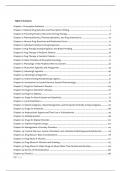
Test Bank Understanding Medical Surgical Nursing 6th Edition WilliamsTable of Contents Chapter 1. Critical Thinking and the Nursing Process ........................................................................................................................................ 2 Chapter 2. Evidence-Based Practice........................................................................................................................................................................ 23 Chapter 3. Issues in Nursing Practice ..................................................................................................................................................................... 36 Chapter 4. Cultural Influences on Nursing Care ................................................................................................................................................. 53 Chapter 5. Complementary and Alternative Modalities ................................................................................................................................. 66 Chapter 6. Nursing Care of Patients With Fluid, Electrolytes, and Acid-Base Imbalances ............................................................... 78 Chapter 7. Nursing Care of Patients Receiving Intravenous Therapy ....................................................................................................... 95 Chapter 8. Nursing Care of Patients With Infections .................................................................................................................................... 106 Chapter 9. Nursing Care of Patients in Shock ................................................................................................................................................... 124 Chapter 10. Nursing Care of Patients in Pain ................................................................................................................................................... 141 Chapter 11. Nursing Care of Patients With Cancer ........................................................................................................................................ 159 Chapter 12. Nursing Care of Patients Having Surgery .................................................................................................................................. 177 Chapter 13. Nursing Care of Patients With Emergent Conditions and Disaster/Bioterrorism Response .............................. 195 Chapter 14. Developmental Considerations and Chronic Illness in the Nursing Care of Adults................................................. 206 Chapter 15. Nursing Care of Older Adult Patients .......................................................................................................................................... 219 Chapter 16. Patient Care Settings .......................................................................................................................................................................... 234 Chapter 17. Nursing Care of Patients at the End of Life ............................................................................................................................... 247 Chapter 18. Immune System Function, Assessment, and Therapeutic Measures ............................................................................. 261 Chapter 19. Nursing Care of Patients With Immune Disorders ................................................................................................................ 274 Chapter 20. Nursing Care of Patients With HIV Disease and AIDS .......................................................................................................... 293 Chapter 21. Cardiovascular System Function, Assessment, and Therapeutic Measures ............................................................... 308 Chapter 22. Nursing Care of Patients With Hypertension .......................................................................................................................... 327 Chapter 23. Nursing Care of Patients With Valvular, Inflammatory, and Infectious Cardiac or Venous Disorders ............. 345 Chapter 24. Nursing Care of Patients With Occlusive Cardiovascular Disorders .............................................................................. 371 Chapter 25. Nursing Care of Patients With Cardiac Dysrhythmias ......................................................................................................... 390 Chapter 26. Nursing Care of Patients With Heart Failure ........................................................................................................................... 407 Chapter 27. Hematological and Lymphatic System Function, Assessment, and Therapeutic Measures ................................. 421 Chapter 28. Nursing Care of Patients With Hematological and Lymphatic Disorders .................................................................... 432 Chapter 29. Respiratory System Function, Assessment, and Therapeutic Measures ...................................................................... 453 Chapter 30. Nursing Care of Patients With Upper Respiratory Tract Disorders ............................................................................... 476 Chapter 31. Nursing Care of Patients With Lower Respiratory Tract Disorders ............................................................................... 492 Chapter 32. Gastrointestinal, Hepatobiliary, and Pancreatic Systems Function, Assessment, and Therapeutic ................. 510 Measures ......................................................................................................................................................................................................................... 510 Chapter 33. Nursing Care of Patients With Upper Gastrointestinal Disorders .................................................................................. 527 Chapter 34. Nursing Care of Patients With Lower Gastrointestinal Disorders .................................................................................. 542 Chapter 35. Nursing Care of Patients With Liver, Pancreatic, and Gallbladder Disorders ............................................................. 562 Chapter 36. Urinary System Function, Assessment, and Therapeutic Measures .............................................................................. 575 Chapter 37. Nursing Care of Patients With Disorders of the Urinary System .................................................................................... 588 1 | P a g eChapter 38. Endocrine System Function and Assessment .......................................................................................................................... 602 Chapter 39. Nursing Care of Patients With Endocrine Disorders ............................................................................................................ 616 Chapter 40. Nursing Care of Patients With Disorders of the Endocrine Pancreas ........................................................................... 631 Chapter 41. Genitourinary and Reproductive System Function and Assessment ............................................................................. 648 Chapter 42. Nursing Care of Women With Reproductive System Disorders ....................................................................................... 661 Chapter 43. Nursing Care of Male Patients With Genitourinary Disorders ......................................................................................... 674 Chapter 44. Nursing Care of Patients With Sexually Transmitted Infections ..................................................................................... 691 Chapter 45. Musculoskeletal Function and Assessment.............................................................................................................................. 703 Chapter 46. Nursing Care of Patients With Musculoskeletal and Connective Tissue Disorders ................................................. 716 Chapter 47. Neurologic System Function, Assessment, and Therapeutic Measures ........................................................................ 729 Chapter 48. Nursing Care of Patients With Central Nervous System Disorders ................................................................................ 743 Chapter 49. Nursing Care of Patients With Cerebrovascular Disorders ............................................................................................... 757 Chapter 50. Nursing Care of Patients With Peripheral Nervous System Disorders ......................................................................... 771 Chapter 51. Sensory System Function, Assessment, and Therapeutic Measures: Vision and Hearing .................................... 784 Chapter 52. Nursing Care of Patients With Sensory Disorders: Vision and Hearing ....................................................................... 800 Chapter 53. Integumentary System Function, Assessment, and Therapeutic Measures ............................................................... 816 Chapter 54. Nursing Care of Patients With Skin Disorders ........................................................................................................................ 830 Chapter 55. Nursing Care of Patients With Burns .......................................................................................................................................... 844 Chapter 1. Critical Thinking and the Nursing Process MULTIPLE CHOICE 1. The nurse is caring for a group of patients on a medical-surgical unit. Which patient should the licensed practical nurse/licensed vocational nurse (LPN/LVN) assess first? 1. A patient with a blood glucose of 42 mg/dL 2. A patient who reports a pain level of 2 3. A patient who has just received a diagnosis of cancer 4. A patient who has a respiratory rate of 22 ANS: 1 Chapter: Chapter 1 Critical Thinking and the Nursing Process Objective: 7. Prioritize patient care activities based on the Maslow hierarchy of human needs. Pages: 6–7 Heading: Prioritize Care Integrated Process: Clinical Problem-Solving Process (Nursing Process) Client Need: SECE—Coordinated Care Cognitive Level: Application [Applying] Concept: Patient-Centered Care Difficulty: Difficult Feedback 1 This patient has a dangerously low blood glucose level and requires immediate intervention. 2 This patient will need to be assessed, but is not as high a priority. 3 According to Maslow, psychosocial needs are not as high of a priority as physiological needs. 2 | P a g e4 A respiratory rate of 22 is within normal range. PTS: 1 CON: Patient-Centered Care 2. The LPN/LVN enters the room of a patient who is angry and yells, “I asked 5 minutes ago for my pain medication. I’m going to call the CEO of the hospital if you don’t get it for me now.” Which statement by the nurse demonstrates intellectual empathy? 1. “We are short-staffed today, so it will take me longer to meet your needs.” 2. “I am sorry you had to wait, I know you must be in a lot of pain.” 3. “I had another patient who had severe pain, and I had to get to them first.” 4. “I will get you the number for the CEO, but he is aware of how busy we are.” ANS: 2 Chapter: Chapter 1 Critical Thinking and the Nursing Process Objective: 2. Describe attitudes and skills that promote good critical thinking Page: 2 Heading: Intellectual Empathy Integrated Process: Communication and Documentation Client Need: Psychosocial Integrity Cognitive Level: Application [Applying] Concept: Communication Difficulty: Moderate Feedback 1 This statement does not consider an individual’s situation. 2 This statement demonstrates intellectual empathy by considering this patient’s situation and will likely alleviate the patient’s anger. 3 This statement does not consider a patient’s situation and does not demonstrate intellectual empathy. 4 This statement addresses the patient’s statement of wanting to call the CEO, but does not demonstrate intellectual empathy by considering the patient’s situation. PTS: 1 CON: Communication 3. The nurse is collecting data on a patient. Which data are described as subjective? 1. Respiratory rate of 26 per minute 2. Patient report of shortness of breath 3. Coarse lung sounds bilaterally 4. Cough producing green sputum ANS: 2 Chapter: Chapter 1 Critical Thinking and the Nursing Process Objective: 5. Differentiate between objective and subjective data. Page: 4 Heading: Subjective Data Integrated Process: Communication and Documentation Client Need: Communication and Documentation Cognitive Level: Application (Applying) Concept: Communication Difficulty: Moderate Feedback 3 | P a g e1 Respiratory rate of 26 per minute is an example of objective data. 2 A patient reporting symptoms to the nurse is an example of subjective data. 3 Coarse lung sounds is an example of objective data. 4 A productive cough is an example of objective data. PTS: 1 CON: Communication 4. A patient with a newly fractured femur reports a pain level of 8/10 and analgesic medication is not due for another 50 minutes. Which action should the nurse take first? 1. Reposition the patient. 2. Give the medication in 30 minutes. 3. Notify the registered nurse (RN) or physician. 4. Tell the patient it is too early for pain medication. ANS: 3 Chapter: Chapter 1 Critical Thinking and the Nursing Process Objective: 4. Identify the role of a licensed practical nurse/licensed vocational nurse in using the nursing process. Page: 3 Heading: Clinical Judgement Integrated Process: Clinical Problem-solving Process (Nursing Process) Client Need: SECE—Coordinated Care Cognitive Level: Application [Applying] Concept: Patient-Centered Care Difficulty: Moderate Feedback 1 The patient who has a fractured femur is having acute pain. Repositioning a patient with a new fracture is not likely to relieve pain. 2 Giving the medication before the prescribed time is beyond the nurse’s scope of practice. 3 The patient should not have to wait for pain relief, so the LPN should inform the RN or physician so new pain relief orders can be obtained. 4 The nurse needs to do more than expect the patient to wait for pain relief. PTS: 1 CON: Patient-Centered Care 5. The nurse is prioritizing care based on Maslow hierarchy of needs. Which need does the nurse identify as having the highest priority? 1. Job-related stress 2. Feeling of loneliness 3. Pain level of 9 on 0-to-10 scale 4. Lack of confidence ANS: 3 Chapter: Chapter 1 Critical Thinking and the Nursing Process Objective: 7. Prioritize patient care activities based on the Maslow hierarchy of human needs Page: 7 Heading: Prioritize Care Integrated Process: Caring Client Need: SECE – Coordinated Care 4 | P a g eCognitive Level: Application [Applying] Concept: Patient-Centered Care Difficulty: Moderate Feedback 1 Job-related stress falls under safety according to Maslow and is addressed after physiological needs. 2 According to Maslow, loneliness is addressed under social needs following physiological and safety. 3 Pain is a physiological need and is the highest priority. 4 Lack of confidence falls under esteem according to Maslow and is addressed following physiological, safety, and social needs. PTS: 1 CON: Patient-Centered Care 6. The nurse is planning care and setting goals for a newly admitted patient. Who should the nurse include when conducting these nursing actions? 1. Patient 2. Nurse manager 3. Hospital chaplain 4. Patient’s health care provider (HCP) ANS: 1 Chapter: Chapter 1 Critical Thinking and the Nursing Process Objective: 4. Identify the role of a licensed practical nurse/licensed vocational nurse is using the nursing process. Page: 6 Heading: Prioritize Care Integrated Process: Communication and Documentation Client Need: SECE—Management of Care Cognitive Level: Application [Applying] Concept: Communication Difficulty: Moderate Feedback 1 Planning care and setting goals is an action performed with the patient. The patient must be in agreement with the plan for it to be successful in meeting the desired outcomes. 2 The nurse manager may or may not be aware of the patient’s care needs. 3 The hospital chaplain may not be aware of the patient’s needs. 4 The focus of nursing care is different from that of the HCP. PTS: 1 CON: Communication 7. While caring for a patient 4 hours after a surgical procedure, the LPN/LVN notes serosanguineous drainage on the dressing. Which statement should the nurse use to document this finding? 1. “Normal drainage noted.” 2. “Moderate drainage recently noted.” 3. “Scant serosanguineous drainage seen on dressing.” 5 | P a g e4. “Pale pink drainage 2 cm by 1 cm noted on dressing.” ANS: 4 Chapter: Chapter 1 Critical Thinking and the Nursing Process Objective: 6. Document subjective and objective data. Page: 5 Heading: Documentation of Data Integrated Process: Communication and Documentation Client Need: PHYS—Physiological Adaptation Cognitive Level: Application [Applying] Concept: Communication Difficulty: Moderate Feedback 1 These statements are interpretations of the data and use words that have vague meanings, which should be avoided when documenting. 2 These statements are interpretations of the data and use words that have vague meanings, which should be avoided when documenting. 3 These statements are interpretations of the data and use words that have vague meanings, which should be avoided when documenting. 4 Objective data are pieces of factual information obtained through physical assessment and diagnostic tests that are observable or knowable through the five senses. The nurse should document exactly what is seen. PTS: 1 CON: Communication 8. The nurse is caring for a patient using the nursing process. Which step should the nurse take first? 1. Implementation 2. Planning 3. Nursing diagnosis 4. Assessment ANS: 4 Chapter: Chapter 1 Critical Thinking and the Nursing Process Objective: 4. Identify the role of a licensed practical nurse/licensed vocational nurse in using the nursing process. Page: 4 Heading: Data Collection Integrated Process: Clinical Problem-Solving Process (Nursing Process) Client Need: SECE: Coordinated Care Cognitive Level: Application [Applying] Concept: Patient-Centered Care Difficulty: Moderate Feedback 1 The steps of the nursing process are data collection/assessment, nursing diagnosis, planning, implementation, and evaluation. 2 The steps of the nursing process are data collection/assessment, nursing diagnosis, planning, implementation, and evaluation. 3 The steps of the nursing process are data collection/assessment, nursing diagnosis, planning, implementation, and evaluation. 6 | P a g e4 Assessment, or data collection, is the first step in the nursing process and is used to evaluate a patient’s condition before providing care. The other steps, in order, are nursing diagnosis, planning, implementation, and evaluation. PTS: 1 CON: Patient-Centered Care 9. The nurse is administering morphine to a patient reporting a pain level of 8 on a 0-to10 scale. This describes which step of the nursing process? 1. Assessment 2. Nursing diagnosis 3. Implementation 4. Evaluation ANS: 3 Chapter: Chapter 1 Critical Thinking and the Nursing Process Objective: 4. Identify the role of a licensed practical nurse/licensed vocational nurse in using the nursing process. Page: 8 Heading: Identify Interventions Integrated Process: Clinical Problem-Solving Process (Nursing Process) Client Need: SECE – Coordination of Care Cognitive Level: Application [Applying] Concept: Patient-Centered Care Difficulty: Moderate Feedback 1 Administering medication does not describe assessment. 2 Administering medication does not describe nursing diagnosis. 3 Administering medication describes the implementation process, since an action is being taken to help the patient meet a desired outcome. 4 Administering medication does not describe the evaluation phase of the nursing process. PTS: 1 CON: Patient-Centered Care 10. The nurse is developing an outcome for a patient with exacerbation of asthma. Which is the most appropriate outcome for this patient? 1. The patient will not experience shortness of breath. 2. The patient will have a respiratory rate of 16 to 20 per minute. 3. The patient will ambulate without reporting shortness of breath. 4. The patient will not require use of an inhaler. ANS: 2 Chapter: Chapter 1 Critical Thinking and the Nursing Process Objective: 3. Describe the thinking that occurs in each step of the nursing process. Page: 8 Heading: Establish Outcomes Integrated Process: Clinical Problem-solving (Nursing Process) Client Need: SECE: Coordinated Care Cognitive Level: Application [Applying] Concept: Patient-Centered Care 7 | P a g eDifficulty: Moderate Feedback 1 This is a vague outcome and is not measurable. 2 This is a measurable outcome and is not vague. 3 This is a vague outcome and is not measurable. 8 | P a g e4 This is a vague outcome and is not measurable. PTS: 1 CON: Patient-Centered Care 11. The nurse suspects a patient is experiencing adverse effects to a newly prescribed antihypertensive medication. After being informed that the effects are expected, the nurse remains concerned and conducts an Internet search on the patient’s manifestations. Which critical thinking behavior did the nurse implement? 1. Sense of justice 2. Intellectual courage 3. Intellectual empathy 4. Intellectual perseverance ANS: 4 Chapter: Chapter 1 Critical Thinking and the Nursing Process Objective: 2. Describe attitudes and skills that promote critical thinking. Page: 2 Heading: Intellectual Perseverance Integrated Process: Caring Client Need: Psychosocial Integrity Cognitive Level: Analysis [Analyzing] Concept: Patient-Centered Care Difficulty: Moderate Feedback 1 A sense of justice examines motives when making decisions. 2 Intellectual courage looks at other points of view, even when the nurse does not agree with them. 3 Intellectual empathy understands how another person feels when making decisions. 4 Intellectual perseverance is not giving up. PTS: 1 CON: Patient-Centered Care 12. The nurse is identifying outcomes for a patient with fluid volume deficit. Which outcome should the nurse use to guide this patient’s care? 1. Patient’s intake will be measured daily. 2. Patient’s intake will be 3,000 mL daily. 3. Fluids will be at the bedside for the patient. 4. Fluids the patient likes will be at the bedside. ANS: 2 Chapter: Chapter 1 Critical Thinking and the Nursing Process Objective: 3. Describe the thinking that occurs in each step of the nursing process. Page: 7 Heading: Establish Outcomes Integrated Process: Clinical Problem-solving (Nursing Process) Client Need: SECE: Coordinated Care Cognitive Level: Application [Applying] Concept: Patient-Centered Care Difficulty: Moderate 9 | P a g eFeedback 1 These statements are nursing actions. 2 This outcome provides objective measurable data. 3 These statements are nursing actions. 10 | P a g e4 These statements are nursing actions. PTS: 1 CON: Patient-Centered Care 13. The nurse is formulating nursing diagnoses for a patient with chronic obstructive pulmonary disease (COPD). Which diagnosis is of the highest priority? 1. Activity intolerance 2. Impaired gas exchange 3. Risk for injury 4. Deficient knowledge ANS: 2 Chapter: Chapter 1 Critical Thinking and the Nursing Process Objective: 7. Prioritize patient care activities based on the Maslow hierarchy of human needs. Page: 6 Heading: Prioritize Care Integrated Process: Clinical Problem-solving (Nursing Process) Client Need: SECE: Coordinated Care Cognitive Level: Analysis [Analyzing] Concept: Patient-Centered Care Difficulty: Difficult Feedback 1 Although activity intolerance is a nursing diagnosis for a patient with COPD, it is not the highest priority. 2 Impaired gas exchange is the highest priority according to Maslow. 3 A risk for diagnosis is not a priority because the patient is only at risk for the problem, it is not an actual problem as of yet. 4 According to Maslow, deficient knowledge is not a priority. PTS: 1 CON: Patient-Centered Care 14. An RN delegates a patient care assignment to the LPN/LVN. Which phase of the nursing process should the LPN/LVN perform independently? 1. Assessment 2. Planning care 3. Implementation 4. Nursing diagnosis ANS: 3 Chapter: Chapter 1 Critical Thinking and the Nursing Process Objective: 4. Identify the role of a licensed practical nurse/licensed vocational nurse in using the nursing process. Page: 22 Heading: Role of the Licensed Practical Nurse/Licensed Vocational Nurse Integrated Process: Clinical Problem-Solving (Nursing Process) Client Need: SECE: Coordinated Care Cognitive Level: Application [Applying] Concept: Patient-Centered Care Difficulty: Moderate Feedback 11 | P a g e1 The LPN/LVN assists the RN with collecting data, formulating nursing diagnoses, and in determining outcomes and planning care to meet patient needs. 2 The LPN/LVN assists the RN with collecting data, formulating nursing diagnoses, and in determining outcomes and planning care to meet patient needs. 3 The LPN/LVN independently provides direct patient care. 4 The LPN/LVN assists the RN with collecting data, formulating nursing diagnoses, and in determining outcomes and planning care to meet patient needs. PTS: 1 CON: Patient-Centered Care 15. The LPN/LVN is reviewing a care plan for a patient who underwent abdominal surgery 2 hours ago and has a priority nursing diagnosis of acute pain. Which intervention should the nurse implement first? 1. Teach the patient how to splint the abdomen when coughing. 2. Assist the patient with early ambulation. 3. Encourage the patient to increase fluid intake. 4. Administer hydromorphone (Dilaudid) per order as needed for pain. ANS: 4 Chapter: Chapter 1 Critical Thinking and the Nursing Process Objective: 7. Prioritize patient care activities based on the Maslow hierarchy of human needs. Page: 6 Heading: Prioritize Care Integrated Process: Clinical Problem-solving Process (Nursing Process) Client Need: SECE: Coordinated Care Cognitive Level: Application [Applying] Concept: Patient-Centered Care Difficulty: Difficult Feedback 1 Splinting is important, but if the patient is in pain, he or she will not likely retain information. 2 Early ambulation is important, but does not address the diagnosis of acute pain. 3 The patient may need to increase fluid intake, but this is not a priority intervention. 4 The patient has a nursing diagnosis of acute pain; this intervention should be implemented first. PTS: 1 CON: Patient-Centered Care 16. Which critical thinking trait is demonstrated when the LPN/LVN is unsure of how to perform a dressing change and asks the RN for assistance? 1. Intellectual courage 2. Intellectual integrity 3. Intellectual humility 4. Intellectual empathy 12 | P a g eANS: 3 Chapter: Chapter 1 Critical Thinking and the Nursing Process Objective: 2. Describe attitudes and skills that promote good critical thinking. Page: 2 Heading: Intellectual Humility Integrated Process: Communication and Documentation Client Need: Psychosocial Integrity Cognitive Level: Comprehension (Understanding) Concept: Communication Difficulty: Moderate Feedback 1 Intellectual courage allows the nurse to look at other points of view even if he or she does not agree. 2 Intellectual integrity is holding oneself to the same level of standards one expects others to meet. 3 The LPN/LVN is demonstrating intellectual humility, which is having the ability to ask for assistance when he or she is unsure. 4 Intellectual empathy allows the nurse to put himself or herself in the patient’s shoes. PTS: 1 CON: Communication 17. During morning report, the LPN/LPN is assigned a group of patients. Which patient should the LPN/LPN see first? 1. A patient scheduled for magnetic resonance imaging (MRI) due to back pain 2. A patient reporting constipation and stomach cramps 3. A 2-day postsurgical patient reporting pain at a level of 6 4. A patient with pneumonia who is short of breath and anxious ANS: 4 Chapter: Chapter 1 Critical Thinking and the Nursing Process Objective: 7. Prioritize patient care activities based on the Maslow hierarchy of human needs. Page: 3 Heading: Prioritize Care Integrated Process: Clinical Problem-solving Process (Nursing Process) Client Need: SECE: Coordinated Care Cognitive Level: Analysis [Analyzing] Concept: Patient-Centered Care Difficulty: Difficult Feedback 1 The patient’s problems of pain, constipation, and scheduled tests are all important but are not immediately life threatening. 2 The patient’s problems of pain, constipation, and scheduled tests are all important but are not immediately life threatening. 3 The patient’s problems of pain, constipation, and scheduled tests are all important but are not immediately life threatening. 4 Using Maslow hierarchy of needs and considering which patient problems are life threatening, shortness of breath is most important. 13 | P a g ePTS: 1 CON: Patient-Centered Care 18. The LPN/LVN asks a patient who received 2 mg of Morphine IV 30 minutes ago to rate his or her pain. This describes which step of the nursing process? 1. Assessment 2. Planning 3. Implementation 4. Evaluation ANS: 4 Chapter: Chapter 1 Critical Thinking and the Nursing Process Objective: 3. Describe the thinking that occurs in each step of the nursing process. Page: 8 Heading: Evaluation of Outcomes Integrated Process: Clinical Problem-solving Process (Nursing Process) Client Need: SECE: Coordinated Care Cognitive Level: Analysis [Analyzing] Concept: Patient-Centered Care Difficulty: Moderate Feedback 1 The assessment process would be conducted prior to administering the Morphine. 2 This does not describe the planning phase of the nursing process. 3 The implementation phase of the nursing process is the administration of Morphine. 4 Asking the patient if the Morphine was effective by asking him or her to rate the pain describes the evaluation phase of the nursing process. PTS: 1 CON: Patient-Centered Care 19. The LPN/LVN is assisting the RN in planning interventions for a patient. Which is an example of a collaborative action? 1. Administering a medication 2. Giving a back rub 3. Assessing a patient 4. Teaching relaxation techniques ANS: 1 Chapter: Chapter 1 Critical Thinking and the Nursing Process Objective: 3. Describe the thinking that occurs in each step of the nursing process. Page: 6 Heading: Nursing Diagnosis Integrated Process: Clinical Problem-solving Process (Nursing Process) Client Need: SECE: Coordinated Care Cognitive Level: Application [Applying] Concept: Patient-Centered Care Difficulty: Moderate Feedback 1 Administering a medication requires an order from the HCP, which makes this a collaborative action. 14 | P a g e2 Giving a back rub is an independent nursing action. 3 Assessing a patient is an example of an independent nursing action. 4 Teaching relaxation techniques is an example of an independent nursing action. PTS: 1 CON: Patient-Centered Care 20. The LPN/LVN is reviewing nursing diagnoses for a patient. Which diagnosis should the nurse report to the RN as incorrect? 1. Risk for injury 2. Heart failure 3. Ineffective gas exchange 4. Activity intolerance ANS: 2 Chapter: Chapter 1 Critical Thinking and the Nursing Process Objective: 4. Identify the role of a licensed practical nurse/licensed vocational nurse in using the nursing process. Page: 6 Heading: Nursing Diagnosis Integrated Process: Clinical Problem-solving Process (Nursing Process) Client Need: SECE: Coordinated Care Cognitive Level: Application [Applying] Concept: Patient-Centered Care Difficulty: Moderate Feedback 1 Risk for injury is a nursing diagnosis and does not require correction. 2 Heart failure is a medical diagnosis and requires correction. 3 Ineffective gas exchange is a nursing diagnosis and does not require correction. 4 Activity intolerance is a nursing diagnosis and does not require correction. PTS: 1 CON: Patient-Centered Care 21. The LPN/LVN is caring for a group of patients. Which patient should the nurse assess first? 1. A patient with an oxygen saturation level of 96% on room air 2. A patient who has a blood pressure of 208/114 mm Hg 3. A patient who reports a pain level of 7 on a scale of 0 to 10 4. A patient with a temperature of 100.2°F ANS: 2 Chapter: Chapter 1 Critical Thinking and the Nursing Process Objective: 7. Prioritize patient care activities based on the Maslow hierarchy of human needs. Page: 7 Heading: Prioritize Care Integrated Process: Clinical Problem-solving Process (Nursing Process) Client Need: SECE: Coordinated Care Cognitive Level: Application [Applying] Concept: Patient-Centered Care Difficulty: Difficult Feedback 1 An oxygen saturation of 96% is not too concerning. This is not the highest priority. 15 | P a g e2 A blood pressure of 208/114 mm Hg is very high and should be addressed immediately. This patient should be seen first. 3 This patient is in pain and should be seen, but is not as high of a priority as the patient with hypertension. 4 This patient has a low-grade temperature, which is not a priority. PTS: 1 CON: Patient-Centered Care 22. The LPN/LVN is caring for a patient who begins to exhibit shortness of breath and chest pain. Which action should the nurse take first? 1. Administer medication as ordered. 2. Notify the RN. 3. Document the findings in the chart. 4. Reposition the patient. ANS: 2 Chapter: Chapter 1 Critical Thinking and the Nursing Process Objective: 7. Prioritize patient care activities based on the Maslow hierarchy of human needs. Page: 3 Heading: Prioritize Care Integrated Process: Clinical Problem-solving Process (Nursing Process) Client Need: SECE: Coordinated Care Cognitive Level: Analysis [Analyzing] Concept: Patient-Centered Care Difficulty: Difficult Feedback 1 The nurse will likely need to administer medication, but should first notify the RN of the patient’s condition. 2 The LPN/LVN should notify the RN immediately of the change in the patient’s status. 3 The nurse will document the findings in the chart, but should first notify the RN. 4 Repositioning the patient may not help in this situation; the LPN/LVN should first notify the RN. PTS: 1 CON: Patient-Centered Care 23. While teaching how to apply a topical medication the patient begins to vomit. Which action should the nurse take to meet the patient’s human needs? 1. Provide a clean gown before resuming the teaching. 2. Position an emesis basin for patient use while teaching. 3. Administer medication prescribed for nausea and vomiting. 4. Wait for the vomiting to stop and begin the teaching session again. ANS: 3 Chapter: Chapter 1 Critical Thinking and the Nursing Process Objective: 7. Prioritize patient care activities based on the Maslow hierarchy of human needs. Page: 7 Heading: Prioritize Care Integrated Process: Clinical Problem-solving Process (Nursing Process) Client Need: SECE: Coordinated Care 16 | P a g eCognitive Level: Application [Applying] Concept: Patient-Centered Care Difficulty: Moderate Feedback 1 These actions do not take the patient’s physiological needs into consideration. The patient will not be able to achieve a higher level of the hierarchy before basic physiological needs are met. 2 These actions do not take the patient’s physiological needs into consideration. The patient will not be able to achieve a higher level of the hierarchy before basic physiological needs are met. 3 Basic physiological needs must be met first. Since the patient is vomiting, the nurse should provide the medication that is prescribed for nausea and vomiting. 4 These actions do not take the patient’s physiological needs into consideration. The patient will not be able to achieve a higher level of the hierarchy before basic physiological needs are met. PTS: 1 CON: Patient-Centered Care 24. A nurse approaches a person in a restaurant who appears to be experiencing respiratory distress. Which action should the nurse perform first? 1. Diagnose the problem. 2. Assist the person to lie down. 3. Gather data from other people. 4. Collect data about the person’s condition. ANS: 4 Chapter: Chapter 1 Critical Thinking and the Nursing Process Objective: 3. Describe the thinking that occurs in each step of the nursing process. Page: 7 Heading: Subjective Data Integrated Process: Clinical Problem-solving Process (Nursing Process) Client Need: SECE: Coordinated Care Cognitive Level: Application (Applying) Concept: Patient-Centered Care Difficulty: Moderate Feedback 1 Diagnosing the problem would occur after collecting data. 2 Assisting the person to lie down is implementing an action to address the problem. 3 The nurse can collect data from other people if necessary. 4 The first step in the nursing process is to collect data, and the patient should come first. PTS: 1 CON: Patient-Centered Care 25. The nurse is reviewing nursing diagnoses. Which is an example of a correctly written nursing diagnosis? 1. Acute pain related to tissue trauma as evidenced by facial grimacing and rating pain at a level of 9 on a 0-to-10 scale 2. Pain related to appendicitis as evidenced by moaning and guarding 3. Acute pain related to guarding abdomen and rating pain at a level of 9 on a 0-to10 scale 17 | P a g e4. Pain as evidenced by status postsurgical procedure ANS: 1 Chapter: Chapter 1 Critical Thinking and the Nursing Process Objective: 3. Describe the thinking that occurs in each step of the nursing process. Page: 6 Heading: Nursing Diagnosis Integrated Process: Clinical Problem-solving Process (Nursing Process) Client Need: SECE: Coordinated Care Cognitive Level: Analysis [Analyzing] Concept: Patient-Centered Care Difficulty: Moderate Feedback 18 | P a g e1 This is a well-written three-part nursing diagnosis that includes the etiology and signs and symptoms. 2 This is a medical diagnosis, not a nursing diagnosis. 3 This nursing diagnosis is missing correct etiology. 4 This is a medical diagnosis and is also missing correct signs and symptoms. PTS: 1 CON: Patient-Centered Care 26. After identifying nursing diagnoses the nurse plans outcomes for a patient with gastroesophageal reflux disease. Which outcome should the nurse use to evaluate this patient’s care? 1. The patient will have less heartburn. 2. The patient will sleep through the night. 3. The patient’s esophageal burning will resolve 30 minutes after taking oral antacids. 4. The patient will state that burning only occurs when eating foods high in acid content. ANS: 3 Chapter: Chapter 1 Critical Thinking and the Nursing Process Objective: 3. Describe the thinking that occurs in each step of the nursing process. Page: 8 Heading: Nursing Diagnosis Integrated Process: Clinical Problem-solving Process (Nursing Process) Client Need: SECE: Coordinated Care Cognitive Level: Analysis [Analyzing] Concept: Patient-Centered Care Difficulty: Moderate Feedback 1 Outcomes should not be vague or open to interpretation, and should use subjective words such as normal, large, small, or moderate. 2 Sleeping through the night may or may not be associated with the patient’s problem. 3 Outcomes should be measurable, realistic for the patient, and have an appropriate time frame for achievement. 4 Stating that the burning only occurs with eating foods high in acid content is a patient statement that could be used for subjective data collection. PTS: 1 MULTIPLE RESPONSE 1. After collecting data, the nurse identifies diagnoses to guide the patient’s care. Which diagnoses did the nurse document correctly? (Select all that apply.) 1. Diabetes 2. Acute pain 3. Pancreatitis 4. Activity intolerance 5. Impaired physical mobility ANS: 2, 4, 5 Chapter: Chapter 1 Critical Thinking and the Nursing Process 19 | P a g e CON: Patient-Centered CareObjective: 3. Describe the thinking that occurs in each step of the nursing process. Page: 8 Heading: Nursing Diagnosis Integrated Process: Clinical Problem-solving Process (Nursing Process) Client Need: SECE: Coordinated Care Cognitive Level: Analysis [Analyzing] Concept: Patient-Centered Care Difficulty: Moderate Feedback 1. 2. 3. 4. 5. Diabetes and pancreatitis are medical diagnoses. Acute pain, activity intolerance, and impaired physical mobility are nursing diagnoses. Diabetes and pancreatitis are medical diagnoses. Acute pain, activity intolerance, and impaired physical mobility are nursing diagnoses. Acute pain, activity intolerance, and impaired physical mobility are nursing diagnoses. PTS: 1 CON: Patient-Centered Care 2. A patient with a family history of diabetes is experiencing high blood glucose levels, confusion, an unsteady gait, and dehydration. Which nursing diagnoses should the nurse identify as appropriate for this patient’s care? (Select all that apply.) 1. Diabetes 2. Dehydration 3. Risk for falls 4. Hyperglycemia 5. Deficient fluid volume ANS: 3, 5 Chapter: Chapter 1 Critical Thinking and the Nursing Process Objective: 3. Describe the thinking that occurs in each step of the nursing process. Page: 6 Heading: Nursing Diagnosis Integrated Process: Clinical Problem-Solving Process (Nursing Process) Client Need: SECE: Coordinated Care Cognitive Level: Application [Applying] Concept: Patient-Centered Care Difficulty: Moderate Feedback 1. Diabetes, dehydration, and hyperglycemia are medical problems. The nurse assists with medical diagnoses; however, the nurse does not diagnose and treat medical problems. 2. 3. 20 | P a g e Diabetes, dehydration, and hyperglycemia are medical problems. The nurse assists with medical diagnoses; however, the nurse does not diagnose and treat medical problems. Deficient fluid volume and risk for falls are nursing diagnoses related to the patient’s symptoms and condition.4. 5. Diabetes, dehydration, and hyperglycemia are medical problems. The nurse assists with medical diagnoses; however, the nurse does not diagnose and treat medical problems. Deficient fluid volume and risk for falls are nursing diagnoses related to the patient’s symptoms and condition. PTS: 1 CON: Patient-Centered Care 3. The nurse identifies the diagnosis potential for ineffective gas exchange as appropriate for a patient with pneumonia. Which independent nursing actions should the nurse plan for this problem? (Select all that apply.) 1. Apply oxygen 2 liters per nasal cannula. 2. Turn and reposition in bed every 2 hours. 3. Coach to deep-breathe and cough every hour. 4. Administer intramuscular antibiotic medication. 5. Encourage to drink 240 mL of fluid every 2 hours. ANS: 2, 3, 5 Chapter: Chapter 1 Critical Thinking and the Nursing Process Objective: 3. Describe the thinking that occurs in each step of the nursing process. Page: 6 Heading: Nursing Diagnosis Integrated Process: Clinical Problem-Solving Process (Nursing Process) Client Need: SECE: Coordinated Care Cognitive Level: Application [Applying] Concept: Patient-Centered Care Difficulty: Moderate Feedback 1. 2. 3. 4. 5. Interventions that need an HCP’s order include administering oxygen and medication. These are collaborative interventions. Independent nursing actions are those that can be implemented without an HCP’s order. Independent nursing actions are those that can be implemented without an HCP’s order. Interventions that need an HCP’s order include administering oxygen and medication. These are collaborative interventions. Independent nursing actions are those that can be implemented without an HCP’s order. PTS: 1 CON: Patient-Centered Care 4. The nurse is planning outcomes for a patient with acute pain who is exhibiting tachypnea and hypertension. Which outcomes should be included in the patient’s care? 1. Patient will rate pain at a level of 2 on a 0-to-10 scale 30 minutes after receiving Morphine. 2. Patient will ambulate without pain. 3. Patient will not exhibit signs or symptoms of pain. 4. Patient will maintain respiratory rate between 16 and 20. 5. Patient’s blood pressure will remain within normal limits. ANS: 1, 4 Chapter: Chapter 1 Critical Thinking and the Nursing Process 21 | P a g eObjective: 3. Describe the thinking that occurs in each step of the nursing process. Page: 6 Heading: Establish Outcomes Integrated Process: Clinical Problem-solving Process (Nursing Process) Client Need: SECE: Coordinated Care Cognitive Level: Application [Applying] Concept: Patient-Centered Care Difficulty: Moderate Feedback 1. 2. 3. 4. 5. This is a measurable and specific outcome. This is not a measurable outcome and is too vague. This is not a measurable outcome and is vague. This is a measurable and specific outcome. This outcome is not specific and is not measurable. The nurse should define normal limits. PTS: 1 ORDERED RESPONSE 1. The nurse is caring for a group of patients. Place in order the patients the nurse should see from highest to lowest priority (1 to 5). 1. A patient who underwent abdominal surgery yesterday and reports a pain level of 5 on a 0-to-10 scale 2. A patient with deep vein thrombosis (DVT) who reports shortness of breath 3. A patient awaiting education from the diabetes educator 4. A patient with eczema who reports itching 5. A patient who reports nausea after chemotherapy ANS: 2, 1, 5, 4, 3 Chapter: Chapter 1 Critical Thinking and the Nursing Process Objective: 7. Prioritize patient care activities based on the Maslow hierarchy of human needs. Page: 6 Heading: Prioritize Care Integrated Process: Clinical Problem-solving Process (Nursing Process) Client Need: SECE: Coordinated Care Cognitive Level: Analysis (Analyzing) Concept: Patient-Centered Care Difficulty: Difficult Feedback 1. 2. 3. 4. 22 | P a g e The patient in pain is a priority, but should be seen after the patient with shortness of breath. The patient with DVT exhibiting shortness of breath could have a pulmonary embolism and should be seen first. A patient waiting for diabetes education is not a priority and can be seen last in this group of patients. Itching is a symptom of eczema and is a priority, but not as high a priority as shortness of breath, pain, or nausea. This patient can be seen fourth. CON: Patient-Centered Care5. Nausea is a priority, but this patient can be seen after the patient with shortness of breath and pain. PTS: 1 CON: Patient-Centered Care 2. The nurse is caring for a patient recovering from a stroke. Place in the order of the nursing process the observations or actions provided while caring for this patient. 1. Hand grasp absent left hand 2. Alteration in cerebral perfusion 3. Flexed left thumb and index finger 4. Coached to squeeze rubber ball placed in left hand 5. Self-feed using left hand ANS: 1, 2, 5, 4, 3 Chapter: Chapter 1 Critical Thinking and the Nursing Process Objective: 3. Describe the thinking that occurs in each step of the nursing process. Page: 4 Heading: NURSING PROCESS Integrated Process: Clinical Problem-Solving Process (Nursing Process) Client Need: SECE: Coordinated Care Cognitive Level: Analysis [Analyzing] Concept: Patient-Centered Care Difficulty: Difficult Feedback 1. 2. 3. 4. 5. Assessed data is the absence of a left-hand grasp. The nursing diagnosis that is associated with the absence of a hand grasp is alteration in cerebral perfusion. The patient flexing the left thumb and index finger evaluates the success of the intervention of squeezing a rubber ball in the left hand. Coaching to squeeze a rubber ball in the left hand is an intervention to improve left hand function. PTS: 1 The goal of nursing care is for the patient to self-feed using the left hand. CON: Patient-Centered Care Chapter 2. Evidence-Based Practice MULTIPLE CHOICE 1. The nurse working in a radiation oncology department wants to reduce the incidence of skin breakdown in patients who receive beam radiation. Which question should the nurse use to guide a literature search about this topic? 1. How often do patients with beam radiation experience skin breakdown? 2. Why do patients who get radiation beam therapy have skin breakdown? 3. What nursing interventions minimize the occurrence of skin breakdown in patients receiving beam radiation? 4. How does our rate of skin breakdown in patients receiving beam radiation compare to other institutions in the city? ANS: 3 23 | P a g eChapter: Chapter 2 Evidence-Based Practice Objective: 4. Describe the EBP process. Page: 10 Heading: Step 1: Ask the Burning Question Integrated Process: Clinical Problem-Solving Process (Nursing Process) Client Need: PHYS: Reduction of Risk Potential Cognitive Level: Application (Applying) Concept: Evidence-Based Practice Difficulty: Moderate Feedback 1 The frequency of skin breakdown and why patients develop skin breakdown does not help identify ways to prevent skin breakdown. 2 The frequency of skin breakdown and why patients develop skin breakdown does not help identify ways to prevent skin breakdown. 3 Asking a burning clinical question is the first step in the evidence-based practice (EBP) process. It is important to include related factors in the question and to focus on nursing interventions and care. In this situation, the nurse should focus on nursing care that may reduce the occurrence of skin breakdown for the specific patient population of interest. 4 Information on statistics from other organizations will not help the nurse identify ways to prevent skin breakdown. PTS: 1 CON: Evidence-Based Practice 2. A licensed practical nurse (LPN) working on the pediatric floor is interested in improving patient outcomes for children with asthma. Which clinical question would best guide the nurse’s next steps? 1. How many patients with asthma have a pet dog or cat? 2. What is the monthly admission rate of patients with asthma to the unit? 3. What patient education materials are available to address effective management of asthma in pediatric patients? 4. How has the occurrence rate of asthma in children under the age of 5 changed since the hospital instituted a no smoking policy for the hospital grounds? ANS: 3 Chapter: Chapter 2 Evidence-Based Practice Objective: 4. Describe the EBP process. Page: 11 Heading: Step 1: Ask the Burning Question Integrated Process: Clinical Problem-Solving Process (Nursing Process) Client Need: SECE: Coordinated Care Cognitive Level: Application (Applying) Concept: Evidence-Based Practice Difficulty: Moderate Feedback 1 Information about pets, admission rates of patients with asthma, and asthma occurrence since the implementation of a no smoking policy will not help improve patient outcomes for children with asthma. 24 | P a g e2 Information about pets, admission rates of patients with asthma, an asthma occurrence since the implementation of a no smoking policy will not help improve patient outcomes for children with asthma. 3 Asking a burning clinical question is the first step in the EBP process. It is important to include related factors in the question and to focus on nursing interventions and care. For this scenario, the nurse would focus on nursing care that affects patient outcomes for the specific patient population of interest. Patient education is a critical component of nursing care. 4 Information about pets, admission rates of patients with asthma, and asthma occurrence since the implementation of a no smoking policy will not help improve patient outcomes for children with asthma. PTS: 1 CON: Evidence-Based Practice 3. The nurse is preparing to give oral care to a patient receiving tube feedings. Which approach should the nurse use to provide care that is based on EBP? 1. Use a soft toothbrush and toothpaste to brush the teeth. 2. Have the patient use swish-and-swallow Nystatin twice a day. 3. Increase oral suctioning to every 2 hours using toothette suction devices. 4. Use mouthwash and toothettes to swab the teeth and mouth three times a day. ANS: 1 Chapter: Chapter 2 Evidence-Based Practice Objective: 3. Explain how to identify nursing evidence that should be put into practice. Page: 12 Heading: Step 3: Think Critically Integrated Process: Clinical Problem-Solving Process (Nursing Process) Client Need: PHYS: Basic Care and Comfort Cognitive Level: Application (Applying) Concept: Evidence-Based Practice Difficulty: Moderate 25 | P a g eFeedback 1 Evidence-based information shows the use of toothbrushes for oral care is much more effective than foam swabs in removing plaque from the teeth. 2 Swish-and-swallow Nystatin is a medication that treats oral thrush and is not routinely used to provide oral care. 3 Oral suctioning is not an approach to provide oral care. 4 Toothettes are not an effective mechanism for providing oral care. PTS: 1 CON: Evidence-Based Practice 4. The nurse is reviewing four articles for research and notes the evidence presented in one article is weaker than the others. Which level of research is the nurse most likely reviewing? 1. Level I 2. Level II 3. Level III 4. Level IV ANS: 4 Chapter: Chapter 2 Evidence-Based Practice Objective: 3. Explain how to identify nursing evidence that should be put into practice. Page: 11 Heading: Identifying Nursing Evidence Integrated Process: Clinical Problem-Solving Process (Nursing Process) Client Need: SECE: Coordination of Care Cognitive Level: Application (Applying) Concept: Evidence-Based Practice Difficulty: Easy Feedback 1 The rating scale used to level the quality of evidence ranges form level I (strongest) to level IV (weakest). 2 3 4 The rating scale used to level the quality of evidence ranges form level I (strongest) to level IV (weakest). The rating scale used to level the quality of evidence ranges form level I (strongest) to level IV (weakest). The rating scale used to level the quality of evidence ranges form level I (strongest) to level IV (weakest). PTS: 1 CON: Evidence-Based Practice 5. The nurse working on an oncology unit wants to know if it is best practice to clean a central line in a circular motion or a back-and-forth motion. What action should the nurse take first? 1. Ask the physicians what they think is best. 2. Ask the patient what their preference is. 3. Develop a research question to guide a literature search. 4. Continue performing the procedure per hospital policy. ANS: 3 Chapter: Chapter 2 Evidence-Based Practice Objective: 4. Describe the EBP process. Page: 11 26 | P a g eHeading: Step 1: Ask the Burning Question Integrated Process: Clinical Problem-Solving Process (Nursing Process) Client Need: SECE: Coordinated Care Cognitive Level: Application (Applying) Concept: Evidence-Based Practice Difficulty: Moderate Feedback 1 Physicians do not determine best practice. 2 The patient’s preference may not be reflective of what is best practice. 3 The nurse should formulate a question to guide a literature search to determine the best practice for cleaning a central line. 4 The nurse should not take no action—the current practice may not be the best practice. PTS: 1 CON: Evidence-Based Practice 6. A group of nurses conducted a pilot study about implementing a team to turn patients every hour to prevent skin breakdown. The results proved the intervention to be a success. What step should the nurses take next to implement the turn team hospital wide? 1. Educate individuals in the facility about implementing the change hospital wide. 2. Collect evidence to support implementation of a turn team. 3. Plan a pilot study to determine if implementing a turn team will reduce skin breakdown. 4. Propose the change to a policy and procedure committee. ANS: 1 Chapter: Chapter 2 Evidence-Based Practice Objective: 4. Describe the EBP process. Page: 13 Heading: Step 5: Make It Happen Integrated Process: Clinical Problem-Solving Process (Nursing Process) Client Need: PHYS: Reduction of Risk Potential Cognitive Level: Application (Applying) Concept: Evidence-Based Practice Difficulty: Moderate Feedback 1 Since turning a patient is an independent nursing intervention, a literature review has been conducted, and a pilot study has been implemented where results have been proved to be successful, the next step is to educate other nurses in the facility about how to implement the turn team. 2 A literature review has already been done. 3 A pilot study has already been conducted. 4 Since turning patients is an independent nursing intervention, it is not required to go to a committee for policy and procedure change. PTS: 1 CON: Evidence-Based Practice 7. A nursing student asks the registered nurse (RN) preceptor why EBP is important. How should the nurse respond to the student? 1. “EBP makes nursing more professional.” 27 | P a g e2. “EBP helps ensure we can demand more pay.” 3. “EBP helps validate the difference nurses really make.” 4. “EBP guides nursing decisions to optimize effective care.” ANS: 4 Chapter: Chapter 2 Evidence-Based Practice Objective: 2. Discuss why EBP should be used. Page: 11 Heading: Reasons For Using EBP Integrated Process: Clinical Problem-Solving Process (Nursing Process) Client Need: SECE: Coordinated Care Cognitive Level: Application (Applying) Concept: Evidence-Based Practice Difficulty: Moderate Feedback 1 EBP is not used to support professionalism in nursing or as a mechanism to increase nurses’ salaries. 2 EBP is not used to support professionalism in nursing or as a mechanism to increase nurses’ salaries. 3 EBP is not used to validate the importance of nursing care. 4 Evidence-based nursing practice is much more than just evaluating research studies to determine what results to apply to nursing practice. Evidencebased nursing practice is a systematic process that utilizes current evidence to make decisions about the care of patients, including evaluation of quality and applicability of existing research, patient preferences, costs, clinical expertise, and clinical settings. PTS: 1 CON: Evidence-Based Practice 8. The nurse is reviewing a proposal for changing the type of needleless systems currently used to administer IV medications in the hospital. Which part of the proposal most effectively supports the proposed change? 1. A pilot study is planned. 2. Two cases of staff injury related to needle sticks have occurred in the past 3 years. 3. A single randomized clinical trial is cited as evidence to support the new policy. 4. The supporting evidence includes research conducted at an outpatient hematology center. ANS: 1 Chapter: Chapter 2 Evidence-Based Practice Objective: 5. List the six steps of EBP. Page: 12 Heading: Step 4: Measure Outcomes Before and After Change Integrated Process: Clinical Problem-Solving Process (Nursing Process) Client Need: SECE: Coordinated Care Cognitive Level: Application (Applying) Concept: Evidence-Based Practice Difficulty: Difficult Feedback 28 | P a g e1 A small pilot study is typically done before an institute-wide change is made. 2 This would not be a statistically significant number to support the need for change. 3 More evidence or evidence of a higher level would better support the proposed change. 4 It is important to consider the context in which the evidence will be used, and research involving a population similar to that of the nurse’s institution is helpful. PTS: 1 CON: Evidence-Based Practice 9. The nurse is planning a Quality and Safety Education for Nurses (QSEN) project to focus on informatics. Which would the nurse include in this project? 1. Collecting data on repeat admissions 2. Implementing a medication barcode system 3. Collaborating with a pharmacist about medication reconciliation 4. Including the patient in a care plan meeting ANS: 2 Chapter: Chapter 2 Evidence-Based Practice Objective: 8. Describe how the Quality and Safety Education for Nurses (QSEN) project can promote safe patient care. Page: 12 Heading: Quality and Safety Education for Nurses Project Integrated Process: Clinical Problem-Solving Process (Nursing Process) Client Need: SECE: Coordination of Care Cognitive Level: Application (Applying) Concept: Evidence-Based Practice Difficulty: Moderate Feedback 1 Collecting data on repeat admissions is an example of quality improvement. 2 Implementing a medication barcode system is an example of informatics. 3 Collaborating with a pharmacist about medication reconciliation is an example of teamwork and collaboration. 4 Including a patient in a care plan meeting demonstrates patient-centered care. PTS: 1 CON: Evidence-Based Practice 10. The nurse is teaching a group of students about implementing EBP to control pain. Which statement best describes understanding of evidence? 1. “I saw a commercial for pain medication that works well.” 2. “The patient has chronic pain and will need more medication.” 3. “We could give this patient Morphine every 4 hours. It works for the other patient.” 4. “There are studies that prove nonpharmacological methods can relieve pain.” ANS: 4 Chapter: Chapter 2 Evidence-Based Practice Objective: 1. Define evidence-based practice (EBP) and evidence-informed practice. Page: 12 Heading: Reasons For Using EBP Integrated Process: Clinical Problem-Solving Process (Nursing 29 | P a g eProcess) Client Need: SECE: Coordinated Care Cognitive Level: Application (Applying) Concept: Evidence-Based Practice Difficulty: Moderate Feedback 1 Watching a commercial does not demonstrate an understanding of evidence. 2 Not all patients who experience chronic pain need more medication; this statement does not demonstrate an understanding of evidence. 3 Just because a drug regimen works for one patient does not mean it will work for another. This statement does not demonstrate evidence. 4 Basing care on studies demonstrates an understanding of evidence. PTS: 1 CON: Evidence-Based Practice 11. A licensed practical nurse/licensed vocational nurse (LPN/LVN) is preparing to insert an indwelling urinary catheter. The policy states to test the balloon before inserting the catheter, although evidence supports not testing the balloon. Which action should the nurse take? 1. Continue to test the balloon per hospital policy. 2. Refuse to insert the catheter until policy is changed. 3. Conduct a literature search and present the literature to the policy committee. 4. Begin the practice of not testing the balloon when inserting urinary catheters. ANS: 3 Chapter: Chapter 2 Evidence-Based Practice Objective: 4. Describe the EBP process. Page: 12 Heading: Step 2: Search for and Collect the Most Relevant and Best Evidence Available Integrated Process: Clinical Problem-Solving Process (Nursing Process) Client Need: SECE: Safety and Infection Control Cognitive Level: Application (Applying) Concept: Evidence-Based Practice Difficulty: Difficult Feedback 1 The nurse is not practicing using evidence if he or she does nothing and continues to follow policy. 2 The patient needs an indwelling urinary catheter, so refusing to complete the 30 | P a g eprocedure is not beneficial to the patient. 3 The nurse should review the literature and present the literature to the policy review committee for an update to the current policy. 4 The nurse still needs to follow policy and should first present information to the policy committee. PTS: 1 CON: Evidence-Based Practice 12. The nurse is providing diabetic education to a patient with a low literacy level. Which statement best promotes health literacy? 1. “You will frequently rotate sites when administering insulin.” 2. “You will need to self-administer insulin subcutaneously.” 3. “If you experience hypoglycemia, consume 15 grams of carbohydrates.” 4. “You will need to call your doctor if your blood sugar is over 300.” ANS: 4 Chapter: Chapter 2 Evidence-Based Practice Objective: 7. Explain health literacy. Page: 14 Heading: Health Literacy Integrated Process: Clinical Problem-Solving Process (Nursing Process) Client Need: Health Promotion and Maintenance Cognitive Level: Application (Applying) Concept: Evidence-Based Practice Difficulty: Moderate Feedback 1 This statement has big words and may not be understood by a patient with low health literacy. 2 This statement has medical terminology that may not be understood by a patient with low health literacy. 3 This statement has medical terminology that may not be understo
Escuela, estudio y materia
- Institución
-
Chamberlian School Of Nursing
- Grado
- Desconocido
Información del documento
- Subido en
- 2 de diciembre de 2023
- Número de páginas
- 871
- Escrito en
- 2023/2024
- Tipo
- Examen
- Contiene
- Desconocido
Temas
-
test bank