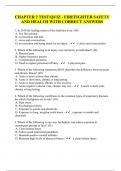
CHAPTER 2 TEST/QUIZ - FIREFIGHTER SAFETY AND HEALTH WITH CORRECT ANSWERS
1. In 2010 the leading causes of fire fatalities were: (46) A. live fire training. B. overexertion and falls. C. stress and overexertion. D. overexertion and being struck by an object. - c stress and overexertion 2. Which of the following is an injury cost carried by an individual? (48) A. Physical pain B. Higher insurance payout C. Compensation payments D. Need to replace personnel off duty - A physical pain 3. Which of the following statements BEST describes the difference between acute and chronic illness? (49) A. Acute is more serious than chronic. B. Acute is short term, chronic is long lasting. C. Acute is more painful, chronic is less invasive. D. Acute requires a doctor visit, chronic may not. - b acute is short term, chronic is long lasting 4. Which of the following contributes to the common types of respiratory diseases for which firefighters are at risk? (50) A. Heat stress B. Psychological stress C. Exposure to smoke and chemicals D. Exposure to long, irregular work hours - exposure to smoke and chemicals 5. Which of the following is one way firefighters can reduce exposure to carcinogens present in fires? (51) A. Clean helmet liners B. Follow good nutritional guidelines C. Maintain positive mental attitudes D. Maintain high levels of physical fitness - a clean helmet liners 6. Which of the following illnesses can result in headaches, nausea, and weakness in legs? (52) A. Obesity B. Alcohol abuse C. Cardiovascular disease D. Stress-induced hypertension - d stress-induced hypertension 7. Which of the following NFPA® standards establishes the design criteria for protective clothing and equipment? (55) A. 1403 B. 1582 C. 1851 D. 1977 - D 1977 8. Which NFPA® standard defines safe training practices and programs? (55) A. 1403 B. 1582 C. 1851 D. 1977 - A 1403 9. Which NFPA® standard sets requirements for care and maintenance of personal and respiratory protection equipment? (55) A. 1403 B. 1582 C. 1851 D. 1977 - C 1851 10. Which NFPA® standard specifies the minimum requirements for department safety and health programs? (56) A. 1407 B. 1500 C. 1851 D. 1977 - B 1500 11. Which of the following must a fire department's safety and health program address? (56) A. All anticipated hazards to which members may be exposed B. All hazards to which members have been exposed in the past C. Some anticipated hazards to which members may be exposed D. Some hazards which members have been exposed to in the past - A all anticipated hazards to which mebers may be exposed 12. Which of the following is a minimum requirement for protective clothing and equipment as established by NFPA® 1500? (57) A. New recruits may not need to train with PPE. B. Most personnel should be fully equipped with PPE. C. Protective equipment must meet current NFPA® design standard. D. Protective equipment must meet one of the two most current NFPA® design standards. - c. protective equipment must meet current nfpa design standard 13. According to NFPA® 1500 emergency operations are limited to: (57) A. those that are required to save the most lives. B. those that can be safely conducted by personnel on scene. C. those that can be started as soon as any personnel reach the scene. D. those that can be started as soon as the lives of all on scene are safe. - B. those that can be safely conudcted by personnel on scene 14. NFPA® 1500 requires that departments develop ___, including an annual medical verification of duty fitness. (59) A. physical performance standards for all personnel B. physical performance standards for new personnel C. physical performance standards for personnel participating in administrative positions D. physical performance standards for personnel participating in emergency operations - D physical performance standards for personal participating in emergency operations 15. Occupational Safety and Health Administration (OSHA) regulations only apply to federal employees unless: (60) A. local jurisdiction exempts the adoption of certain regulations. B. federal jurisdiction exempts the adoption of certain regulations. C. a federal jurisdiction decides not to adopt part of the regulations. D. a state jurisdiction decides to adopt them as part of local regulations. - D a state jurisdiciction decides to adopt them as part of local regulations
Escuela, estudio y materia
- Institución
- Firefighter
- Grado
- Firefighter
Información del documento
- Subido en
- 5 de noviembre de 2023
- Número de páginas
- 11
- Escrito en
- 2023/2024
- Tipo
- Examen
- Contiene
- Preguntas y respuestas
Temas
- firefighter
-
firefighter safety and health questions

Documento también disponible en un lote