

Bacterial Pili (Fimbriae): Types, Functions
Tracked down fundamentally in Gram-negative organic entities, fimbriae
or pili (solitary: pilus) are hair-like fibers (small empty projections) that
stretch out from the cell layer into the outer climate. A pilus is made out
of subunits of the protein pilin. Fimbriae (pili) are more limited,
straighter, and more various than bacterial flagella.
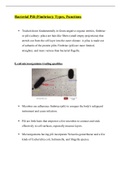
E.coli microorganisms trading qualities
Microbes use adherence fimbriae (pili) to conquer the body's safeguard
instrument and cause infection.
Pili are little hairs that empower a few microbes to connect and stick
effectively to cell surfaces, especially mucous layers.
Microorganisms having pili incorporate Neisseria gonorrhoeae and a few
kinds of Escherichia coli, Salmonella, and Shigella species.
Tracked down fundamentally in Gram-negative organic entities, fimbriae
or pili (solitary: pilus) are hair-like fibers (small empty projections) that
stretch out from the cell layer into the outer climate. A pilus is made out
of subunits of the protein pilin. Fimbriae (pili) are more limited,
straighter, and more various than bacterial flagella.
E.coli microorganisms trading qualities
Microbes use adherence fimbriae (pili) to conquer the body's safeguard
instrument and cause infection.
Pili are little hairs that empower a few microbes to connect and stick
effectively to cell surfaces, especially mucous layers.
Microorganisms having pili incorporate Neisseria gonorrhoeae and a few
kinds of Escherichia coli, Salmonella, and Shigella species.


