A01:
FORENSIC PSYCHOLOGY A03 evidence:
Zuckerman – studied MZ and DZ twins and A03: evaluation
Eysenck used self-report questionnaires,
supported Eysenck’s theory that personality is weakness because it allows people to give
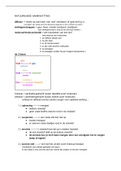
PSYCHOLOGICAL EXPLANATIONS FOR CRIME
highly genetic, found concordance rates of socially desirable answers which means results
EYSENCK’S THEORY: neuroticism and extroversion in MZ twins was lack validity.
50% (proves personality is not 100% which
Eysenck’s theory attempts to combine Bartol and Holanchock – found cultural
supports interactionist theory).
psychological and biological factors that make a differences in criminal personality traits,
‘criminal personality’. He measured personality Eysenck & Eysenck – found that the prisoners studied Hispanic and African – American
on a scale of 3 traits: scored more highly in psychoticism, prisoners and found them to be more
neuroticism and extraversion compared to introverted than a control group of non-
Extraversion --- Introversion offenders. Weakness as suggests Eysenck’s
control group of non-offenders. Supports
Neuroticism --- Stability theory that these traits and more likely to be research cannot be widely generalised.
criminal.
Psychoticism --- Normality
Extraverted people are more likely to be risk
takers and outgoing, whereas introverts are
more reserved. Neurotic people are anxious
and worriers, stable people are emotionally
calm. Psychotics are cruel and lack empathy,
tend to be more aggressive
Eysenck felt that people that were extraverted,
neurotic, psychotic had a ‘criminal personality’.
Extroverted people seek greater levels of
excitement, as they need more to stimulate
their reticular activating system. Similarly,
neurotic people have a highly active ANS
including adrenaline meaning it is harder to
manage emotions. Psyhcotic people have high
levesl of testerone, meaning more aggressive
and less empathy.
, A01:
All of these traits dispose someone to criminal A03 evidence: A03: evaluation
behaviour.
Eysenck measured personality by Eysenck
Personality Inventory (EPI), a psychological test
that measures peoples levels of the 3 factors.
COGNITIVE EXPLANATIONS: Smetena – support for Kohlberg as found in Kohlberg believed men were more likely to
controlled study that young offenders had a reach highest levels of moral reasoning, which
Kohlberg’s level of moral reasoning:
lower level of moral reasoning than non- is contradicted by the fact vast majority of
Studied moral dilemmas and composed 3 levels offenders. crime is committed by men.
of moral reasoning:
Thornton and Reid – found those who commit Kohlberg’s research highly conducted on men,
Pre-conventional level – decisions made to crimes such as robbery had a pre-conventional meaning it cannot be widely generalised.
avoid punishment and gain reward level or morality and a need to gain rewards. Sampling issues.
Conventional level – decisions reflect that of Palmer and Hollin – compared offenders to Contradicted by Gibbs idea of mature and
society and uphold standard control group and found both male and female immature reasoning, suggested Kohlberg’s
offenders had a less mature level of moral theory was culturally biased and ignored
Post-conventional level – only reached by about
reasoning. natural level of moral development (Piaget’s
10% of society, follow own moral code
egocentrism etc).
Chenn and Howitt – found those with highest
Kohlberg believed criminals are more likely to
level of moral reasoning were likely to commit
have pre-conventional morality, the lowest
most violent crimes.
level of reasoning, a child-like attitude. Will act
to gain rewards such as money or respect.
FORENSIC PSYCHOLOGY A03 evidence:
Zuckerman – studied MZ and DZ twins and A03: evaluation
Eysenck used self-report questionnaires,
supported Eysenck’s theory that personality is weakness because it allows people to give
PSYCHOLOGICAL EXPLANATIONS FOR CRIME
highly genetic, found concordance rates of socially desirable answers which means results
EYSENCK’S THEORY: neuroticism and extroversion in MZ twins was lack validity.
50% (proves personality is not 100% which
Eysenck’s theory attempts to combine Bartol and Holanchock – found cultural
supports interactionist theory).
psychological and biological factors that make a differences in criminal personality traits,
‘criminal personality’. He measured personality Eysenck & Eysenck – found that the prisoners studied Hispanic and African – American
on a scale of 3 traits: scored more highly in psychoticism, prisoners and found them to be more
neuroticism and extraversion compared to introverted than a control group of non-
Extraversion --- Introversion offenders. Weakness as suggests Eysenck’s
control group of non-offenders. Supports
Neuroticism --- Stability theory that these traits and more likely to be research cannot be widely generalised.
criminal.
Psychoticism --- Normality
Extraverted people are more likely to be risk
takers and outgoing, whereas introverts are
more reserved. Neurotic people are anxious
and worriers, stable people are emotionally
calm. Psychotics are cruel and lack empathy,
tend to be more aggressive
Eysenck felt that people that were extraverted,
neurotic, psychotic had a ‘criminal personality’.
Extroverted people seek greater levels of
excitement, as they need more to stimulate
their reticular activating system. Similarly,
neurotic people have a highly active ANS
including adrenaline meaning it is harder to
manage emotions. Psyhcotic people have high
levesl of testerone, meaning more aggressive
and less empathy.
, A01:
All of these traits dispose someone to criminal A03 evidence: A03: evaluation
behaviour.
Eysenck measured personality by Eysenck
Personality Inventory (EPI), a psychological test
that measures peoples levels of the 3 factors.
COGNITIVE EXPLANATIONS: Smetena – support for Kohlberg as found in Kohlberg believed men were more likely to
controlled study that young offenders had a reach highest levels of moral reasoning, which
Kohlberg’s level of moral reasoning:
lower level of moral reasoning than non- is contradicted by the fact vast majority of
Studied moral dilemmas and composed 3 levels offenders. crime is committed by men.
of moral reasoning:
Thornton and Reid – found those who commit Kohlberg’s research highly conducted on men,
Pre-conventional level – decisions made to crimes such as robbery had a pre-conventional meaning it cannot be widely generalised.
avoid punishment and gain reward level or morality and a need to gain rewards. Sampling issues.
Conventional level – decisions reflect that of Palmer and Hollin – compared offenders to Contradicted by Gibbs idea of mature and
society and uphold standard control group and found both male and female immature reasoning, suggested Kohlberg’s
offenders had a less mature level of moral theory was culturally biased and ignored
Post-conventional level – only reached by about
reasoning. natural level of moral development (Piaget’s
10% of society, follow own moral code
egocentrism etc).
Chenn and Howitt – found those with highest
Kohlberg believed criminals are more likely to
level of moral reasoning were likely to commit
have pre-conventional morality, the lowest
most violent crimes.
level of reasoning, a child-like attitude. Will act
to gain rewards such as money or respect.