Financial modeling process
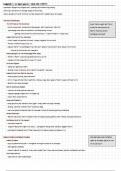
1. Establish needs
2. Define outputs
3. Collect data inputs
4. Design model
5. Build model
6. Test model
7. Implement model
Model classification
1. Empirical (data driven) vs. theoretical
a. Empirical model tries to describe underlying data generating process as good
as possible e.g. machine learning model → data to model
b. Theoretical model makes testable predictions based on abstract reasoning
and set of assumptions e.g. Black Scholes Model → theory to model
2. Deterministic vs. probabilistic (stochastic) model
a. Deterministic model does not have random/uncertain term → e.g. CAPM
b. Probabilistic model does have random/uncertain term → e.g. regression
3. Discrete vs. continuous variables model
a. Discrete variable can take only discrete (specific) values → binomial tree
b. Continuous variable can take any value within certain range → BS model
4. Discrete vs. continuous time model
a. Discrete time: value of variable can change at fixed points in time
b. Continuous time: value of variable can change at any point in time
5. Cross-sectional vs. time-series vs. panel data model
a. Cross sectional: comparing multiple units (companies, stocks) at a point in
time
b. Time series: track one unit (company, stock, country) over time
c. Panel: track multiple units over multiple periods
Monte Carlo simulation is a powerful computer-based technique used to analyse and
account for uncertainty in financial decision making.
Sources of model risk
a. Specification (design):conceptual mistakes, misspecification of statistical model
b. Implementation: spreadsheet/programming flaws, wrong inputs, estimation error
c. Application (scope): function creep, misinterpretation of model outputs
d. Environment: time-varying parameters, relations break down (regime shifts)
,Module 1.1
Hedge fund: a private investment pool, open to institutional or wealthy investors, that is
largely exempt from SEC regulations and can pursue more speculative investment policies
than mutual funds.
- Hedge fund strategies focus on absolute returns
- In contrast to mutual funds, hedge funds may: use extensive leverage, engage in
short selling, use derivatives, liquidity often low, manager pay based on performance,
large fees
Funds of funds: a hedge fund that's investing in other hedge funds
Since 2008 a gradual decline in funds of funds → high fees and poor performance
Most of the hedge funds are located* in Delaware and the cayman islands, attractive taxes
The most common reason why institutional investors allocate money into hedge funds is the
alpha generation.
Module 1.2
● Management fee plus incentive / performance fee
○ Usually 2% of AUM + 20% of gains (2/20 scheme)
○ Incentive fee can be modeled as call option → may encourage excessive risk
taking by HF manager (asymmetric payoff)
● High water mark
○ If fund experiences losses, incentive fee only paid when it makes up for these
losses → creates incentive to shut down fund after poor performance and
start a new one
● Funds of funds
○ Usually 1% management fee and 10% incentive fee
○ FoF pays incentive fee to each underlying HF (fee-on-fee)
○ FoF investor might have to pay an investment fee even though the gross
return is negative (assume hurdle rate is zero)
Correlations between hedge funds and other asset classes are higher during periods of
recessions than periods outside of recessions, which suggests that the diversification benefit
of hedge funds is lower than anticipated.
Why do hedge funds underperform?: too many hedge funds chasing limited opportunities to
generate alpha!
, Module 1.3
Alpha = abnormal return relative to a set of benchmark factors
Beta = exposure to the benchmark factors
Hedge fund strategies:
1. Directional (bets)
a. Bets on the direction of financial or economic variables
b. Based on fundamental investment approach
c. Typically not market neutral (positive or negative exposure)
2. Non directional (arbitrage: but no free lunches)
a. Exploit temporary misalignments in security valuations
b. Often quantitative investment approach (e.g. pairs trading)
a. long/short equity hedge: equity-oriented positions on either side of the market,
depending on out-look.
b. Convertible arbitrage: hedged investing in convertible securities, typically long
convertible bonds and short stock.
Largest HF strategies: long/short equities, multi-strategy
When a strategy has the highest Sharpe ratio it means that the strategy offers the largest
reward per unit of risk.
Why do we care about alphas and betas?
1. No point to pay fee for beta exposure that you can get yourself through index fund or
ETF → only pay for alpha
2. Allows to check if HF manager follows proclaimed strategy
3. Investor can short market index (futures/ETF) to remove market risk
Portable alpha: the investors earns a beta in one asset and alpha in another, often
implemented using futures contracts → future overlay strategy
𝐶𝐴𝑃𝑀: 𝑅𝑖 − 𝑅𝑓 = α + β[𝐸(𝑅𝑚) − 𝑅𝑓] + ε
Goal: separate asset allocation (beta) from security selection (alpha)
1. Establish needs
2. Define outputs
3. Collect data inputs
4. Design model
5. Build model
6. Test model
7. Implement model
Model classification
1. Empirical (data driven) vs. theoretical
a. Empirical model tries to describe underlying data generating process as good
as possible e.g. machine learning model → data to model
b. Theoretical model makes testable predictions based on abstract reasoning
and set of assumptions e.g. Black Scholes Model → theory to model
2. Deterministic vs. probabilistic (stochastic) model
a. Deterministic model does not have random/uncertain term → e.g. CAPM
b. Probabilistic model does have random/uncertain term → e.g. regression
3. Discrete vs. continuous variables model
a. Discrete variable can take only discrete (specific) values → binomial tree
b. Continuous variable can take any value within certain range → BS model
4. Discrete vs. continuous time model
a. Discrete time: value of variable can change at fixed points in time
b. Continuous time: value of variable can change at any point in time
5. Cross-sectional vs. time-series vs. panel data model
a. Cross sectional: comparing multiple units (companies, stocks) at a point in
time
b. Time series: track one unit (company, stock, country) over time
c. Panel: track multiple units over multiple periods
Monte Carlo simulation is a powerful computer-based technique used to analyse and
account for uncertainty in financial decision making.
Sources of model risk
a. Specification (design):conceptual mistakes, misspecification of statistical model
b. Implementation: spreadsheet/programming flaws, wrong inputs, estimation error
c. Application (scope): function creep, misinterpretation of model outputs
d. Environment: time-varying parameters, relations break down (regime shifts)
,Module 1.1
Hedge fund: a private investment pool, open to institutional or wealthy investors, that is
largely exempt from SEC regulations and can pursue more speculative investment policies
than mutual funds.
- Hedge fund strategies focus on absolute returns
- In contrast to mutual funds, hedge funds may: use extensive leverage, engage in
short selling, use derivatives, liquidity often low, manager pay based on performance,
large fees
Funds of funds: a hedge fund that's investing in other hedge funds
Since 2008 a gradual decline in funds of funds → high fees and poor performance
Most of the hedge funds are located* in Delaware and the cayman islands, attractive taxes
The most common reason why institutional investors allocate money into hedge funds is the
alpha generation.
Module 1.2
● Management fee plus incentive / performance fee
○ Usually 2% of AUM + 20% of gains (2/20 scheme)
○ Incentive fee can be modeled as call option → may encourage excessive risk
taking by HF manager (asymmetric payoff)
● High water mark
○ If fund experiences losses, incentive fee only paid when it makes up for these
losses → creates incentive to shut down fund after poor performance and
start a new one
● Funds of funds
○ Usually 1% management fee and 10% incentive fee
○ FoF pays incentive fee to each underlying HF (fee-on-fee)
○ FoF investor might have to pay an investment fee even though the gross
return is negative (assume hurdle rate is zero)
Correlations between hedge funds and other asset classes are higher during periods of
recessions than periods outside of recessions, which suggests that the diversification benefit
of hedge funds is lower than anticipated.
Why do hedge funds underperform?: too many hedge funds chasing limited opportunities to
generate alpha!
, Module 1.3
Alpha = abnormal return relative to a set of benchmark factors
Beta = exposure to the benchmark factors
Hedge fund strategies:
1. Directional (bets)
a. Bets on the direction of financial or economic variables
b. Based on fundamental investment approach
c. Typically not market neutral (positive or negative exposure)
2. Non directional (arbitrage: but no free lunches)
a. Exploit temporary misalignments in security valuations
b. Often quantitative investment approach (e.g. pairs trading)
a. long/short equity hedge: equity-oriented positions on either side of the market,
depending on out-look.
b. Convertible arbitrage: hedged investing in convertible securities, typically long
convertible bonds and short stock.
Largest HF strategies: long/short equities, multi-strategy
When a strategy has the highest Sharpe ratio it means that the strategy offers the largest
reward per unit of risk.
Why do we care about alphas and betas?
1. No point to pay fee for beta exposure that you can get yourself through index fund or
ETF → only pay for alpha
2. Allows to check if HF manager follows proclaimed strategy
3. Investor can short market index (futures/ETF) to remove market risk
Portable alpha: the investors earns a beta in one asset and alpha in another, often
implemented using futures contracts → future overlay strategy
𝐶𝐴𝑃𝑀: 𝑅𝑖 − 𝑅𝑓 = α + β[𝐸(𝑅𝑚) − 𝑅𝑓] + ε
Goal: separate asset allocation (beta) from security selection (alpha)