BIO 121 EXAM 2 | ACTUAL VERIFIED STUDY |
2026 UPDATES | ALREADY PASSED
, lOMoAR cPSD| 61371432
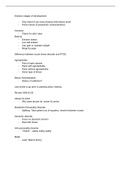
BIO 121 NOTES
Exam 2: 10/19
Chapter 6: A Tour of the Cell
- Most cells synthesize and secrete materials that are external to the plasma membrane;
these extracellular structures are involved in many cellular functions
Basic features of all cells: plasma membrane, cytosol, chromosomes, ribosomes
Cytosol: semifluid substance
Ribosomes: complexes made of ribosomal RNA and protein; carry out protein synthesis in the
cytosol (free ribosomes)and on the outside of the endoplasmic reticulum or nuclear envelope
(bound ribosomes)
Microscope: used to visualize cells
Light microscope: visible light is passed through a specimen and then through glass lenses;
lenses refract or bend the light so that the image is magnified (can magnify effectively to about
1,000 times the size of the actual specimen)
- Various techniques enhance contrast and enable cell components to be stained or labeled
- Recent advances give new techniques for labeling cells that improve resolution and
confocal microscopy and deconvolution microscopy provide sharper images of 3D
tissues and cells
3 important parameters of microscopy:
1. Magnification: the ratio of an object’s image size to its real size
2. Resolution: the
3. Contrast
Organelle: membrane-enclosed structures in eukaryotic cells; standard light microscopy
resolution is too low to study them (plant and animal cells have most of the same organelles)
Basic electron microscopes: used to study subcellular structures
1. Scanning electron microscope (SEM): focuses a beam of electrons onto the surface of a
specimen, providing images that look 3D
2. Transmission electron microscope (TEM): focuses a beam of electrons through a
specimen; used mainly to study the internal structure of cells
Cell fractionation: takes cells apart and separates the major organelles from 1 another; enables
scientists to determine the functions of organelles (centrifuges fractionate cells into their
component parts)
- Biochemistry and cytology help correlate cell function and structure
Nucleoid: unbound region
Nucleus: contains most of the cell’s genes; usually the most conspicuous organelle (DNA is
organized into chromosomes which are discrete units)
Nuclear envelope: encloses nucleus and separates it from the cytoplasm
, lOMoAR cPSD| 61371432
Nuclear membrane: double membrane where each membrane consists of a lipid bilayer
Pore: regulates entry and exit of molecules from the nucleus
Nuclear lamina: lines the nuclear size of the nuclear envelope; composed of proteins and
maintains the shape of the nucleus
Nucleolus: site of ribosomal RNA synthesis; located within the nucleus
Chromatin: DNA and proteins of chromosomes together; condense to form discrete
chromosomes as a cell prepares to divide
Endomembrane system: compartmental organization, regulates protein traffic and performs
metabolic functions in the cell; consists of nuclear envelope, endoplasmic reticulum, golgi
apparatus, lysosomes, vacuoles, plasma membrane (these components are either continuous or
connected via transfer of vesicles)
Endoplasmic reticulum: accounts for more than ½ of the total membrane in many eukaryotic
cells; continuous with the nuclear envelope - 2 distinct regions of the ER:
1. Smooth: lacks ribosomes, synthesizes lipids, metabolizes carbohydrates, detoxifies drugs
and poisons, stores calcium ions
2. Rough: surface is studded with ribosomes which secret glycoproteins, distributes
transport vesicles, membrane factory for the cell
Glycoproteins: proteins covalently bonded to carbohydrates
Transport vesicles: secretory proteins surrounded by membranes
Vacuole: large vesicle derived from the ER and golgi apparatus; perform a variety of functions
in different kinds of cells
- Food vacuole: formed by phagocytosis
- Contractile vacuole: found in many freshwater protists; pumps excess water out of cells
- Central vacuole: found in many mature plant cells; holds organic compounds and water
Golgi apparatus: shipping and receiving center; consists of cisternae (modifies products of the
ER, manufactures certain macromolecules, sorts and packages material into transport vesicles)
Cisternae: flattened membranous sacs
Lysosome: membranous sac of hydrolytic enzymes that can digest macromolecules; lysosomal
enzymes work best in the acidic environment inside the lysosome (hydrolytic enzymes and
lysosomal membranes are made by the rough ER and then transferred to the golgi apparatus for
further processing)
Autophagy: process used by lysosomes where enzymes are used to recycle the cell’s own
organelles and macromolecules
Phagocytosis: how some types of cells can engulf another cell; forms a food vacuole (lysosome
fuses with the food vacuole and digests the molecules)
Mitochondria: sites of cellular respiration (has similarities with bacteria); are in nearly all
eukaryotic cells and have a smooth outer membrane and an inner membrane folded into cristae
- Inner membrane creates 2 compartments: intermembrane space and mitochondrial matrix
2026 UPDATES | ALREADY PASSED
, lOMoAR cPSD| 61371432
BIO 121 NOTES
Exam 2: 10/19
Chapter 6: A Tour of the Cell
- Most cells synthesize and secrete materials that are external to the plasma membrane;
these extracellular structures are involved in many cellular functions
Basic features of all cells: plasma membrane, cytosol, chromosomes, ribosomes
Cytosol: semifluid substance
Ribosomes: complexes made of ribosomal RNA and protein; carry out protein synthesis in the
cytosol (free ribosomes)and on the outside of the endoplasmic reticulum or nuclear envelope
(bound ribosomes)
Microscope: used to visualize cells
Light microscope: visible light is passed through a specimen and then through glass lenses;
lenses refract or bend the light so that the image is magnified (can magnify effectively to about
1,000 times the size of the actual specimen)
- Various techniques enhance contrast and enable cell components to be stained or labeled
- Recent advances give new techniques for labeling cells that improve resolution and
confocal microscopy and deconvolution microscopy provide sharper images of 3D
tissues and cells
3 important parameters of microscopy:
1. Magnification: the ratio of an object’s image size to its real size
2. Resolution: the
3. Contrast
Organelle: membrane-enclosed structures in eukaryotic cells; standard light microscopy
resolution is too low to study them (plant and animal cells have most of the same organelles)
Basic electron microscopes: used to study subcellular structures
1. Scanning electron microscope (SEM): focuses a beam of electrons onto the surface of a
specimen, providing images that look 3D
2. Transmission electron microscope (TEM): focuses a beam of electrons through a
specimen; used mainly to study the internal structure of cells
Cell fractionation: takes cells apart and separates the major organelles from 1 another; enables
scientists to determine the functions of organelles (centrifuges fractionate cells into their
component parts)
- Biochemistry and cytology help correlate cell function and structure
Nucleoid: unbound region
Nucleus: contains most of the cell’s genes; usually the most conspicuous organelle (DNA is
organized into chromosomes which are discrete units)
Nuclear envelope: encloses nucleus and separates it from the cytoplasm
, lOMoAR cPSD| 61371432
Nuclear membrane: double membrane where each membrane consists of a lipid bilayer
Pore: regulates entry and exit of molecules from the nucleus
Nuclear lamina: lines the nuclear size of the nuclear envelope; composed of proteins and
maintains the shape of the nucleus
Nucleolus: site of ribosomal RNA synthesis; located within the nucleus
Chromatin: DNA and proteins of chromosomes together; condense to form discrete
chromosomes as a cell prepares to divide
Endomembrane system: compartmental organization, regulates protein traffic and performs
metabolic functions in the cell; consists of nuclear envelope, endoplasmic reticulum, golgi
apparatus, lysosomes, vacuoles, plasma membrane (these components are either continuous or
connected via transfer of vesicles)
Endoplasmic reticulum: accounts for more than ½ of the total membrane in many eukaryotic
cells; continuous with the nuclear envelope - 2 distinct regions of the ER:
1. Smooth: lacks ribosomes, synthesizes lipids, metabolizes carbohydrates, detoxifies drugs
and poisons, stores calcium ions
2. Rough: surface is studded with ribosomes which secret glycoproteins, distributes
transport vesicles, membrane factory for the cell
Glycoproteins: proteins covalently bonded to carbohydrates
Transport vesicles: secretory proteins surrounded by membranes
Vacuole: large vesicle derived from the ER and golgi apparatus; perform a variety of functions
in different kinds of cells
- Food vacuole: formed by phagocytosis
- Contractile vacuole: found in many freshwater protists; pumps excess water out of cells
- Central vacuole: found in many mature plant cells; holds organic compounds and water
Golgi apparatus: shipping and receiving center; consists of cisternae (modifies products of the
ER, manufactures certain macromolecules, sorts and packages material into transport vesicles)
Cisternae: flattened membranous sacs
Lysosome: membranous sac of hydrolytic enzymes that can digest macromolecules; lysosomal
enzymes work best in the acidic environment inside the lysosome (hydrolytic enzymes and
lysosomal membranes are made by the rough ER and then transferred to the golgi apparatus for
further processing)
Autophagy: process used by lysosomes where enzymes are used to recycle the cell’s own
organelles and macromolecules
Phagocytosis: how some types of cells can engulf another cell; forms a food vacuole (lysosome
fuses with the food vacuole and digests the molecules)
Mitochondria: sites of cellular respiration (has similarities with bacteria); are in nearly all
eukaryotic cells and have a smooth outer membrane and an inner membrane folded into cristae
- Inner membrane creates 2 compartments: intermembrane space and mitochondrial matrix