Organs associated with Gastrointestinal tract
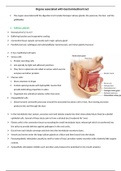
The organs associated with the digestive tract include themajor salivary glands, the pancreas, the liver, and the
gallbladder.
Salivary glands:
Normal pH of 6.5 to 6.9
Buffering function and evaporative cooling
Connective tissue capsule surrounds each major salivary gland
Parotids (serous), sublingual and submandibular (seromucous), and minor glands (mucous)
It has 3 epithelial cell types:
Serous cells:
1. Protein-secreting cells
2. Join apically by tight and adherent junctions
3. They form a spherical unit called an acinus which secrete
enzymes and other proteins
Mucous cells:
1. More columnar in shape
2. Contain apical granules with hydrophilic mucins that
provide lubricating properties in saliva
3. Organized into cylindrical tubules rather than acini.
Myoepithelial cells:
1. Extend several contractile processes around the associated secretory unit or duct, thus moving secretory
products into and through the duct.
In the intralobular duct system, secretory acini and tubules empty into short intercalated ducts lined by cuboidal
epithelial cells. Several of these ducts join to form a striated duct (reabsorb Na + ions)
Plasma cells in the connective tissue surrounding the small intralobular ducts release IgA which is transferred into
the saliva to provide defense against pathogens in the oral cavity.
Ducts from each lobule converge and drain into the interlobular excretory ducts.
Vessels and nerves enter the large salivary glands at a hilum and then branch into the lobule.
Parasympathetic stimulation usually by smell or taste of food, provokes watery secretion with relatively little organic
content.
Sympathetic stimulation inhibits such secretion and produces the potential for dry mouth (anxiety)
, The 3 groups of salivary glands: About 90% of saliva is produced by three
Parotid glands: bilateral pairs of salivary glands: the
1. Located in each cheek near the ear
parotid, submandibular, and sublingual
2. They are branched acinar glands with exclusively serous acini.
3. Serous cells secrete alpha amylase that initiates hydrolysis of carbohydrates and proline-rich proteins with
antimicrobial properties.
Submandibular glands:
1. Produce two-thirds of all saliva
2. They are branched tubuloacinar glands (mucous and serous), having primarily serous acini.
3. Serous cells of this gland secrete other enzymes in addition to alpha amylase, including lysozyme for bacterial
wall hydrolysis.
Sublingual glands:
1. Smallest of all major glands
2. They are branched tubuloacinar glands but tubules of mucous cells predominate and the main product of the
gland is mucus.
3. The few serous glands add amylase and lysozyme to the secretion.
Pancreas:
Mixed exocrine-endocrine gland that produces both digestive enzymes and hormones.
It is a retroperitoneal organ with a large head near the duodenum
Has a thin capsule of connective tissue
Endocrine functions of the pancreas involves smaller cells called pancreatic islets (islets of Langerhans).
The digestive enzymes are produced by cells of serous acini in the larger exocrine portion of the pancreas.
The acinar cells have numerous zymogen granules apically
Each acinus is drained by a short intercalated duct of simple squamous epithelium
These cells extend into the lumen of the acinus as centroacinar cells that are unique to the pancreas.
Cells of the intercalated ducts secrete a large volume of fluid rich in HCO 3- (bicarbonate ions).
The intercalated ducts merge with the intralobular ducts and larger interlobular ducts before joining the main
pancreatic duct.
The exocrine pancreas releases 1.5 L of alkaline pancreatic juice per day directly into the duodenum.
The bicarbonate there neutralizes the acidic chyme entering from the stomach and establish the pH for optimal
activity of pancreatic enzymes.
These digestive enzymes include proteases, alpha-amylase, lipases, and nucleases (DNAase and RNAase).
The proteases are secreted as inactive zymogens
Trypsinogen is cleaved and activated by enteropeptidases in the duodenum generating trypsin that activates other
proteases in a cascade.
The organs associated with the digestive tract include themajor salivary glands, the pancreas, the liver, and the
gallbladder.
Salivary glands:
Normal pH of 6.5 to 6.9
Buffering function and evaporative cooling
Connective tissue capsule surrounds each major salivary gland
Parotids (serous), sublingual and submandibular (seromucous), and minor glands (mucous)
It has 3 epithelial cell types:
Serous cells:
1. Protein-secreting cells
2. Join apically by tight and adherent junctions
3. They form a spherical unit called an acinus which secrete
enzymes and other proteins
Mucous cells:
1. More columnar in shape
2. Contain apical granules with hydrophilic mucins that
provide lubricating properties in saliva
3. Organized into cylindrical tubules rather than acini.
Myoepithelial cells:
1. Extend several contractile processes around the associated secretory unit or duct, thus moving secretory
products into and through the duct.
In the intralobular duct system, secretory acini and tubules empty into short intercalated ducts lined by cuboidal
epithelial cells. Several of these ducts join to form a striated duct (reabsorb Na + ions)
Plasma cells in the connective tissue surrounding the small intralobular ducts release IgA which is transferred into
the saliva to provide defense against pathogens in the oral cavity.
Ducts from each lobule converge and drain into the interlobular excretory ducts.
Vessels and nerves enter the large salivary glands at a hilum and then branch into the lobule.
Parasympathetic stimulation usually by smell or taste of food, provokes watery secretion with relatively little organic
content.
Sympathetic stimulation inhibits such secretion and produces the potential for dry mouth (anxiety)
, The 3 groups of salivary glands: About 90% of saliva is produced by three
Parotid glands: bilateral pairs of salivary glands: the
1. Located in each cheek near the ear
parotid, submandibular, and sublingual
2. They are branched acinar glands with exclusively serous acini.
3. Serous cells secrete alpha amylase that initiates hydrolysis of carbohydrates and proline-rich proteins with
antimicrobial properties.
Submandibular glands:
1. Produce two-thirds of all saliva
2. They are branched tubuloacinar glands (mucous and serous), having primarily serous acini.
3. Serous cells of this gland secrete other enzymes in addition to alpha amylase, including lysozyme for bacterial
wall hydrolysis.
Sublingual glands:
1. Smallest of all major glands
2. They are branched tubuloacinar glands but tubules of mucous cells predominate and the main product of the
gland is mucus.
3. The few serous glands add amylase and lysozyme to the secretion.
Pancreas:
Mixed exocrine-endocrine gland that produces both digestive enzymes and hormones.
It is a retroperitoneal organ with a large head near the duodenum
Has a thin capsule of connective tissue
Endocrine functions of the pancreas involves smaller cells called pancreatic islets (islets of Langerhans).
The digestive enzymes are produced by cells of serous acini in the larger exocrine portion of the pancreas.
The acinar cells have numerous zymogen granules apically
Each acinus is drained by a short intercalated duct of simple squamous epithelium
These cells extend into the lumen of the acinus as centroacinar cells that are unique to the pancreas.
Cells of the intercalated ducts secrete a large volume of fluid rich in HCO 3- (bicarbonate ions).
The intercalated ducts merge with the intralobular ducts and larger interlobular ducts before joining the main
pancreatic duct.
The exocrine pancreas releases 1.5 L of alkaline pancreatic juice per day directly into the duodenum.
The bicarbonate there neutralizes the acidic chyme entering from the stomach and establish the pH for optimal
activity of pancreatic enzymes.
These digestive enzymes include proteases, alpha-amylase, lipases, and nucleases (DNAase and RNAase).
The proteases are secreted as inactive zymogens
Trypsinogen is cleaved and activated by enteropeptidases in the duodenum generating trypsin that activates other
proteases in a cascade.