Scheduling the Project
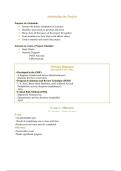
Purpose of a Schedule:
● Ensures the timely completion of a project
● Identifies what needs to get done and when
● Shows how all the pieces of the project fit together
● Team members see how their work affects others
● Used to monitor and control the project
Formats to create a Project Schedule:
● Gantt Charts
● Network Diagram
- PERT Network
- CPM Network
Network Diagrams
(Developed in the 1950s)
• Developed in the 1950’s
– A diagram of nodes and arrows (directional arcs)
– Illustrate the flow of activities
• Program Evaluation and Review Technique (PERT)
– U.S. Navy, Booz-Allen Hamilton, and Lockheed Aircraft
– Probabilistic activity durations (randomness)
– AOA
• Critical Path Method (CPM)
– Dupont De Nemours Inc.
– Deterministic activity durations (originally)
– AON
Event vs. Milestone
(0” duration – 0 hours or days)
Event
• An identifiable state
– Result of completing one or more activities
• Predecessor activities must be completed
Milestone
• Noteworthy event
• Marks significant progress
, Task Dependencies
(Precedence Diagram)
• Finish to Start
– Activity (predecessor) must finish before the successor can start.
– Dig hole – plant tree
• Start to Start
– Activity (predecessor) must start before the successor can start.
– Design code - code
• Finish to Finish
– Activity (predecessor) must finish before the successor can finish
– Test - documentation
• Start to Finish
– Activity (predecessor) must start before the successor can finish.
– Software cutover; new system implementation
An activity is an element of work that has:
– an expected duration
– a cost
– resource requirements
– predecessor
– successor
Sequencing Events (CPM)
, ● Path: A series of connected activities between two events (i.e. start/finish)
- Helps calculate Project Duration
Merge vs. Burst
Merge: An event which represents the joint completion of multiple activities.
Burst: An event which represents the beginning of multiple activities.
Critical Path
“Critical path”
- Series of activities (path) that determines the earliest time project can be completed
- Longest path through the network diagram
- Has the least amount of slack or float
What is Slack or Float?
- Amount of time an activity may be delayed without delaying project finish date
● Free – impacts successor
● Total – impacts total project
Critical Path Calculations
● First develop a good network diagram
● Add the duration estimates for all activities
● Calculated Early Start/Finish and Late Start/Finish/Slack
● The longest path is the critical path
- Activities have no slack
- If activities on the critical path slips, the whole project will be delayed
- Alerts PM to take corrective action
● Activities on all paths must be completed to finish the project
● The critical path is not the one with all the critical activities; it only accounts for time
● There can be more than one critical path if the lengths of two or more paths are the
same
● The critical path can change as the project progresses
Purpose of a Schedule:
● Ensures the timely completion of a project
● Identifies what needs to get done and when
● Shows how all the pieces of the project fit together
● Team members see how their work affects others
● Used to monitor and control the project
Formats to create a Project Schedule:
● Gantt Charts
● Network Diagram
- PERT Network
- CPM Network
Network Diagrams
(Developed in the 1950s)
• Developed in the 1950’s
– A diagram of nodes and arrows (directional arcs)
– Illustrate the flow of activities
• Program Evaluation and Review Technique (PERT)
– U.S. Navy, Booz-Allen Hamilton, and Lockheed Aircraft
– Probabilistic activity durations (randomness)
– AOA
• Critical Path Method (CPM)
– Dupont De Nemours Inc.
– Deterministic activity durations (originally)
– AON
Event vs. Milestone
(0” duration – 0 hours or days)
Event
• An identifiable state
– Result of completing one or more activities
• Predecessor activities must be completed
Milestone
• Noteworthy event
• Marks significant progress
, Task Dependencies
(Precedence Diagram)
• Finish to Start
– Activity (predecessor) must finish before the successor can start.
– Dig hole – plant tree
• Start to Start
– Activity (predecessor) must start before the successor can start.
– Design code - code
• Finish to Finish
– Activity (predecessor) must finish before the successor can finish
– Test - documentation
• Start to Finish
– Activity (predecessor) must start before the successor can finish.
– Software cutover; new system implementation
An activity is an element of work that has:
– an expected duration
– a cost
– resource requirements
– predecessor
– successor
Sequencing Events (CPM)
, ● Path: A series of connected activities between two events (i.e. start/finish)
- Helps calculate Project Duration
Merge vs. Burst
Merge: An event which represents the joint completion of multiple activities.
Burst: An event which represents the beginning of multiple activities.
Critical Path
“Critical path”
- Series of activities (path) that determines the earliest time project can be completed
- Longest path through the network diagram
- Has the least amount of slack or float
What is Slack or Float?
- Amount of time an activity may be delayed without delaying project finish date
● Free – impacts successor
● Total – impacts total project
Critical Path Calculations
● First develop a good network diagram
● Add the duration estimates for all activities
● Calculated Early Start/Finish and Late Start/Finish/Slack
● The longest path is the critical path
- Activities have no slack
- If activities on the critical path slips, the whole project will be delayed
- Alerts PM to take corrective action
● Activities on all paths must be completed to finish the project
● The critical path is not the one with all the critical activities; it only accounts for time
● There can be more than one critical path if the lengths of two or more paths are the
same
● The critical path can change as the project progresses