100% Zufriedenheitsgarantie Sofort verfügbar nach Zahlung Sowohl online als auch als PDF Du bist an nichts gebunden 4.2 TrustPilot
logo-home
Prüfung

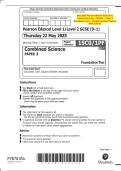
May 2025 Pearson Edexcel: GCSE (9–1) Combined Science – ISCO/3F – Paper 3 (Foundation Tier) – Merged Question Paper & Mark Scheme

Bewertung
-
Verkauft
-
seiten
48
Klasse
A+
Hochgeladen auf
04-10-2025
geschrieben in
2025/2026

May 2025 Pearson Edexcel: GCSE (9–1) Combined Science – ISCO/3F – Paper 3 (Foundation Tier) – Merged Question Paper & Mark Scheme DO NOT WRITE IN THIS AREA DO NOT WRITE IN THIS AREA BLANK PAGE 2 ■ ■ ■ ■ infrared gamma ultraviolet radio waves Answer ALL questions. Write your answers in the spaces provided. Some questions must be answered with a cross in one of the four boxes . If you change your mind about an answer, put a line through the box and then mark your new answer with a cross . 1 (a) Draw one straight line from each electromagnetic radiation to its correct description. electromagnetic radiation (b) Different colours of light have different frequencies. Which of these colours has the highest frequency? A blue B green C red D yellow ■■■■ description (3) (1) 3 Turn over the most dangerous radiation may damage eyes, so sunglasses worn as protection the least dangerous radiation used in night vision cameras DO NOT WRITE IN THIS AREA DO NOT WRITE IN THIS AREA DO NOT WRITE IN THIS AREA ray of light coming in glass block ray of light going out (c) Figure 1 is a diagram of a glass block being used to investigate the refraction of light. (Source: © ajizai/) Figure 1 The angle of incidence was varied and the angle of refraction was measured each time. Figure 2 shows the results in a table. angle of incidence in degrees angle of refraction in degrees 20 13 30 20 40 25 50 31 60 35 70 39 80 41 Figure 2 4 ■■■■ DO NOT WRITE IN THIS AREA DO NOT WRITE IN THIS AREA DO NOT WRITE IN THIS AREA Figure 3 shows a graph of these results. 45 40 35 30 angle ofrefraction 25 in degrees 20 15 10 5 0 angle of incidence in degrees Figure 3 (i) The two shaded rows in Figure 2 are not plotted on the graph in Figure 3. Plot these missing results on the graph in Figure 3. (ii) Draw a curve of best fit through the points on the graph in Figure 3. (iii) Using figure 3, describe the relationship between the angle of refraction and the angle of incidence. (2) (1) (2) . . . . . . . . . . . . . . . . . . . . . . . . . . . . . . . . . . . . . . . . . . . . . . . . . . . . . . . . . . . . . . . . . . . . . . . . . . . . . . . . . . . . . . . . . . . . . . . . . . . . . . . . . . . . . . . . . . . . . . . . . . . . . . . . . . . . . . . . . . . . . . . . . . . . . . . . . . . . . . . . . . . . . . . . . . . . . . . . . . . . . . . . . . . . . . . . . . . . . . . . . . . . . . . . . . . . . . . . . . . . . . . . . . . . . . . . . . . . . . . . . . . . . . . . . . . . . . .. . . . . .. . . . . .. . . . . . . . . . . . . . . . . . . . . . . . . . . . . . . . . . . . . . . . . . . . . . . . . . . . . . . . . . . . . . . . . . . . . . . . . . . . . . . . . . . . . . . . . . . . . . . . . . . . . . . . . . . . . . . . . . . . . . . . . . . . . . . . . . . . . . . . . . . . . . . . . . . . . . . . . . . . . . . . . . . . . . . . . . . . . . . . . . . . . . . . . . . . . . . . . . . . . . . . . . . . . . . . . . . . . . . . . . . . . . . . . . . . . . . . . . . . . . . . . . . . . . . . . . . . . . . . . . . . . . . .. . . . . .. . . . . .. . . . . . . . . . . . . . . . . . . . . . . . . . . . . . . . . . . . . . . . . . . . . . . . . . . . . . . . . . . . . . . . . . . . . . . . . . . . . . . . . . . . . . . . . . . . . . . . . . . . . . . . . . . . . . . . . . . . . . . . . . . . . . . . . . . . . . . . . . . . . . . . . . . . . . . . . . . . . . . . . . . . . . . . . . . . . . . . . . . . . . . . . . . . . . . . . . . . . . . . . . . . . . . . . . . . . . . . . . . . . . . . . . . . . . . . . . . . . . . . . . . . . . . . . . . . . . . . . . . . . . . .. . . . . .. . . . . .. . . . . . . . . . . . . . . . . . . . . . . . . . . . . . . . . . . . . . . . . . . . . . . . . . . . . . . . . . . . . . . . . . . . . . . . . . . . . . . . . . . . . . . . . . . . . . . . . . . . . . . . . . . . . . . . . . . . . . . . . . . . . . . . . . . . . . . . . . . . . . . . . . . . . . . . . . . . . . . . . . . . . . . . . . . . . . . . . . . . . . . . . . . . . . . . . . . . . . . . . . . . . . . . . . . . . . . . . . . . . . . . . . . . . . . . . . . . . . . . . . . . . . . . . . . . . . . . . . . . . . . .. . . . . .. . . . . .. . . . . . . . . (Total for Question 1 = 9 marks) ■■■■ 5 Turn over DO NOT WRITE IN THIS AREA DO NOT WRITE IN THIS AREA DO NOT WRITE IN THIS AREA 2 Figure 4 shows a velocity / time graph for a car moving on a test track. 30 25 S R 20 velocity in m / s 15 10 Q 5 0 T P 25 30 35 time in s Figure 4 (a) (i) Use this graph to describe the velocity of the car in stages TS, SR and RQ. TS (3) . . . . . . . . . . . . . . . . . . . . . . . . . . . . . . . . . . . . . . . . . . . . . . . . . . . . . . . . . . . . . . . . . . . . . . . . . . . . . . . . . . . . . . . . . . . . . . . . . . . . . . . . . . . . . . . . . . . . . . . . . . . . . . . . . . . . . . . . . . . . . . . . . . . . . . . . . . . . . . . . . . . . . . . . . . . . . . . . . . . . . . . . . . . . . . . . . . . . . . . . . . . . . . . . . . . . . . . . . . . . . . . . . . . . . . . . . . . . . . . . . . . . . . . . . . . . . . .. . . . . .. . . . . .. . . . . . . . . . . . . . . . . . . . . . . . . . . . . . . . . . . . . . . . . . . . . . . . . . . . . . . . . . . . . . . . . . . . . . . . . . . . . . . . . . . . . . . . . . . . . . . . . . . . . . . . . . . . . . . . . . . . . . . . . . . . . . . . . . . . . . . . . . . . . . . . . . . . . . . . . . . . . . . . . . . . . . . . . . . . . . . . . . . . . . . . . . . . . . . . . . . . . . . . . . . . . . . . . . . . . . . . . . . . . . . . . . . . . . . . . . . . . . . . . . . . . . . . . . . . . . . . . . . . . . . .. . . . . .. . . . . .. . . . . . . . . SR . . . . . . . . . . . . . . . . . . . . . . . . . . . . . . . . . . . . . . . . . . . . . . . . . . . . . . . . . . . . . . . . . . . . . . . . . . . . . . . . . . . . . . . . . . . . . . . . . . . . . . . . . . . . . . . . . . . . . . . . . . . . . . . . . . . . . . . . . . . . . . . . . . . . . . . . . . . . . . . . . . . . . . . . . . . . . . . . . . . . . . . . . . . . . . . . . . . . . . . . . . . . . . . . . . . . . . . . . . . . . . . . . . . . . . . . . . . . . . . . . . . . . . . . . . . . . . .. . . . . .. . . . . .. . . . . . . . . . . . . . . . . . . . . . . . . . . . . . . . . . . . . . . . . . . . . . . . . . . . . . . . . . . . . . . . . . . . . . . . . . . . . . . . . . . . . . . . . . . . . . . . . . . . . . . . . . . . . . . . . . . . . . . . . . . . . . . . . . . . . . . . . . . . . . . . . . . . . . . . . . . . . . . . . . . . . . . . . . . . . . . . . . . . . . . . . . . . . . . . . . . . . . . . . . . . . . . . . . . . . . . . . . . . . . . . . . . . . . . . . . . . . . . . . . . . . . . . . . . . . . . . . . . . . . . .. . . . . .. . . . . .. . . . . . . . . RQ . . . . . . . . . . . . . . . . . . . . . . . . . . . . . . . . . . . . . . . . . . . . . . . . . . . . . . . . . . . . . . . . . . . . . . . . . . . . . . . . . . . . . . . . . . . . . . . . . . . . . . . . . . . . . . . . . . . . . . . . . . . . . . . . . . . . . . . . . . . . . . . . . . . . . . . . . . . . . . . . . . . . . . . . . . . . . . . . . . . . . . . . . . . . . . . . . . . . . . . . . . . . . . . . . . . . . . . . . . . . . . . . . . . . . . . . . . . . . . . . . . . . . . . . . . . . . . .. . . . . .. . . . . .. . . . . . . . . . . . . . . . . . . . . . . . . . . . . . . . . . . . . . . . . . . . . . . . . . . . . . . . . . . . . . . . . . . . . . . . . . . . . . . . . . . . . . . . . . . . . . . . . . . . . . . . . . . . . . . . . . . . . . . . . . . . . . . . . . . . . . . . . . . . . . . . . . . . . . . . . . . . . . . . . . . . . . . . . . . . . . . . . . . . . . . . . . . . . . . . . . . . . . . . . . . . . . . . . . . . . . . . . . . . . . . . . . . . . . . . . . . . . . . . . . . . . . . . . . . . . . . . . . . . . . . .. . . . . .. . . . . .. . . . . . . . . (ii) State how the motion of the car is different in RQ compared with QP. (1) . . . . . . . . . . . . . . . . . . . . . . . . . . . . . . . . . . . . . . . . . . . . . . . . . . . . . . . . . . . . . . . . . . . . . . . . . . . . . . . . . . . . . . . . . . . . . . . . . . . . . . . . . . . . . . . . . . . . . . . . . . . . . . . . . . . . . . . . . . . . . . . . . . . . . . . . . . . . . . . . . . . . . . . . . . . . . . . . . . . . . . . . . . . . . . . . . . . . . . . . . . . . . . . . . . . . . . . . . . . . . . . . . . . . . . . . . . . . . . . . . . . . . . . . . . . . . . .. . . . . .. . . . .

Mehr anzeigen Weniger lesen
Hochschule
May 2025 Pearson Edexcel: GCSE Combined Scie
Kurs
May 2025 Pearson Edexcel: GCSE Combined Scie


Ups! Dein Dokument kann gerade nicht geladen werden. Versuch es erneut oder kontaktiere den Support.

Schule, Studium & Fach

Hochschule
May 2025 Pearson Edexcel: GCSE Combined Scie
Kurs
May 2025 Pearson Edexcel: GCSE Combined Scie

Dokument Information

Hochgeladen auf
4. oktober 2025
Anzahl der Seiten
48
geschrieben in
2025/2026
Typ
Prüfung
Enthält
Fragen & Antworten

Themen

Inhaltsvorschau

Please check the examination details below before entering your candidate information
Candidate surname Other names
May 2025 Pearson Edexcel: GCSE (9–1)
Centre Number Candidate Number Combined Science – ISCO/3F – Paper 3
(Foundation Tier) – Merged Question Paper &
Mark Scheme

Pearson Edexcel Level 1/Level 2 GCSE (9–1)
Thursday 22 May 2025
Morning (Time: 1 hour 10 minutes) Paper
reference 1SC0/1PF
Combined Science 🟐 🟐


PAPER 3

Foundation Tier
You must have: Total Marks
Calculator, ruler, Equation Booklet (enclosed)


Instructions

•• Use black ink or ball-point pen.
Fill in the boxes at the top of this page with your name,
centre number and candidate number.
•• Answer all questions.
Answer the questions in the spaces provided
– there may be more space than you need.

Information

•• The total mark for this paper is 60.
The marks for each question are shown in brackets

• Instructure
– use this as a guide as to how much time to spend on each question.
questions marked with an asterisk (*), marks will be awarded for your ability to
your answer logically, showing how the points that you make are related
or follow on from each other where appropriate.

Advice
• Read each question carefully before you start to answer it.
• Try to answer every question.
• your answers if you have time at the end.
Check


Turn over


P78701RA
©2025 Pearson Education Ltd.
Y:1/1/1/1/

,DO NOT WRITE IN THIS AREA DO NOT WRITE IN THIS AREA


■■■■
BLANK PAGE


2

, Answer ALL questions. Write your answers in the spaces provided.

Some questions must be answered with a cross in one of the four boxes . If you change your
DO NOT WRITE IN THIS AREA


mind about an answer, put a line through the box and then mark your new answer with
a cross .
1 (a) Draw one straight line from each electromagnetic radiation to its
correct description.
(3)

electromagnetic radiation description


infrared used in night vision cameras


gamma the least dangerous radiation
DO NOT WRITE IN THIS AREA


may damage eyes, so
ultraviolet
sunglasses worn as protection


radio waves the most dangerous radiation


(b) Different colours of light have different frequencies.
Which of these colours has the highest frequency?
(1)

A blue

B green

C red
DO NOT WRITE IN THIS AREA


D yellow


3
■■■■ Turn over

, (c) Figure 1 is a diagram of a glass block being used to investigate the refraction
of light.


DO NOT WRITE IN THIS AREA
ray of light coming in
glass block


ray of light going out


DO NOT WRITE IN THIS AREA
(Source: © ajizai/docstoc.com)

Figure 1
The angle of incidence was varied and the angle of refraction was measured
each time.

Figure 2 shows the results in a table.

angle of incidence angle of refraction
in degrees in degrees
20 13

30 20

40 25 DO NOT WRITE IN THIS AREA

50 31

60 35

70 39

80 41


Figure 2


4
■■■■

8,83 €
Vollständigen Zugriff auf das Dokument erhalten:

100% Zufriedenheitsgarantie
Sofort verfügbar nach Zahlung
Sowohl online als auch als PDF
Du bist an nichts gebunden


Ebenfalls erhältlich im paket-deal

Lerne den Verkäufer kennen

Seller avatar
Bewertungen des Ansehens basieren auf der Anzahl der Dokumente, die ein Verkäufer gegen eine Gebühr verkauft hat, und den Bewertungen, die er für diese Dokumente erhalten hat. Es gibt drei Stufen: Bronze, Silber und Gold. Je besser das Ansehen eines Verkäufers ist, desto mehr kannst du dich auf die Qualität der Arbeiten verlassen.
ScholarsDove Arizona State University
Folgen Sie müssen sich einloggen, um Studenten oder Kursen zu folgen.
Verkauft
46
Mitglied seit
3 Jahren
Anzahl der Follower
0
Dokumente
678
Zuletzt verkauft
7 Jahren vor

4,8

4 rezensionen

5
3
4
1
3
0
2
0
1
0

Kürzlich von dir angesehen.

Warum sich Studierende für Stuvia entscheiden

on Mitstudent*innen erstellt, durch Bewertungen verifiziert

Geschrieben von Student*innen, die bestanden haben und bewertet von anderen, die diese Studiendokumente verwendet haben.

Nicht zufrieden? Wähle ein anderes Dokument

Kein Problem! Du kannst direkt ein anderes Dokument wählen, das besser zu dem passt, was du suchst.

Bezahle wie du möchtest, fange sofort an zu lernen

Kein Abonnement, keine Verpflichtungen. Bezahle wie gewohnt per Kreditkarte oder Sofort und lade dein PDF-Dokument sofort herunter.

Student with book image

“Gekauft, heruntergeladen und bestanden. So einfach kann es sein.”

Alisha Student

Häufig gestellte Fragen