How macbeth is presented as a character who changes throughout the play
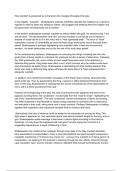
In his tragedy, “macbeth” , Shakespeare presents macbeths dwindle into madness as a result of
regicide in order to deter any ambitious nobles and suggest that breaking free from religion and
the great chain of being leads one to nihilism.
In the extract, shakespeare portrays macbeth as being riddled with guilt. He mentions that “I am
sick at heart”. The demonstrative verb “am” conveys macbeth is convinced and is without a
shadow of doubt that he is ill in the mind, with a “heat oppressed brain”. The noun of “heart”
symbolises a sense of vulnerability, as once the heart stops working the rest of the body does
aswell. Shakespeare is perhaps highlighting how macbeth’s fails to feel any remorse and
emotion , his heart deteriorates and so his the rest of his body does aswell.
To the contemporary audience, shakespeare is conveying two things: breaking free from the
great chain of being results in a descent into madness but also a sense of deterrence. Following
the 1605 gunpowder plot, some nobles at court would have been seen to be ambitious to
dethrone King james. King james was infact a scot, which conveys why the nobles would have
seen themselves as better Kings. Shakespeare is dramatising but also making apparent that
those who seek to dethrone King james will share the same fate of a “heat oppressed brain”
alongside macbeth.
In addition, he is reinforcing Christian messages of the Great chain of being, where the King
stood at the top. Thus by assasinating the King, a person in effect distanced themselves from
God. In this way, Shakespeare is implying that the severe consequences of the deterioration of
one’s self is a divine punishment from god .
However at the beginning of the play, this idea of guilt seems less apparent and more so he
appears as being fierce. He “unseamed “ macdonwald from the “nave to chops”, highlighting his
use of the “brandished steel”. The verb “unseamed” carries connotations of tailors and sewing.
The effect harbored is that Macbeth is directly being compared to someone who is meticulous
and articulate in their craft, taking extra care in every moment. Perhaps Shakespeare is making
apparent the experience and enjoyment macbeth finds in violence and blood.
Alternatively, this idea of violence could be related to his enjoyment of serving his King. This
fight where it appeared as “two swimmers spent” was where macbeth fought for the king, and so
god. Shakespeares subtle message is that when a person fights according to God and his
teachings, not only does the supposed bad look good, but also enjoyment is found in it ,
suggesting happiness as a result of believing in God.
Shakespeare may reinforce this message, through when later in the play macbeth dwindles
from essentialism to existentialism. From a more philosophical and psychoanalytic perspective,
macbeths mentioning of “if chance may crown me” , conveys how macbeth is in fact a person of
essentialism, not seeking to find purpose in meaning through his own efforts. However through
Lady macbeths “spur” and the witches’ influence, Macbeth finds himself committing the murder
In his tragedy, “macbeth” , Shakespeare presents macbeths dwindle into madness as a result of
regicide in order to deter any ambitious nobles and suggest that breaking free from religion and
the great chain of being leads one to nihilism.
In the extract, shakespeare portrays macbeth as being riddled with guilt. He mentions that “I am
sick at heart”. The demonstrative verb “am” conveys macbeth is convinced and is without a
shadow of doubt that he is ill in the mind, with a “heat oppressed brain”. The noun of “heart”
symbolises a sense of vulnerability, as once the heart stops working the rest of the body does
aswell. Shakespeare is perhaps highlighting how macbeth’s fails to feel any remorse and
emotion , his heart deteriorates and so his the rest of his body does aswell.
To the contemporary audience, shakespeare is conveying two things: breaking free from the
great chain of being results in a descent into madness but also a sense of deterrence. Following
the 1605 gunpowder plot, some nobles at court would have been seen to be ambitious to
dethrone King james. King james was infact a scot, which conveys why the nobles would have
seen themselves as better Kings. Shakespeare is dramatising but also making apparent that
those who seek to dethrone King james will share the same fate of a “heat oppressed brain”
alongside macbeth.
In addition, he is reinforcing Christian messages of the Great chain of being, where the King
stood at the top. Thus by assasinating the King, a person in effect distanced themselves from
God. In this way, Shakespeare is implying that the severe consequences of the deterioration of
one’s self is a divine punishment from god .
However at the beginning of the play, this idea of guilt seems less apparent and more so he
appears as being fierce. He “unseamed “ macdonwald from the “nave to chops”, highlighting his
use of the “brandished steel”. The verb “unseamed” carries connotations of tailors and sewing.
The effect harbored is that Macbeth is directly being compared to someone who is meticulous
and articulate in their craft, taking extra care in every moment. Perhaps Shakespeare is making
apparent the experience and enjoyment macbeth finds in violence and blood.
Alternatively, this idea of violence could be related to his enjoyment of serving his King. This
fight where it appeared as “two swimmers spent” was where macbeth fought for the king, and so
god. Shakespeares subtle message is that when a person fights according to God and his
teachings, not only does the supposed bad look good, but also enjoyment is found in it ,
suggesting happiness as a result of believing in God.
Shakespeare may reinforce this message, through when later in the play macbeth dwindles
from essentialism to existentialism. From a more philosophical and psychoanalytic perspective,
macbeths mentioning of “if chance may crown me” , conveys how macbeth is in fact a person of
essentialism, not seeking to find purpose in meaning through his own efforts. However through
Lady macbeths “spur” and the witches’ influence, Macbeth finds himself committing the murder