SECTION C – SECURITY
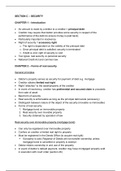
CHAPTER 1 – Introduction
• An amount is owed by a debtor to a creditor = principal debt
• Creditor may require that debtor provides some security in respect of the
performance of the debt (to ensure money is paid back)
• Particularly important in insolvency
• Right of security = accessory right
Þ The right is dependent on the validity of the principal debt
Þ Once principal debt is satisfied, security is terminated
Þ If debt is void, right of security is void
• Two types: real security vs personal security
• National Credit Act and common law
CHAPTER 2 – Forms of real security
General principles
• Debtor’s property serves as security for payment of debt e.g. mortgage
• Creditor obtains limited real right
• Right “attaches” to the asset/property of the creditor
• In event of insolvency, creditor has preferential and secured claim to proceeds
from sale of asset
• Best form of security
• Real security is enforceable as long as the principal debt exists (accessory)
• Distinguish between nature of the object of the security (movable vs immovable)
• Forms of real security
1. Mortgage bond on immovable property
2. Real security over movable property
3. Security obtained by operation of law
Real security over immovable property (mortgage bond)
• Can only be registered over immovable property
• Confers on creditor a limited real right to property
• Must be registered in the Deeds Office (to acquire real right)
§ If property is sold, Registrar of Deeds will not transfer ownership unless
mortgage bond is cancelled or property is exempt
• Debtor retains ownership in and use of the property
• In event of debtor’s default payment, creditor may have mortgaged property sold
in execution with court order (section 26)
, § Creditor has preferent claim on insolvency of debtor
§ Unless debt originated 2+ months prior to registration of bond and was not
secured before registration
§ Exception: “Kustingsbrief” – bond registered simultaneously with registration
of transfer of land to buyer
• Regulated by National Credit Act
• Mortgage over future debts:
§ Covering bond – secures future debts e.g. bank overdrafts
• Participation bond – investors lend money to an investment company which in
turn lends money to a third party
Real security over movable property
1. Pledge
• Security over another person’s movable property e.g. diamond ring
• Delivery of property required by debtor (pledgor) to creditor (pledgee)
Þ After object is delivered, pledgor does not have use thereof any longer
Þ Pledgee also cannot use the object
Þ Delivery confers a limited real right to pledgee (before only personal right)
• No formalities required
• Pledge = accessory right
• In case of insolvency, creditor has a secured claim on proceeds of sale
• Object can also be sold in execution with court order OR without court order if
contract provides parate executie clause (immediate exemption)
2. Special notarial bond
• Security held over a corporeal, movable property or assets that are reasonably
identifiable
• Requires registration in the Deeds Office to acquire the limited real right
Þ Only applies for special notarial bonds registered after 7 May 1993 outside
Natal (real right was acquired there before)
• Does not require delivery since debtor retains physical control
• If debt is not paid, burdened property can be sold in execution in payment of
outstanding debt
Þ In case of insolvency, secured creditor receives share in proceeds
• General notarial bond
§ No real right acquired
§ This also applies to special notarial bonds registered prior to 7 May 1993
(except in Natal)
§ Not a secured creditor, but has preferent claim on free residue of insolvent
estate
CHAPTER 1 – Introduction
• An amount is owed by a debtor to a creditor = principal debt
• Creditor may require that debtor provides some security in respect of the
performance of the debt (to ensure money is paid back)
• Particularly important in insolvency
• Right of security = accessory right
Þ The right is dependent on the validity of the principal debt
Þ Once principal debt is satisfied, security is terminated
Þ If debt is void, right of security is void
• Two types: real security vs personal security
• National Credit Act and common law
CHAPTER 2 – Forms of real security
General principles
• Debtor’s property serves as security for payment of debt e.g. mortgage
• Creditor obtains limited real right
• Right “attaches” to the asset/property of the creditor
• In event of insolvency, creditor has preferential and secured claim to proceeds
from sale of asset
• Best form of security
• Real security is enforceable as long as the principal debt exists (accessory)
• Distinguish between nature of the object of the security (movable vs immovable)
• Forms of real security
1. Mortgage bond on immovable property
2. Real security over movable property
3. Security obtained by operation of law
Real security over immovable property (mortgage bond)
• Can only be registered over immovable property
• Confers on creditor a limited real right to property
• Must be registered in the Deeds Office (to acquire real right)
§ If property is sold, Registrar of Deeds will not transfer ownership unless
mortgage bond is cancelled or property is exempt
• Debtor retains ownership in and use of the property
• In event of debtor’s default payment, creditor may have mortgaged property sold
in execution with court order (section 26)
, § Creditor has preferent claim on insolvency of debtor
§ Unless debt originated 2+ months prior to registration of bond and was not
secured before registration
§ Exception: “Kustingsbrief” – bond registered simultaneously with registration
of transfer of land to buyer
• Regulated by National Credit Act
• Mortgage over future debts:
§ Covering bond – secures future debts e.g. bank overdrafts
• Participation bond – investors lend money to an investment company which in
turn lends money to a third party
Real security over movable property
1. Pledge
• Security over another person’s movable property e.g. diamond ring
• Delivery of property required by debtor (pledgor) to creditor (pledgee)
Þ After object is delivered, pledgor does not have use thereof any longer
Þ Pledgee also cannot use the object
Þ Delivery confers a limited real right to pledgee (before only personal right)
• No formalities required
• Pledge = accessory right
• In case of insolvency, creditor has a secured claim on proceeds of sale
• Object can also be sold in execution with court order OR without court order if
contract provides parate executie clause (immediate exemption)
2. Special notarial bond
• Security held over a corporeal, movable property or assets that are reasonably
identifiable
• Requires registration in the Deeds Office to acquire the limited real right
Þ Only applies for special notarial bonds registered after 7 May 1993 outside
Natal (real right was acquired there before)
• Does not require delivery since debtor retains physical control
• If debt is not paid, burdened property can be sold in execution in payment of
outstanding debt
Þ In case of insolvency, secured creditor receives share in proceeds
• General notarial bond
§ No real right acquired
§ This also applies to special notarial bonds registered prior to 7 May 1993
(except in Natal)
§ Not a secured creditor, but has preferent claim on free residue of insolvent
estate