PART 1:
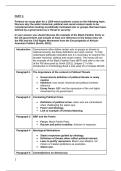
Produce an essay plan for a 1200-word academic essay on the following topic:
Discuss why the wider historical, political and social context needs to be
considered when looking at politically motivated acts or groups that have been
defined by a government as a ‘threat to security’.
In your answer you should discuss the example of the Black Panther Party vs
the US government and include at least one reference to the below entry on
the FBI and the Civil Rights Movement from the Encyclopedia of African-
American Politics (Smith, 2021).
Introduction Governments often define certain acts or groups as threats to
national security, but these definitions are rarely neutral. To fully
understand politically motivated acts it is necessary to examine the
broader historical, political and social context. The essay will use
the example of the Black Panther Party (BPP) and refer to the role
of the FBI discussed by Smith (2021), chapter 17 of the
Introduction to Criminology Book 2 and week 25 of module DD105.
Paragraph 1 The importance of the context in Political Threats
Governments definition of political threats is rarely
neutral.
Influence: how social, historical and political contexts
influence.
Essay focus: BBP and the repression of the civil rights
movement by US government.
Paragraph 2 Contesting Political Crime
Definition of political crime: when acts are criminalised
when challenging the status quo.
Power and ideology.
Link to example of Chelsea Manning.
Paragraph 3 BBP and the Power:
Focus: Black Panter Party.
Racism and police brutality: Activism in response.
Paragraph 4 Ideological Motivations
States responses guided by ideology.
Definition of threats often reflect political interest.
Laws to justify repression: Black Lives Matters, UK
miners or Catalan politicians as examples.
Status quo.
Paragraph 5 Contradictions on democracy:
1
, BBP reveal contradictions: freedom of expression.
State choose repression.
Paragraph 6 Angela Davis:
Focus: Angela Davis case.
Demonstrates the importance of context.
Conclusion Legal definitions alone are insufficient: requires context.
BBP shows how often groups as labelled as threats not
for their actions.
PART 2:
Discuss why the wider historical, political and social context needs to be
considered when looking at politically motivated acts or groups that have been
defined by a government as a ‘threat to security’.
Governments often define certain acts or groups as threats to national security.
These definitions are rarely neutral. Rather, they are determined by broader
historical, political and social contexts that influence who is considered a threat, why
they are considered a threat and how they are dealt with. A narrow, legalistic
interpretation of political crime risks ignoring the structural forces and ideological
interests that underpin these definitions. Therefore, to fully understand politically
motivated acts, it is essential to consider the broader environment in which such acts
arise. This essay explores this argument by examining the case of the Black Panther
Party (BPP) and its treatment by the US government, along with the role played by
the FBI in repressing the civil rights movement. Through this case study, it becomes
evident that political dissent is often criminalised not because of the acts themselves,
but because of the ideological challenge they pose to existing power structures.
Political crime is a contested concept, ranging from civil disobedience and protest to
violent acts. However, such acts are not always defined as crimes because of their
nature; rather, they are criminalised when they challenge the status quo (Kent, Drake
2
Produce an essay plan for a 1200-word academic essay on the following topic:
Discuss why the wider historical, political and social context needs to be
considered when looking at politically motivated acts or groups that have been
defined by a government as a ‘threat to security’.
In your answer you should discuss the example of the Black Panther Party vs
the US government and include at least one reference to the below entry on
the FBI and the Civil Rights Movement from the Encyclopedia of African-
American Politics (Smith, 2021).
Introduction Governments often define certain acts or groups as threats to
national security, but these definitions are rarely neutral. To fully
understand politically motivated acts it is necessary to examine the
broader historical, political and social context. The essay will use
the example of the Black Panther Party (BPP) and refer to the role
of the FBI discussed by Smith (2021), chapter 17 of the
Introduction to Criminology Book 2 and week 25 of module DD105.
Paragraph 1 The importance of the context in Political Threats
Governments definition of political threats is rarely
neutral.
Influence: how social, historical and political contexts
influence.
Essay focus: BBP and the repression of the civil rights
movement by US government.
Paragraph 2 Contesting Political Crime
Definition of political crime: when acts are criminalised
when challenging the status quo.
Power and ideology.
Link to example of Chelsea Manning.
Paragraph 3 BBP and the Power:
Focus: Black Panter Party.
Racism and police brutality: Activism in response.
Paragraph 4 Ideological Motivations
States responses guided by ideology.
Definition of threats often reflect political interest.
Laws to justify repression: Black Lives Matters, UK
miners or Catalan politicians as examples.
Status quo.
Paragraph 5 Contradictions on democracy:
1
, BBP reveal contradictions: freedom of expression.
State choose repression.
Paragraph 6 Angela Davis:
Focus: Angela Davis case.
Demonstrates the importance of context.
Conclusion Legal definitions alone are insufficient: requires context.
BBP shows how often groups as labelled as threats not
for their actions.
PART 2:
Discuss why the wider historical, political and social context needs to be
considered when looking at politically motivated acts or groups that have been
defined by a government as a ‘threat to security’.
Governments often define certain acts or groups as threats to national security.
These definitions are rarely neutral. Rather, they are determined by broader
historical, political and social contexts that influence who is considered a threat, why
they are considered a threat and how they are dealt with. A narrow, legalistic
interpretation of political crime risks ignoring the structural forces and ideological
interests that underpin these definitions. Therefore, to fully understand politically
motivated acts, it is essential to consider the broader environment in which such acts
arise. This essay explores this argument by examining the case of the Black Panther
Party (BPP) and its treatment by the US government, along with the role played by
the FBI in repressing the civil rights movement. Through this case study, it becomes
evident that political dissent is often criminalised not because of the acts themselves,
but because of the ideological challenge they pose to existing power structures.
Political crime is a contested concept, ranging from civil disobedience and protest to
violent acts. However, such acts are not always defined as crimes because of their
nature; rather, they are criminalised when they challenge the status quo (Kent, Drake
2