

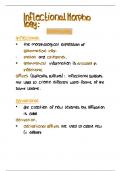
Inflectional MOFP.to
1099:
Morphology
Inflectional:
◦ the morphological expression of
grammatical info-
- mation and categories.
◦ grammatical information is encoded in
inflectional
affixes (typically suffixes); inflectional suffixes
are used to create different word-forms of the
same Lexeme.
Derivational:
◦ the creation of new lexemes by affixation
is called
derivation.
◦ derivational affixes are used to create new
(= different
, in meaning from the base/ lexemes.
German: Nouns
◦ inflect for case (nominative.etc.) &
number
(Singular, Plural); feminine nouns do not inflect
for case and case distinctions are marked
only on the article.
◦ articles additionally inflect for gender in
the singular
syncretism: formal identity of different
categories across paradigms. very common in
nouns and determiners.
Economy Principles: grammatical categories need
not be marked redundant ly within NP
inherent-_gender is a property of the whole
1099:
Morphology
Inflectional:
◦ the morphological expression of
grammatical info-
- mation and categories.
◦ grammatical information is encoded in
inflectional
affixes (typically suffixes); inflectional suffixes
are used to create different word-forms of the
same Lexeme.
Derivational:
◦ the creation of new lexemes by affixation
is called
derivation.
◦ derivational affixes are used to create new
(= different
, in meaning from the base/ lexemes.
German: Nouns
◦ inflect for case (nominative.etc.) &
number
(Singular, Plural); feminine nouns do not inflect
for case and case distinctions are marked
only on the article.
◦ articles additionally inflect for gender in
the singular
syncretism: formal identity of different
categories across paradigms. very common in
nouns and determiners.
Economy Principles: grammatical categories need
not be marked redundant ly within NP
inherent-_gender is a property of the whole


