Checklist when reading poetry
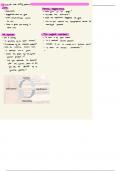
Title
o
Visual
appearance
-
expectations Visual the ?
·
form on page
suggestions about the Devided into stanzas.?
-
genre
·
-
poem comprehensible without · Does the appearance suggests it's
gene
the title Has devices for
the poet exploited typographical
·
any
in
-
Does it focus your reading meaninggol purposes
some
way
The speaker
The
implied narratee
Who To whom is the adressed
is
speaking poems
- -
revealed ? Is a
particular individual adressed?
Is
personality of the speaker
- -
?
-
Adressed to ?
Circomstances
of the Narrative perspective you fictional
-
as
a reader , or a person.
narrative situation have
releationship ?
-Does the there
-
Is an intended
specific time or
a
place
-
-
Does the poem use the first
1
person pronoon
Do associate the speaker
you
-
with the actual poet or do
you see the speaker as a
?
fictional persona
,
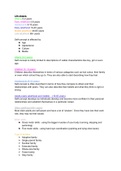
, Types of Literature
Narrative poetry= present a story of any kind (epic, ballad, romance and loosely, blank verse)
Expressive poetry=. Experience of emotion and thoughtfulness (lyric, elegy, some love poetry
and pastoral) are told with a particular solemnity and some lightheartedness and comedy
Topos = a place, indicate a recurrent formulation or concept
Motif= dominant emblem, recurs throughout a literary work, becoming a symbol of the works
central idea
Epic:
long, narrative form, often hero’s or demigod, an arduous journey, gods or supernatural power
who intervene in human action, begins in medias res ( in the middle of things), mixture of
ashbacks and present time action, In the beginning the poet will perform an invocation to
address the muse and state the epics argument, question or theme, the language ist formal,
serious and differentiated from everyday speech by a sense of ceremony
Meters in epic
Dactylic hexameter: relatively long line of six feet and the metre often used in Classical texts,
Alliterative metre:
Blank verse
Terra Roma: a three line stanza form
Lyric:
Expressive, Emotional, one speaker, more direct, not framed by a narrator
Written in rst person (suggesting direct expression), appear to capture a single moment,
apolitical, or non- judgemental expressions, speaker is overtaken by a emotion, appeal to the
ear and use song like-meters, kind of erase historical context
Ballad
A poem that was originally sung, uses regular rhythms and rhymes to tell a story, uses a lot of
repetition, simple, objective, delivery that emphasizes with the story rather than the author,
often dialect, political ans social radicalism, sentient raging between love stories to ghost
stories
Ballad metre
Four line stanzas( Verse) (quatrains)
Lines 1 and 3 have four stresses each (Betonungen) (tetrameter)
Lines 2 and 4 which usually rhyme have tree stresses each (trimeter)
fl fi
Title
o
Visual
appearance
-
expectations Visual the ?
·
form on page
suggestions about the Devided into stanzas.?
-
genre
·
-
poem comprehensible without · Does the appearance suggests it's
gene
the title Has devices for
the poet exploited typographical
·
any
in
-
Does it focus your reading meaninggol purposes
some
way
The speaker
The
implied narratee
Who To whom is the adressed
is
speaking poems
- -
revealed ? Is a
particular individual adressed?
Is
personality of the speaker
- -
?
-
Adressed to ?
Circomstances
of the Narrative perspective you fictional
-
as
a reader , or a person.
narrative situation have
releationship ?
-Does the there
-
Is an intended
specific time or
a
place
-
-
Does the poem use the first
1
person pronoon
Do associate the speaker
you
-
with the actual poet or do
you see the speaker as a
?
fictional persona
,
, Types of Literature
Narrative poetry= present a story of any kind (epic, ballad, romance and loosely, blank verse)
Expressive poetry=. Experience of emotion and thoughtfulness (lyric, elegy, some love poetry
and pastoral) are told with a particular solemnity and some lightheartedness and comedy
Topos = a place, indicate a recurrent formulation or concept
Motif= dominant emblem, recurs throughout a literary work, becoming a symbol of the works
central idea
Epic:
long, narrative form, often hero’s or demigod, an arduous journey, gods or supernatural power
who intervene in human action, begins in medias res ( in the middle of things), mixture of
ashbacks and present time action, In the beginning the poet will perform an invocation to
address the muse and state the epics argument, question or theme, the language ist formal,
serious and differentiated from everyday speech by a sense of ceremony
Meters in epic
Dactylic hexameter: relatively long line of six feet and the metre often used in Classical texts,
Alliterative metre:
Blank verse
Terra Roma: a three line stanza form
Lyric:
Expressive, Emotional, one speaker, more direct, not framed by a narrator
Written in rst person (suggesting direct expression), appear to capture a single moment,
apolitical, or non- judgemental expressions, speaker is overtaken by a emotion, appeal to the
ear and use song like-meters, kind of erase historical context
Ballad
A poem that was originally sung, uses regular rhythms and rhymes to tell a story, uses a lot of
repetition, simple, objective, delivery that emphasizes with the story rather than the author,
often dialect, political ans social radicalism, sentient raging between love stories to ghost
stories
Ballad metre
Four line stanzas( Verse) (quatrains)
Lines 1 and 3 have four stresses each (Betonungen) (tetrameter)
Lines 2 and 4 which usually rhyme have tree stresses each (trimeter)
fl fi