100% Zufriedenheitsgarantie Sofort verfügbar nach Zahlung Sowohl online als auch als PDF Du bist an nichts gebunden 4.2 TrustPilot
logo-home
Prüfung

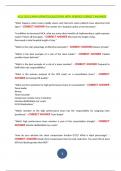
ACLS 2025 EXAM UPDATED QUESTIONS WITH VERIFIED CORRECT ANSWERS

Bewertung
-
Verkauft
-
seiten
25
Klasse
A+
Hochgeladen auf
27-02-2025
geschrieben in
2024/2025

ACLS 2025 EXAM UPDATED QUESTIONS WITH VERIFIED CORRECT ANSWERS "What happens when teams rapidly assess and intervene when patients have abnormal vital signs? - CORRECT ANSWER The number of in hospital cardiac arrest decreases" "In addition to decreased IHCA, what are some other benefits of implementing a rapid response system? Select all that apply. - CORRECT ANSWER Decrease ICU length of stay. Decreased in total hospital length of stay." "Which is the main advantage of effective teamwork? - CORRECT ANSWER Division of tasks" "Which is the best example of a role of the team leader? - CORRECT ANSWER Models excellent team behavior" "Which is the best example of a role of a team member? - CORRECT ANSWER Prepared to fulfill their role responsibilities" "What is the primary purpose of the CPR coach on a resuscitation team? - CORRECT ANSWER Increasing CPR quality" "What are the 6 positions for high performance teams in resuscitation? - CORRECT ANSWER Team leader Airway Timer/recorder Compressor (rotate every 2 minutes) Monitor/defibrillator/cpr coach IV/IO/Medications" "Which member of the high performance team has the responsibility for assigning roles (positions)? - CORRECT ANSWER Team leader" "Which high performance team member is part of the resuscitation triangle? - CORRECT ANSWER Monitor/defibrillator/cpr coach" "How do you calculate the chest compression fraction (CCF)? What is ideal percentage? - CORRECT ANSWER Divide chest compression time by total code time. You want this at least 60% but ideally greater than 80%" "Which component of effective high-performance teams is represented by the use of real-time feedback devices? - CORRECT ANSWER Quality" "How do you calculate Coronary Perfusion Pressure (CPP)? - CORRECT ANSWER Aortic diastolic pressure "minus" Right Atrial Diastolic Pressure" "How do interruptions in chest compressions negatively impact survival after cardiac arrest? - CORRECT ANSWER Decrease coronary perfusion pressure" "What is the only intervention that can restore an organized rhythm in patients with ventricular fibrillation (VF)? - CORRECT ANSWER Early and effective defibrillation" "The initial assessment reveals a conscious patient. The patients airway is patent and an advanced airway is not indicated. Which action in the primary assessment should you perform next? - CORRECT ANSWER Administer oxygen as needed" "Which action is part of secondary assessment of a conscious patient? - CORRECT ANSWER Formulate a differential diagnosis" "Which of the following are the "H's" causes of reversible cardiac arrest? Select all that apply: - CORRECT ANSWER Hypothermia Hypoxia Hyperkalemia/hypokalemia Hypovolemia Acidosis" "Which of the following are the "T" causes of reversible cardiac arrest? - CORRECT ANSWER Tension pneumothorax Toxins Cardiac tamponade Pulmonary thrombosis Coronary thrombosis" "What is the only intervention that can restore an organized rhythm in patients with ventricular fibrillation (VF)? - CORRECT ANSWER Early and effective defibrillation" "What is the most common symptom of myocardial ischemia and infarction? - CORRECT ANSWER Retrosternal chest pain" "Which demographic group experiencing acute coronary syndromes is more likely to present without chest pain? - CORRECT ANSWER Females" "Oxygen should be delivered to a patient who has obvious signs of heart failure if the oxygen saturation is less than? - CORRECT ANSWER 90%" "If someone starts developing hypotension after giving morphine or nitroglycerin? - CORRECT ANSWER Administer fluids" "Which class of medications commonly given to patients with acute coronary syndrome may be adversely affected by morphine administration? - CORRECT ANSWER Oral anti platelet meds" "What is the benefit of morphine when given for management of acute coronary syndrome? - CORRECT ANSWER Central nervous system analgesic" "You obtain a 12-lead ECG in a patient with retrosternal chest pain. Which ECG finding is suggestive of high risk non-ST-segment elevation acute coronary syndrome? - CORRECT ANSWER Dynamic t wave inversion" "Upon reviewing a patients 12 lead ECG, you note ST segment elevation of 2mm in leads 2, 3, and aVF. How would you classify the ECG finding? - CORRECT ANSWER ST-segment elevation myocardial infarction" "What is the time goal for how quickly you should complete a fibrinolytic checklist once the patient arrives in the emergency department? - CORRECT ANSWER 10 min" "Which action is part of the secondary assessment of a conscious patient? - CORRECT ANSWER Formulate a differential diagnosis" "Upon reviewing a patients 12-lead ECG, you note ST-segment elevation of 2mm in leads II, III and aVF. How would you classify these ECG findings? - CORRECT ANSWER ST-segment elevation myocardial infarction" "Upon reviewing a patients 12 lead ECG, you note ST elevation of 2mm in leads II, III, and aVF. How would you classify these ECG findings? - CORRECT ANSWER ST segment elevation MI" "Which action is part of the secondary assessment of a conscious patient? - CORRECT ANSWER Formulate a different diagnosis" "What is the most common type of stroke? - CORRECT ANSWER Ischemic stroke" "What type of stroke occurs when a blood vessel in the brain suddenly ruptures into the surrounding tissue? - CORRECT ANSWER Hemorrhagic stroke" "Which is a sign of a stroke? - CORRECT ANSWER Trouble speaking" "Which is a symptom of stroke? - CORRECT ANSWER Sudden trouble seeing" "What are the 3 components of the Cincinnati Prehospital stroke scale? - CORRECT ANSWER Facial droop Arm drift Abnormal speech" "What is the estimated probability of the prehospital stroke scale with 1 abnormal finding when scored by prehospital providers? - CORRECT ANSWER 72%" "What is a stroke severity tool that helps EMS differentiate a large vessel occlusion stroke from a non-large vessel occlusion stroke? - CORRECT ANSWER Los Angeles motor scale" "What is an advantage of EMS alerting the receiving facility of the impending arrival of a patient with suspected acute ischemic stroke? - CORRECT ANSWER The hospital can perform more efficient evaluation and management" "What is the time for neurological assessment by the stroke team or designee and noncontrast computed tomography or magnetic resonance imaging performed after the hospital arrival? - CORRECT ANSWER 20 min" "What is the time goal for initiation of fibrinolytic therapy for patients w/o contraindications after hospital arrival - CORRECT ANSWER 45 min" "What is the door-to device time for direct-arriving patients with acute ischemic stroke treated with endovascular therapy? - CORRECT ANSWER 90 min" "Evidence suggest that there is a higher likelihood of good to excellent functional outcome when alteplase is given to adults with an acute ischemic stroke within what time frame? - CORRECT ANSWER 3 hours" "What is the maximum time for last known normal when endovascular therapy can be performed? - CORRECT ANSWER 24 hours" "What is the maximum time from last known normal when intra arterial thrombolysis for select patients can be used for treatment? - CORRECT ANSWER 6 hours" "What is the time goal for initiation of fibrinolytic therapy in appropriate patients without contraindications after hospital arrival? - CORRECT ANSWER 45 min" "Identify the systolic blood pressure threshold for withholding fibrinolytic therapy to otherwise eligible patients with acute ischemic stroke. - CORRECT ANSWER 185" "Identify the diastolic blood pressure threshold for withholding fibrinolytic therapy to otherwise eligible patients with acute ischemic stroke. - CORRECT ANSWER 110" "What blood glucose level should trigger administration of IV or subq insulin for a patient with acute ischemic stroke? - CORRECT ANSWER 180" "What tidal volume typically maintains normal oxygenation and elimination of carbon dioxide? - CORRECT ANSWER 6-8" "What is a contraindication of the use of an oropharyngeal airway? - CORRECT ANSWER Conscious patient" "In which of the following patients can nasopharyngeal airways be used? - CORRECT ANSWER Unconscious Semiconscious Conscious" "Select the first step in the use of an oropharyngeal airway - CORRECT ANSWER Clear the mouth and pharynx" "What is a potential complication of inserting an oropharyngeal airway that is too small? - CORRECT ANSWER Pushing the base of the tongue back" "What is the recommended ventilation for an adult in cardiac arrest with an advanced airway device in place? - CORRECT ANSWER Once every 6 seconds" "The EMS team brings a 54 year old patient to the emergency department who had been experiencing severe shortness of breath and difficulty breathing. The patient loses consciousness on arrival. What initial actions should be taken? - CORRECT ANSWER Check for responsiveness Assess ABCs Call for additional help" "The pt is unresponsive and not breathing but has a strong pulse. What should your initial actions include? - CORRECT ANSWER Open the pt's airway via a head tilt-chin lift or jaw thrust Initiate ventilation with a bag-mask device attached to supplemental oxygen" "The pt's signs are HR 84/min, BP 124/73 mmHg, SpO2 is 66%, and the skin is cyanotic around the mouth and extremities. What is the recommended rate for rescue breaths? - CORRECT ANSWER 1 breath every 6 seconds" "While ventilating the pt, you hear loud gurgling sounds coming from the airway. What is your next action? - CORRECT ANSWER Suction the airway." "The pt is not responding well to ventilation and suctioning. You decide to intubate the pt. In addition to clinical assessment, what is the single most reliable method of confirming and monitoring correct placement of the ET tube? - CORRECT ANSWER Quantitative waveform capnography" "During analysis of the patients ECG, you note the presence of more P waves than QRS complexes. You also note the absence of a relationship between the P wave and the QRS complex. What type of atrioventricular block is most likely present? - CORRECT ANSWER Third-degree" "Symptomatic bradycardia is defined by a heart rate less than ___ beats per minute - CORRECT ANSWER 50" "Which signs and symptoms indicate a symptomatic bradycardia? - CORRECT ANSWER Shortness of breath Chest Pain Hypotension Altered mental status" "During analysis of the pt's EKG, you note the presence of more P waves than QRS complexes. You also note all PR intervals have a uniform length, but random QRS complexes are dropped. What type of AV block is most likely present? - CORRECT ANSWER Second-degree type II" "What is the first line treatment for unstable bradycardia? - CORRECT ANSWER Atropine" "What is the recommended first dose of IV atropine for the management of bradycardia? - CORRECT ANSWER 1 mg IV" "What is a complication of IV atropine when administered in doses of less than 0.5 mg? - CORRECT ANSWER Further slowing of the heart rate" "What is the recommended infusion rate of epinephrine in the management of symptomatic bradycardia unresponsive to atropine? - CORRECT ANSWER 2 to 10 mcg per minute" "A 75 year old man presents to the emergency department. His wife states that he fainted 45 minutes ago, while watching TV. She said he has had episodes of confusion and fatigue during the past week. The patient presents with HR 30/min (weak pulse), BP 66/43 mmHG, RR of 20/min, SpO2 89%. He is alert and responsive. What should your next steps be to assess and treat this patient? - CORRECT ANSWER Establish IV Obtain 12 lead Maintain airway and administer O2 as needed" "What is the patient's rhythm? - CORRECT ANSWER Third-degree AV block" "You determine patient has poor perfusion. What is your next step? - CORRECT ANSWER Administer atropine 1 mg IV" "Patient does not respond to atropine. The vital signs are HR 34/min, BP 66/43 mm HG, RR 18/min, and SpO2 91%. He is responsive, but dizzy. What option do you have to treat the patient? - CORRECT ANSWER Initiate transcutaneous pacing Administer epinephrine 2-10mcg/min Administer dopamine 5-20 mvg/kg/min" "The patient does not respond to treatments. The vital signs are HR 40/min (weak pulse), BP 66/43 mmHG, RR 18/min, and SpO2 91%. He is responsive but states that he feels tired. What should you consider? - CORRECT ANSWER Prepare for transvenous pacing Seek expert consultation" "You are treating a patient with a heart rate of 186/min. Which symptom (if present) suggest unstable tachycardia? - CORRECT ANSWER Hypotension" "What is the first-line treatment for unstable tachycardia? - CORRECT ANSWER Cardioversion" "The width of the QRS in a patient presenting with tachycardia is 0.16 seconds. Each QRS complex has a visible P wave. How would you classify this tachycardia? - CORRECT ANSWER Wide-complex tachycardia" "The width of the QRS in a patient presenting with tachycardia is 0.10 second. There are no clearly discernable P waves. How would you classify this tachycardia - CORRECT ANSWER Narrow-complex tachycardia" "What is the upper heart rate limit for a patient with sinus tachycardia? - CORRECT ANSWER 130/min" "What is the lower heart rate limit for a patient with sinus tachycardia? - CORRECT ANSWER 100/min" "After activating the sync control button in preparation for delivering electrical cardio version, what is the most important next step? - CORRECT ANSWER Look for markers on the R wave indicating sync mode" "Symptoms of instability are not usually caused by HR less than ______ unless ventricular function is impaired. - CORRECT ANSWER 150/min" "If a patient with stable ventricular tachycardia does not response to vagal maneuvers, what drug and dose regimen is to be given? - CORRECT ANSWER Give Adenosine 6mg over 1 second followed by a flush in a large vein and elevate arm quickly after If they don't response in 1-2 minutes, Administer 12 mg IV followed by a flush and elevate arm quickly" "Which action is not part of the acute stroke pathway? - CORRECT ANSWER Seizure prophylaxis" "A 74- year old man was brought to the hospital by his wife. She states that her husband started having sudden-left arm weakness and left-sided facial paralysis during lunch. He has a past medical history of poor controlled hypertension. The patient's vital signs show HR 92/min, RR 14/min, BP 130/86 mmHG, SpO2 97% and atrial fibrillation on the monitor. What additional assessment and stabilization activities should be completed within the first 10 min after the patient's arrival? - CORRECT ANSWER Check glucose Complete neurologic screening Order an emergent CT scan or MRI of the brain and review pt history Establish IV access Activate the stroke team" "What needs to be completed for this pt within 20 mins after hospital arrival? - CORRECT ANSWER Neurologic assessment" "As part of the neurologic assessment, you perform a physical and neurologic examination. What are some general questions you need to ask? - CORRECT ANSWER What other symptoms do you have? When did the symptoms start? Do you take any medications? Do you have any allergies?" "What is the average respiratory rate for an adult at rest? - CORRECT ANSWER 12 to 20/min" "A 59 year old patient is reporting difficulty breathing. Physical exam reveals nasal flaring, intercostal interaction and use of accessory muscles. RR is 28 breaths per minute. O2 sat is 92% PETCO2 is 36 mmHg. How would you categorize this patent's condition? - CORRECT ANSWER Respiratory distress" "An 18 year old patient is reporting difficulty breathing and is displaying increased respiratory effort. Auscultation reveals bilateral wheezing. The respiratory rate is 28 breaths per minute. Oxygen saturations is 91%. PETCO2 is 44 mmHg. How would you categorize this patient's condition? - CORRECT ANSWER Respiratory Distress" "A 75 year old patient is having difficulty breathing, with increased respiratory effort. The patient has history of emphysema. The patient is drowsy. Auscultation reveals bilateral wheezing, although the lung sounds are difficult to auscultate. RR is 38/min. O2 sat = 85%, PETCO2= 49mmHg. How would you categorize this patient's condition? - CORRECT ANSWER Respiratory failure" "What is the term of the rise in arterial CO2 levels typically associated with respiratory failure? - CORRECT ANSWER Hypercapnia" "How much tidal volume must provide with a bag-mask device to produce visible chest rise for an adult patient in respiratory arrest? - CORRECT ANSWER 6 to 7 mL/kg" "What device on a resuscitation bag-mask device may prevent sufficient tidal volume in patients with poor lung compliance? - CORRECT ANSWER Pressure-relief value" "Patients with perfusing rhythms should receive ventilations once every ___ seconds - CORRECT ANSWER 6 seconds" "What is the most effective way to deliver bag-mask ventilation? - CORRECT ANSWER Using a 2-person technique" "How long should the second rescuer squeeze the bag mask device when providing 2-rescuer ventilation? - CORRECT ANSWER 1 second" "When performing the jaw-thrust maneuver on patients with suspected cervical spine injury, where should you place your fingers? - CORRECT ANSWER Just under the angel of the lower jaw" "When you use a bag-mask device, you should deliver approximately 500 to ___ ml tidal volume. - CORRECT ANSWER 600" "Which is a contraindication to the use of procainamide infusion in the management of stable wide complex tachycardia? - CORRECT ANSWER Prolonged QT interval" "What is the recommended first dose of amiodarone for management of stable wide complex tachycardia? - CORRECT ANSWER 150 mg IV" "A 72 year old male patient has been suffering from progressive dizziness and bouts of palpitations after exercising last night. His symptoms reappeared and worsened this morning. The patient is conscious and alert, HR 180/min, a weak radial pulse, BP 110/78 mm Hg, and SpO2 96%. What are the most appropriate initial interventions? - CORRECT ANSWER Attach a 12-lead ECG Maintain a patent airway and monitor" "Would you consider the patient stable or unstable? - CORRECT ANSWER Stable" "What rhythm is shown on the monitor? - CORRECT ANSWER Supraventricular tachycardia" "What do your next steps include? - CORRECT ANSWER IV access 12-lead EKG Vagal Maneuvers" "Vagal maneuvers are unsuccessful. His vital signs are HR 178/min, RR 24/min, and BP 110/78 mmHg. What medication is appropriate for this patient? - CORRECT ANSWER Adenosine 6 mg IV (follow with saline flush)." "After administration of adenosine, the patient's vital signs are now HR 184/min, RR 26/min, and BP 78/54 mmHg. He now responds only to noxious stimuli. What is your next action? - CORRECT ANSWER Perform synchronized cardioversion" "What is the recommended first IV/IO dose of lidocaine for patient in cardiac arrest with VF/pVT that is unresponsive to defibrillation? - CORRECT ANSWER 1 to 1.5 mg/kg" "What term best describes an organized rhythm without a pulse? - CORRECT ANSWER PEA" "PEA can present as which of the following organized rhythms? - CORRECT ANSWER Sinus rhythm Atrial fibrillation or flutter Bundle branch blocks" "What is the recommended point to administer epinephrine to a patient with asystole? - CORRECT ANSWER As soon as IV/IO access is available" "In addition to hypoxia, what is the most common underlying, potentially reversible cause of pulseless electrical activity? - CORRECT ANSWER Hypovolemia" "Which therapy is not supported by evidence for use in patients with cardiac arrest secondary to hypothermia? - CORRECT ANSWER Antiarrhythmics" "Which alteration to the standard ACLS algorithm is appropriate for patients whose cardiac arrest is caused by hypothermia? - CORRECT ANSWER Medications spaced at longer intervals" "A patient with suspected opioid poisoning is not breathing normally but has a pulse. What is your next step? - CORRECT ANSWER Provide rescue breathing and give naloxone" "Depending on training and clinical circumstance, how can rescuers administer naloxone? - CORRECT ANSWER Intramuscularly Intravenously Intranasally" "You are preparing to provide electrical cardioversion. You are monitoring the patient's ECG and have applied the defibrillation pads to the patient's bare chest. You have delivered sufficient sedation and have turned the defibrillator on. What is the next step you should perform? - CORRECT ANSWER Activate the sync control button." "A patient with a ventricular assist device (VAD) is not breathing, has signs of inadequate perfusion, and is unconscious. You determine the VAD is functioning. After endotracheal intubation, the patient has a PETCO2 of 12mm Hg. What is your next action? - CORRECT ANSWER Perform external chest compressions" "What is the recommended CPR positions for a third trimester gravid patient? - CORRECT ANSWER Supine with manual left lateral uterine displacement" "what alterations are recommended for resuscitation to 3rd trimester gravid patients in cardiac arrest - CORRECT ANSWER No dosing alterations are recommended" "When should resuscitation Team Leaders activate the protocol for perimortem cesarean delivery? - CORRECT ANSWER As soon as cardiac arrest is identified in a pregnant patient." "How quickly should resuscitation Team Leaders consider perimortem cesarean delivery after beginning resuscitative efforts if return of spontaneous circulation has not been achieved? - CORRECT ANSWER 5 minutes" "When titrating inspired oxygen, which arterial oxyhemoglobin saturation value lies within recommended range for a patient who achieves return of spontaneous circulation? - CORRECT ANSWER 95%" "When adjusting ventilation rates, which PETCO2 value lies within the recommended range for a patient who achieves return to spontaneous circulation? - CORRECT ANSWER 40 mm Hg" "What is the recommended fluid bolus dose for patients who are hypotensive during the post-cardiac arrest phase? - CORRECT ANSWER 1 to 2 L" "What is the recommended norepinephrine dose for hypotensive patients during the post-cardiac arrest phase? - CORRECT ANSWER 0.1 to 0.5 mcg/kg per minute" "What is the recommended starting IV infusion dose of epinephrine for pts in cardiac arrest who achieve ROSC and need vasopressor support? - CORRECT ANSWER 2 to 10 mcg per minute" "What is the mean arterial pressure target when adminsitering epinephrinie to patients in cardiac arrest who achieve ROSC and need vasopressor support? - CORRECT ANSWER 65 mm Hg" "What is the purpose of obtaining a 12-lead ECG early during the post-cardiac arrest care phase? - CORRECT ANSWER To detect ST-segment elevation or left bundle branch block" "During the post-cardiac arrest care period, the 12-lead ECG reveals an STEMI. Which step has the highest priority? - CORRECT ANSWER Coronary angiography" "If the patient is not following commands, starts targeted temperature management as soon as possible with what targeted temperature range? - CORRECT ANSWER 32 to 36 C" "What is the recommended destination for a post-cardiac arrest patient after coronary reperfusion and initiation of targeted temperature management? - CORRECT ANSWER ICU" "What is an advantage of placing a post-cardiac arrest patient in a critical care bed after coronary reperfusion interventions? - CORRECT ANSWER Experts can perform timely neurologic evaluation." "Which factor can confound neuroprognostication during the post-cardiac arrest phase? - CORRECT ANSWER Targeted temperature management" "A BLS team is bringing a 70 year old woman, who suddenly collapsed while on her morning jog, to your department. CPR is in progress. As Team Leader, you conduct the primary assessment, including rhythm analysis, while high-quality BLS continues. What type of rhythm is being displayed on the monitor? - CORRECT ANSWER Ventricular fibrillation" "Based on the patient's condition, what is your next action? - CORRECT ANSWER Shock immediately" "After a shock is delivered, CPR resumes immediately. What action also needs to be performed at this time?q - CORRECT ANSWER Establish IV/IO access" "After 2 minutes, the team pauses CPR for a rhythm check. What rhythm is now being demonstrated by the patient? - CORRECT ANSWER Ventricular tachycardia" "The patient is showing persistent pulseless ventricular tachycardia. What actions need to be completed next by the team? - CORRECT ANSWER Shock immediately Resume CPR Administer epinephrine 1mg IV Consider an advanced airway" "At the next pulse check, compressors are switched, and rhythm continues to be refractory ventricular fibrillation/ventricular tachycardia. A shock is delivered and CPR is resumed. What is your next intervention? - CORRECT ANSWER Administer amiodarone 300mg IV" "After 2 more minutes of CPR, you conduct a rhythm check and pulse check, confirming absence of a pulse. Based on the organized rhythm below, describe the patient's condition? - CORRECT ANSWER PEA" "Once PEA is identified and there are no signs of ROSC, you continue CPR. What is your next step for appropriate care for this patient? - CORRECT ANSWER Administer epinephrine 1mg IV" "After 2 minutes of CPR, you conduct another rhythm check and determine that the patient has the following rhythm and is showing signs of ROSC. How do you continue treating this patient? - CORRECT ANSWER Move to the Adult Post-Cardiac Arrest Care Algorithm" "A 70 year old woman suffered a sudden cardiac arrest. After a 10 minute resuscitation attempt, she is showing signs of ROSC. She is intubated and has an IV established. She has a palpable pulse of 65/min, SpO2 94%, ETCO2 of 38 mmHg, and BP 82/55 mm Hg. What are your highest priorities? - CORRECT ANSWER Maintaining SpO2 92-98% Maintaining PaCO2 35-45 Ventilating patient-10 breaths/minute" "In addition to managing the airway and respiratory parameters, which step is also prioritized during the initial stabilization phase? - CORRECT ANSWER Treating hypotension" "Match the treatment for hypotension to the proper initial dosage for an adult based on the AHA guidelines. - CORRECT ANSWER NS or LR --> 1 to 2 L Epinephrine --> 2 to 10 mcg per minute Dopamine --> 5 to 20 mcg/kg per minute Norepinephrine IV --> 0.1 to 0.5 mcg/kg per minute" "The patient's ventilation and BP have responded to treatment. What other lab or diagnostic tests would be appropriate to consider at this time for reversible causes? - CORRECT ANSWER Temperature 12 lead ECG Troponin Test" "You obtain a 12-lead ECG. What is the most appropriate action to take next? - CORRECT ANSWER Transfer the patient to a cardiac cath lab for percutaneous coronary intervention" "The patient is unable to follow verbal commands. What intervention should the team consider? - CORRECT ANSWER Targeted temperature management" "Which of the following are immediately available as feedback from CPR performance monitors? - CORRECT ANSWER Chest compression rate Compression depth Compression recoil" "What is the normal PETCO2 range? - CORRECT ANSWER 35 to 45 mm Hg" "What is the main determinant of end-tidal carbon dioxide (ETCO2) measurement during CPR? - CORRECT ANSWER Blood delivery to the lungs" "What is the only CPR performance monitor typically available for measuring a physiologic end point outside of a hospital setting? - CORRECT ANSWER End-tidal carbon dioxide (ETCO2)" "What invasive CPR performance measure reflects changes in cardiac output due to chest compressions, if oxygen consumption, arterial oxygen saturation, and hemoglobin remain constant? - CORRECT ANSWER Central venous oxygen saturation" "A 49 year old female patient arrives at the hospital, saying she has chest discomfort and palpitations that have occurred for the past several hours. She feels cold, sweaty, and weak. The patient is awake and alert. She states that she does not have any medical history and has never felt like this before. She mentions that she feels like she may pass out. Which of the following are initial steps of the primary assessment? - CORRECT ANSWER Assess ABCs Establish IV access Obtain a 12-lead ECG Monitor heart rhythm and vital signs" "The patient is placed on the heart monitor. What is her heart rhythm? - CORRECT ANSWER Mobitz type II second-degree AV block" "The patient's vital signs are HR 37/min, BP 77/50 mmHg, RR 15/min, SpO2 97%, and temperature 98.8F. What is the first-line drug for acute symptomatic bradycardia? - CORRECT ANSWER Atropine" "You administer a 1 mg bolus of atropine, which is ineffective. You prepare to initiate transcutaneous pacing. What steps should be followed to start pacing? - CORRECT ANSWER Ideally, administer a sedative and analgesic for conscious patients. Set the demand rate Attach pacing electrodes on the chest according to package instructions Turn the pacer on Set the current" "What is an appropriate demand rate for the transcutaneous pacer? - CORRECT ANSWER 60 to 80/min" "You initiated transcutaneous pacing but are unable to palpate a pulse that matches vour electrical capture. Do you have mechanical capture? - CORRECT ANSWER No" "The patient suddenly loses consciousness and stops breathing. You assess the underlying ECG rhythm. What is this rhythm? - CORRECT ANSWER Ventricular fibrillation" "What is the most important next action for this patient? - CORRECT ANSWER Deliver a shock" "The team started CPR immediately after delivering the shock. After 2 minutes, the rhythm was unchanged and a second shock was delivered. What medication can be administrated at this time. - CORRECT ANSWER Epinephrine 1 mg IV" "After securing the ET tube, what ration of compressions to the ventilations should you deliver? - CORRECT ANSWER Continuous compressions with 1 breath every 6 seconds" "The patient remains in ventricular fibrillation after another 2 minutes of CPR. What additional medication can you administer? - CORRECT ANSWER Amiodarone 300mg IV" "The patient is showing signs of ROSC. She has a palpable pulse, HR 65/min, SpO2 94%, ETCO2 38mm Hg, and BP 82/55 mmHg. Which are the highest priority interventions per the adult post cardiac arrest care algorithm? - CORRECT ANSWER Maintaining a target PaCO2 between 35 and 45 mmHg Maintaining SpO2 92 to 98% Ventilating the patient with 10 breaths per minute" "In addition to managing the airway and respiratory parameters, which step is also prioritized during the initial stabilization phase? - CORRECT ANSWER Treating hypotension" “What element of a system of care is represented by properly functioning resuscitation equipment? - CORRECT ANSWER Structure" "What is the first link in the out-of-hospital cardiac arrest (OHCA) chain of survival? - CORRECT ANSWER Activation of emergency reponse" "What are signs of clinical deterioration that would prompt the activation of rapid response system? - CORRECT ANSWER Symptomatic hypertension Seizure Unexplained agitation" "What is the primary purpose of a rapid response team (RRT) or medical emergency team (MET)? - CORRECT ANSWER To improve patient outcomes by identifying and treating early clinical deterioration" "Which is an example of knowledge sharing by a team leader? - CORRECT ANSWER Asking for suggestions about interventions" "Which is an example of summarizing and reevaluating? - CORRECT ANSWER Increasing monitoring of the patients condition deteriorates" "Which is a step of closed-loop communication? - CORRECT ANSWER Confirming task completion before assigning another task" "Which are examples of mutual respect? Select all that apply: - CORRECT ANSWER Acknowledging correctly completed tasks in a positive way Ensuring that only one person talks at a time" "What are the components of high quality CPR? Select all that apply: - CORRECT ANSWER Compression depth of at least 2 inches (5cm) Switching compressors every 2 minutes Avoiding excessive ventilation Complete chest recoil after each compression Interruption limited to under 10 seconds" "How quickly does the chance of survival decline for every minute of defibrillation delay in patients with ventricular fibrillation who do receive bystander CPR? - CORRECT ANSWER 7-10%" "What is the advantage of a systematic approach to patient assessment? - CORRECT ANSWER Reduces the chances of missing important signs and symptoms" "What is the first step in the systematic approach to patient assessment? - CORRECT ANSWER Initial impression" "What is the maximum amount of time you should simultaneously perform pulse and breathing checks? - CORRECT ANSWER 10 seconds" "While performing the BLS Assessment, you initiate high- quality CPR and assist ventilation with a bag mask device. The AED does not recommend a shock. Which action in the Primary assessment should you perform first? - CORRECT ANSWER Determine is the patients airway is patent" "Obtaining a what is the most important assessment tool for a patient displaying signs and symptoms of acute coronary syndrome? - CORRECT ANSWER 12 lead ekg" "What is the time goal for how quickly you should complete a fibrinolytic checklist once the patient arrives in the emergency department? - CORRECT ANSWER 10 minutes" "When should oxygen be administered? - CORRECT ANSWER If the patient is dyspneic or hypoxemic, has obvious signs of heart failure, or has an arterial o2 saturation that is less than 90% or unknown." "Which is a contraindication to the administration of aspirin for the management of a patient with acute coronary syndromes? - CORRECT ANSWER Recent GI bleeding" "What are the contraindications of nitroglycerin? - CORRECT ANSWER -If patient has a confirmed inferior wall stemi or right ventricular infarction -avoid nitro if patient has hypotension, bradycardia, or tachycardia -if patient recently has taken sildenafil, vardenafil, or tadalafil in the past 24-48 hrs" "What is a physiological effect of nitroglycerin? - CORRECT ANSWER Reduces preload" "Which clinical findings represents a contraindication to the administration of nitroglycerin? - CORRECT ANSWER Confirmed right ventricular infarction" "When is morphine indicated? - CORRECT ANSWER In STEMI patients with severe chest discomfort that does not respond to nitrates" "What should you always monitor after giving morphine? - CORRECT ANSWER Monitor BP and respiratory rate" "When should you use caution when giving morphine? - CORRECT ANSWER Use caution when patient is in NSTE-ACS because of the association of mortality" "What is the goal for first medical contact-to-balloon inflation time for a patient receiving percutaneous coronary intervention? - CORRECT ANSWER 90 min" "What is the longest acceptable emergency door to needle time when fibrinolysis is the indented reperfusion strategy? - CORRECT ANSWER 30 min" "What is the recommended window after symptoms onset for early fibrinolytic therapy or direct catheter based reperfusion for patients ST segment elevation myocardial infarction and no contraindications? - CORRECT ANSWER Within 12 hours" "Within the first 10 minutes, on the basis of the patient showing symptoms suggestive of myocardial ischemia, what will your first actions include? Select all that apply - CORRECT ANSWER Administer aspirin Assess ABCs If considering prehospital fibrinolysis, perform fibrinolytic checklist Provide prehospital notification to the reveiving hospital Consider 02, nitro and morphine Obtain a 12 lead ECG" "What is the primary advantage of using a stroke severity tool? - CORRECT ANSWER It helps identify large vessel occlusion stroke" "What is the most appropriate destination for patients with suspected acute ischemic stroke? - CORRECT ANSWER Certified stroke center" "What is the highest level of stroke center certification? - CORRECT ANSWER Comprehensive stroke center" "Which is an advantage of EMS transport to a stroke hospital for a patient with a suspected acute ischemic stroke? - CORRECT ANSWER Responding providers can stabilize critical issues" "The length of a correctly sized nasopharyngeal airway is the same as the distance from the tip of the patient's nose to the - CORRECT ANSWER earlobe" "What is the potential complication of using a nasopharyngeal airway that is too long? - CORRECT ANSWER Entering the esophagus" "What is the most serious potential complication of nasopharyngeal airway insertion into a patient with facial trauma? - CORRECT ANSWER Misplacement into the cranial cavity" "What is the maximum length of suction catheter that should be inverted into the patient's oropharynx beyond the tongue? - CORRECT ANSWER The tip of the nose to the earlobe" "When should you include the side opening of a suction catheter when performing oropharyngeal suctioning? - CORRECT ANSWER While withdrawing the catheter" "What is the recommended infusion rate for dopamine in the management of symptomatic bradycardia unresponsive to atropine? - CORRECT ANSWER 5 to 20 mcg/kg per minute" "What therapy is recommended alternative to vasopressor infusion in the management of unstable bradycardia unresponsive to atropine? - CORRECT ANSWER Transcutaneous pacing" "What is your initial impulse setting for transcutaneous pacemaker use in the management of unstable bradycardia? - CORRECT ANSWER 60 to 80/min" "How much of a safety margin (energy above the dose at which consistent capture is observed) should you allow when using the transcutaneous pacemaker? - CORRECT ANSWER 2 mA" "What is the recommended initial therapy for a patient with stable narrow-complex tachycardia, after establishing an IV and acquiring a 12 lead EKG? - CORRECT ANSWER Vagal maneuvers" "What procedure used in the management of stable narrow complex tachycardia forces a patient to strain against a closed glottis? - CORRECT ANSWER Valsalva maneuver" "What is the recommended initial dose of adenosine for the management of supraventricular tachycardia unresponsive to vagal maneuvers? - CORRECT ANSWER 6 mg IV" "What is the recommended follow-up dose of adenosine for the management of supraventricular tachycardia unresponsive to the first adenosine dose? - CORRECT ANSWER 12 mg IV" "If a patient is conscious, establish IV access prior to synchronized cardioversion and administer ___. - CORRECT ANSWER sedation" "Generally speaking, electrical cardioversion is not recommended as the initial therapy for patients unless the HR is above ___. - CORRECT ANSWER 150/min" "Within 45 mins, the neuroimaging interpretation of the CT scan of the brain suggests an acute ischemic infarction. There are no signs of hemorrhage or mass lesions. Is this pt a potential candidate for fibrinolytic therapy? - CORRECT ANSWER Yes" "To determine whether the pt is a candidate for fibrinolytic therapy, what actions should be taken? - CORRECT ANSWER Repeat neurologic exam" "You find that the pt's neurologic function is rapidly improving. Is this pt still a candidate for fibrinolytic therapy? - CORRECT ANSWER No" "Because this pt is no longer a candidate for fibrinolytic therapy, what are your next steps for him? - CORRECT ANSWER Begin the stroke pathway Admit the patient to an ICU Support ABCs" "In addition to CPR with minimal interruptions in chest compressions, what is the most critical intervention during the first few minutes of arrest for a patient in ventricular fibrillation? - CORRECT ANSWER Defibrillation" "During the management of a patient in cardiac arrest, you have initiated CPR, attached the manual defibrillator, delivered the first shock, and immediately resumed high-quality CPR, beginning with chest compressions. What is your next intervention? - CORRECT ANSWER Establish IV or IO access" "When is the recommended point to administer the first dose of epinephrine for a patient in a shockable rhythm? - CORRECT ANSWER Between the second and third shocks" "What is the recommended dose of epinephrine during a resuscitation effort? - CORRECT ANSWER 1 mg IV every 3 to 5 minutes" "What is the recommended first IV/IO dose of amiodarone for patients in cardiac arrest with VF/pVT that is unresponsive to defibrillation? - CORRECT ANSWER 300 mg" "What roles does ECPR fill in the management of cardiac arrest? - CORRECT ANSWER Provides vital organ support while treating reversible causes. Serves as a bridge for left ventricular assist device implantation." "How will the current generation of continuous-flow left ventricular assist devices complicate the BLS assessment? - CORRECT ANSWER The device will not produce a pulse." "You are assessing an unresponsive pt known to have an implanted left Ventricular assist device (LVAD). The pt is not breathing, the pts skin is pale and cool, the cap refill is inadequate. How do you assess whether the LAD is functioning? - CORRECT ANSWER Listen for device hum" "What is an advantage of primary percutaneous coronary intervention in a catheterization laboratory for patients with cardiac arrest secondary to coronary artery occlusion once they achieve return to spontaneous circulation? - CORRECT ANSWER It restores blood flow in an infarction-related artery" "During the post-cardiac arrest care phase, your team has optimized the patient's oxygenation, ventilation, and hemodynamic status. The patient's 12-lead electrocardiogram identifies an ST-segment elevation myocardial infarction, and the patient is being prepped for transport to the catheterization laboratory to undergo coronary reperfusion therapy. Why is it important to assess the patient's ability to follow command? - CORRECT ANSWER To determine the need for targeted temperature management"

Mehr anzeigen Weniger lesen
Hochschule
Heart Code ACLS
Kurs
Heart code ACLS


Ups! Dein Dokument kann gerade nicht geladen werden. Versuch es erneut oder kontaktiere den Support.

Schule, Studium & Fach

Hochschule
Heart code ACLS
Kurs
Heart code ACLS

Dokument Information

Hochgeladen auf
27. februar 2025
Anzahl der Seiten
25
geschrieben in
2024/2025
Typ
Prüfung
Enthält
Fragen & Antworten

Themen

Inhaltsvorschau

ACLS 2025 EXAM UPDATED QUESTIONS WITH VERIFIED CORRECT ANSWERS

"What happens when teams rapidly assess and intervene when patients have abnormal vital
signs? - CORRECT ANSWER The number of in hospital cardiac arrest decreases"

"In addition to decreased IHCA, what are some other benefits of implementing a rapid response
system? Select all that apply. - CORRECT ANSWER Decrease ICU length of stay.
Decreased in total hospital length of stay."

"Which is the main advantage of effective teamwork? - CORRECT ANSWER Division of tasks"

"Which is the best example of a role of the team leader? - CORRECT ANSWER Models
excellent team behavior"

"Which is the best example of a role of a team member? - CORRECT ANSWER Prepared to
fulfill their role responsibilities"

"What is the primary purpose of the CPR coach on a resuscitation team? - CORRECT
ANSWER Increasing CPR quality"

"What are the 6 positions for high performance teams in resuscitation? - CORRECT ANSWER
Team leader
Airway
Timer/recorder
Compressor (rotate every 2 minutes)
Monitor/defibrillator/cpr coach
IV/IO/Medications"

"Which member of the high performance team has the responsibility for assigning roles
(positions)? - CORRECT ANSWER Team leader"

"Which high performance team member is part of the resuscitation triangle? - CORRECT
ANSWER Monitor/defibrillator/cpr coach"


"How do you calculate the chest compression fraction (CCF)? What is ideal percentage? -
CORRECT ANSWER Divide chest compression time by total code time. You want this at least
60% but ideally greater than 80%"


1

,"Which component of effective high-performance teams is represented by the use of real-time
feedback devices? - CORRECT ANSWER Quality"

"How do you calculate Coronary Perfusion Pressure (CPP)? - CORRECT ANSWER Aortic
diastolic pressure "minus" Right Atrial Diastolic Pressure"

"How do interruptions in chest compressions negatively impact survival after cardiac arrest? -
CORRECT ANSWER Decrease coronary perfusion pressure"

"What is the only intervention that can restore an organized rhythm in patients with ventricular
fibrillation (VF)? - CORRECT ANSWER Early and effective defibrillation"


"The initial assessment reveals a conscious patient. The patients airway is patent and an
advanced airway is not indicated.

Which action in the primary assessment should you perform next? - CORRECT ANSWER
Administer oxygen as needed"

"Which action is part of secondary assessment of a conscious patient? - CORRECT ANSWER
Formulate a differential diagnosis"

"Which of the following are the "H's" causes of reversible cardiac arrest? Select all that apply: -
CORRECT ANSWER Hypothermia
Hypoxia
Hyperkalemia/hypokalemia
Hypovolemia
Acidosis"

"Which of the following are the "T" causes of reversible cardiac arrest? - CORRECT ANSWER
Tension pneumothorax
Toxins
Cardiac tamponade
Pulmonary thrombosis
Coronary thrombosis"

"What is the only intervention that can restore an organized rhythm in patients with ventricular
fibrillation (VF)? - CORRECT ANSWER Early and effective defibrillation"


2

, "What is the most common symptom of myocardial ischemia and infarction? - CORRECT
ANSWER Retrosternal chest pain"

"Which demographic group experiencing acute coronary syndromes is more likely to present
without chest pain? - CORRECT ANSWER Females"

"Oxygen should be delivered to a patient who has obvious signs of heart failure if the oxygen
saturation is less than? - CORRECT ANSWER 90%"


"If someone starts developing hypotension after giving morphine or nitroglycerin? - CORRECT
ANSWER Administer fluids"

"Which class of medications commonly given to patients with acute coronary syndrome may be
adversely affected by morphine administration? - CORRECT ANSWER Oral anti platelet
meds"

"What is the benefit of morphine when given for management of acute coronary syndrome? -
CORRECT ANSWER Central nervous system analgesic"

"You obtain a 12-lead ECG in a patient with retrosternal chest pain.

Which ECG finding is suggestive of high risk non-ST-segment elevation acute coronary
syndrome? - CORRECT ANSWER Dynamic t wave inversion"

"Upon reviewing a patients 12 lead ECG, you note ST segment elevation of 2mm in leads 2, 3,
and aVF.

How would you classify the ECG finding? - CORRECT ANSWER ST-segment elevation
myocardial infarction"

"What is the time goal for how quickly you should complete a fibrinolytic checklist once the
patient arrives in the emergency department? - CORRECT ANSWER 10 min"

"Which action is part of the secondary assessment of a conscious patient? - CORRECT
ANSWER Formulate a differential diagnosis"


3

10,51 €
Vollständigen Zugriff auf das Dokument erhalten:

100% Zufriedenheitsgarantie
Sofort verfügbar nach Zahlung
Sowohl online als auch als PDF
Du bist an nichts gebunden


Ebenfalls erhältlich im paket-deal

Lerne den Verkäufer kennen

Seller avatar
Bewertungen des Ansehens basieren auf der Anzahl der Dokumente, die ein Verkäufer gegen eine Gebühr verkauft hat, und den Bewertungen, die er für diese Dokumente erhalten hat. Es gibt drei Stufen: Bronze, Silber und Gold. Je besser das Ansehen eines Verkäufers ist, desto mehr kannst du dich auf die Qualität der Arbeiten verlassen.
Andreas4114 Teachme2-tutor
Folgen Sie müssen sich einloggen, um Studenten oder Kursen zu folgen.
Verkauft
28
Mitglied seit
11 Jahren
Anzahl der Follower
1
Dokumente
804
Zuletzt verkauft
2 Jahren vor

4,7

3 rezensionen

5
2
4
1
3
0
2
0
1
0

Kürzlich von dir angesehen.

Warum sich Studierende für Stuvia entscheiden

on Mitstudent*innen erstellt, durch Bewertungen verifiziert

Geschrieben von Student*innen, die bestanden haben und bewertet von anderen, die diese Studiendokumente verwendet haben.

Nicht zufrieden? Wähle ein anderes Dokument

Kein Problem! Du kannst direkt ein anderes Dokument wählen, das besser zu dem passt, was du suchst.

Bezahle wie du möchtest, fange sofort an zu lernen

Kein Abonnement, keine Verpflichtungen. Bezahle wie gewohnt per Kreditkarte oder Sofort und lade dein PDF-Dokument sofort herunter.

Student with book image

“Gekauft, heruntergeladen und bestanden. So einfach kann es sein.”

Alisha Student

Häufig gestellte Fragen