ACNE VULGARIS
- Inflammatory disease of the pilosebaceous follicle
- Obstruction of pilosebaceous follicle with keratin plugs which results in
comedones, inflammation and pustules
- Common condition that results in a series of skin lesions ranging from:
o Comeodomes
o Pustules
o Papules
o Scarring
- Classified as mild, moderate or severe
- Mild:
o Comeodomes (open and closed, closed whitehead, open
blackhead)
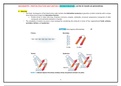
Comedones due to dilated sebaceous follicle
o Some papules
o Some pustules (papules and pustules are inflammatory lesions that
form when follicle bursts releasing irritants)
- Moderate:
o Increasing number of papules and pustules
o Mild scarring
- Severe:
o Comeodomes
o Papules
o Pustules
o More extensive scarring
o Nodular abscesses
o Excessive inflammatory response can result in nodules and cysts
- Acne fulminans:
o Rare but very severe form of acne seen exclusively in adolescent
males
o Caused by immune reaction to propionobacterium acnes
o Very severe acne associated with systemic upset eg fever
o Hospital admission
o Responds to oral steroids
Epidemiology
- Most in teenagers aged 13-18 years
Causes
- Follicular keratinisation, seborrhoea and colonisation of pilosebaceous unit
with P.acnes are central to development of acne skin lesions
- Hormonal factors and genetic components can facilitate an environment
(hormonal- androgen) providing optimal conditions for growth of P.acnes and
impacting on subsequent inflammatory reaction
Contributing factors
, - Increased sebum production
- Abnormal follicular keratinisation
- Bacterial colonisation
- Inflammation
Exacerbating factors
- Cosmetics- especially oily creams
- Certain clothing- high collared shirts
- Excessive sweating
- Excessive androgen production- PCOS
Symptoms
- Comeodomes
- Papules
- Pustules
- Cysts
- Pseudocysts
- Scarring- ice pick scarring
- Excoriations
- Erythematous or pigmented macules
Presentation
- Non inflammatory lesions- mild acne open and closed comedones
(blackheads and whiteheads)
- Inflammatory lesions (moderate and severe acne) papules, pustules,
nodules and cysts
- Commonly affects face, chest and upper back
Investigations
- Clinical diagnosis
- If hyperandrogenism is suspected in females, further tests undertaken- PCOS
Complications
- Scarring- ice pick scars, hypertrophic scars
- Psychological- depression
- Postinflammatory hyprpigmentation
- S/E of treatment
o Isotretinoin
Cheilitis
Increased risk of sunburn
Teratogenic
Myalgia
Treatment
Conservative
- Patient education
- Advice regarding skin hygiene
Medical
- Inflammatory disease of the pilosebaceous follicle
- Obstruction of pilosebaceous follicle with keratin plugs which results in
comedones, inflammation and pustules
- Common condition that results in a series of skin lesions ranging from:
o Comeodomes
o Pustules
o Papules
o Scarring
- Classified as mild, moderate or severe
- Mild:
o Comeodomes (open and closed, closed whitehead, open
blackhead)
Comedones due to dilated sebaceous follicle
o Some papules
o Some pustules (papules and pustules are inflammatory lesions that
form when follicle bursts releasing irritants)
- Moderate:
o Increasing number of papules and pustules
o Mild scarring
- Severe:
o Comeodomes
o Papules
o Pustules
o More extensive scarring
o Nodular abscesses
o Excessive inflammatory response can result in nodules and cysts
- Acne fulminans:
o Rare but very severe form of acne seen exclusively in adolescent
males
o Caused by immune reaction to propionobacterium acnes
o Very severe acne associated with systemic upset eg fever
o Hospital admission
o Responds to oral steroids
Epidemiology
- Most in teenagers aged 13-18 years
Causes
- Follicular keratinisation, seborrhoea and colonisation of pilosebaceous unit
with P.acnes are central to development of acne skin lesions
- Hormonal factors and genetic components can facilitate an environment
(hormonal- androgen) providing optimal conditions for growth of P.acnes and
impacting on subsequent inflammatory reaction
Contributing factors
, - Increased sebum production
- Abnormal follicular keratinisation
- Bacterial colonisation
- Inflammation
Exacerbating factors
- Cosmetics- especially oily creams
- Certain clothing- high collared shirts
- Excessive sweating
- Excessive androgen production- PCOS
Symptoms
- Comeodomes
- Papules
- Pustules
- Cysts
- Pseudocysts
- Scarring- ice pick scarring
- Excoriations
- Erythematous or pigmented macules
Presentation
- Non inflammatory lesions- mild acne open and closed comedones
(blackheads and whiteheads)
- Inflammatory lesions (moderate and severe acne) papules, pustules,
nodules and cysts
- Commonly affects face, chest and upper back
Investigations
- Clinical diagnosis
- If hyperandrogenism is suspected in females, further tests undertaken- PCOS
Complications
- Scarring- ice pick scars, hypertrophic scars
- Psychological- depression
- Postinflammatory hyprpigmentation
- S/E of treatment
o Isotretinoin
Cheilitis
Increased risk of sunburn
Teratogenic
Myalgia
Treatment
Conservative
- Patient education
- Advice regarding skin hygiene
Medical