SUMMARY READER
INTRODUCTION
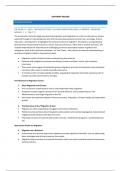
DE HAAS, H. 2023: “INTRODUCTION” IN HOW MIGRATION REALLY WORKS. PENGUIN
BOOKS. 1-11 (P6-17)
The introduction sets the stage by presenting migration and integration as critical contemporary issues,
explored through an interdisciplinary lens that incorporates perspectives from law, sociology, history,
education, and linguistics. It highlights the historical nature of migration, framing it as a longstanding
phenomenon influenced by economic, social, and cultural forces, rather than a modern anomaly. The
chapter emphasizes the importance of challenging common assumptions about migration and
integration, such as the dichotomy between "us" and "them," and calls for a nuanced understanding of
diversity and global mobility. Key points include:
• Migration is both a historical and contemporary phenomenon.
• Diversity and integration processes are deeply rooted in political, social, and economic
structures.
• The course encourages critical thinking about migration and aims to dismantle overly simplistic
narratives often seen in media and public discourse.
• It introduces the concept of global mobility, arguing that migration should be viewed as part of
broader societal and economic changes.
Introduction to Migration Issues
1. Mass Migration and Crises:
• The current era is described as one of unprecedented mass migration.
• Examples include migrant caravans from Central America, overcrowded boats in the
Mediterranean, and illegal migrants in the UK.
• Key factors driving these migration flows are poverty, inequality, climate change, and population
growth.
2. The Narrative of the 'Migration Crisis':
• Migrants are often exploited by smugglers and human traffickers.
• Political and social fears about integration and parallel communities (segregated, impoverished
neighborhoods) reinforce the idea of a crisis.
• Proposed solutions include stricter border controls, resettlement programs, and development
aid.
Alternative Views on Migration
3. Migration as a Solution:
• Economists and activists argue that migration provides significant benefits, such as addressing
labor shortages and driving economic innovation.
• Migrants bring innovation and cultural diversity, which can lead to positive social and economic
transformations.
, 4. Misleading Perspectives in Migration Debates:
• Simplistic pro- and anti-migration arguments often lack nuance and scientific backing.
• The book offers a more nuanced view of migration as an intrinsic process tied to social,
economic, and cultural changes.
Policy Failures
5. Policy Flaws:
• Politicians often fail to deliver on promises related to migration, resulting in counterproductive
outcomes:
- Stricter border controls can paradoxically increase migration flows.
- Despite significant investments in enforcement, illegal migration persists.
6. Lack of Scientific Basis:
• Migration policies are often based on myths rather than evidence.
• Political agendas and misinformation dominate debates, preventing effective solutions.
A New Approach
7. A Radical Vision of Migration:
• The book advocates for an objective, evidence-based approach to migration.
• Migration should be understood as a normal process rather than as a problem or a solution.
• It explores questions such as: Why does border control fail? How can we better understand
migration and design more effective policies?
Conclusions
8. Hope for the Future:
• The book shows that public opinion on migration is more nuanced than polarized political
debates suggest.
• By reducing fear and panic, an informed debate can take place about both the benefits and
downsides of migration.
• Solutions lie in designing policies that work better for all members of society, based on facts and
evidence-based insights.
Doelstelling: Migratie en integratie worden gepresenteerd als multidimensionale fenomenen
die een historisch en sociaal-economisch kader vereisen.
Belangrijk: Uitdaging van stereotypen en de oproep om voorbij simplistische aannames te
denken.
Kernconcepten: Globale mobiliteit, diversiteit, en structurele veranderingen in samenlevingen
door migratie.
KEY DEFINITIONS
This chapter focuses on defining essential terms and concepts central to migration studies,
laying a theoretical foundation for the course. Key terms include:
• Migration vs. Mobility: Migration is typically seen as a one-time movement across borders, while
mobility captures ongoing and fluid movements influenced by global interconnectedness.
, • Integration and Inclusion: These are framed as processes that go beyond mere coexistence,
involving the creation of equitable opportunities for all members of society.
• Forced vs. Voluntary Migration: The chapter discusses how these distinctions are often blurred,
as many forms of migration lie on a spectrum of choice and necessity.
Diaspora and Transnationalism: Diaspora refers to dispersed communities with shared cultural
or ethnic ties, while transnationalism emphasizes the cross-border connections migrants
maintain.
• Race and Ethnicity: The chapter critiques how racial and ethnic categorizations often reinforce
stereotypes and structural inequalities.
It delves into the theoretical underpinnings of these concepts, drawing from key readings by
scholars like Massey et al. (1993) and de Haas (2019), who highlight the complexity and
interconnectedness of migration processes.
THEORIES OF INTERNATIONAL MIGRATION: A REVIEW AND APPRAISAL. POPULATION AND
DEVELOPMENT (P18-53)
Introduction
1. Understanding International Migration:
• Migration has become a significant feature of industrialized societies worldwide.
• Current theories on migration are fragmented, often focusing on specific disciplines without a
unified framework.
• The authors aim to create an interdisciplinary approach that combines different levels of
analysis.
2. Purpose of the Article:
• To review and evaluate the main theories of international migration.
• To understand how migration begins and how it continues over time.
• To identify gaps in existing theories and propose a more comprehensive and evidence-based
framework.
How International Migration Starts
1. Neoclassical Economics:
• Macro-Level Theory: Migration occurs due to wage differences and labor market imbalances
between countries.
- Workers move to higher-wage countries to maximize income.
- Capital often flows in the opposite direction, from wealthier to poorer regions.
• Micro-Level Theory: Migration is a decision made by individuals based on cost-benefit analysis.
- Factors like education, skills, and migration costs influence these decisions.
2. New Economics of Migration:
• Migration is not just an individual decision; it is often a family strategy to reduce economic risks.
• Families send members abroad to diversify income sources and cope with failures in local
markets (e.g., lack of credit or insurance).
3. Dual Labor Market Theory:
• Advanced economies need low-wage workers for undesirable jobs that native workers avoid due
to cultural or structural reasons.
• Migrants fill this gap, making them essential to the labor market.
INTRODUCTION
DE HAAS, H. 2023: “INTRODUCTION” IN HOW MIGRATION REALLY WORKS. PENGUIN
BOOKS. 1-11 (P6-17)
The introduction sets the stage by presenting migration and integration as critical contemporary issues,
explored through an interdisciplinary lens that incorporates perspectives from law, sociology, history,
education, and linguistics. It highlights the historical nature of migration, framing it as a longstanding
phenomenon influenced by economic, social, and cultural forces, rather than a modern anomaly. The
chapter emphasizes the importance of challenging common assumptions about migration and
integration, such as the dichotomy between "us" and "them," and calls for a nuanced understanding of
diversity and global mobility. Key points include:
• Migration is both a historical and contemporary phenomenon.
• Diversity and integration processes are deeply rooted in political, social, and economic
structures.
• The course encourages critical thinking about migration and aims to dismantle overly simplistic
narratives often seen in media and public discourse.
• It introduces the concept of global mobility, arguing that migration should be viewed as part of
broader societal and economic changes.
Introduction to Migration Issues
1. Mass Migration and Crises:
• The current era is described as one of unprecedented mass migration.
• Examples include migrant caravans from Central America, overcrowded boats in the
Mediterranean, and illegal migrants in the UK.
• Key factors driving these migration flows are poverty, inequality, climate change, and population
growth.
2. The Narrative of the 'Migration Crisis':
• Migrants are often exploited by smugglers and human traffickers.
• Political and social fears about integration and parallel communities (segregated, impoverished
neighborhoods) reinforce the idea of a crisis.
• Proposed solutions include stricter border controls, resettlement programs, and development
aid.
Alternative Views on Migration
3. Migration as a Solution:
• Economists and activists argue that migration provides significant benefits, such as addressing
labor shortages and driving economic innovation.
• Migrants bring innovation and cultural diversity, which can lead to positive social and economic
transformations.
, 4. Misleading Perspectives in Migration Debates:
• Simplistic pro- and anti-migration arguments often lack nuance and scientific backing.
• The book offers a more nuanced view of migration as an intrinsic process tied to social,
economic, and cultural changes.
Policy Failures
5. Policy Flaws:
• Politicians often fail to deliver on promises related to migration, resulting in counterproductive
outcomes:
- Stricter border controls can paradoxically increase migration flows.
- Despite significant investments in enforcement, illegal migration persists.
6. Lack of Scientific Basis:
• Migration policies are often based on myths rather than evidence.
• Political agendas and misinformation dominate debates, preventing effective solutions.
A New Approach
7. A Radical Vision of Migration:
• The book advocates for an objective, evidence-based approach to migration.
• Migration should be understood as a normal process rather than as a problem or a solution.
• It explores questions such as: Why does border control fail? How can we better understand
migration and design more effective policies?
Conclusions
8. Hope for the Future:
• The book shows that public opinion on migration is more nuanced than polarized political
debates suggest.
• By reducing fear and panic, an informed debate can take place about both the benefits and
downsides of migration.
• Solutions lie in designing policies that work better for all members of society, based on facts and
evidence-based insights.
Doelstelling: Migratie en integratie worden gepresenteerd als multidimensionale fenomenen
die een historisch en sociaal-economisch kader vereisen.
Belangrijk: Uitdaging van stereotypen en de oproep om voorbij simplistische aannames te
denken.
Kernconcepten: Globale mobiliteit, diversiteit, en structurele veranderingen in samenlevingen
door migratie.
KEY DEFINITIONS
This chapter focuses on defining essential terms and concepts central to migration studies,
laying a theoretical foundation for the course. Key terms include:
• Migration vs. Mobility: Migration is typically seen as a one-time movement across borders, while
mobility captures ongoing and fluid movements influenced by global interconnectedness.
, • Integration and Inclusion: These are framed as processes that go beyond mere coexistence,
involving the creation of equitable opportunities for all members of society.
• Forced vs. Voluntary Migration: The chapter discusses how these distinctions are often blurred,
as many forms of migration lie on a spectrum of choice and necessity.
Diaspora and Transnationalism: Diaspora refers to dispersed communities with shared cultural
or ethnic ties, while transnationalism emphasizes the cross-border connections migrants
maintain.
• Race and Ethnicity: The chapter critiques how racial and ethnic categorizations often reinforce
stereotypes and structural inequalities.
It delves into the theoretical underpinnings of these concepts, drawing from key readings by
scholars like Massey et al. (1993) and de Haas (2019), who highlight the complexity and
interconnectedness of migration processes.
THEORIES OF INTERNATIONAL MIGRATION: A REVIEW AND APPRAISAL. POPULATION AND
DEVELOPMENT (P18-53)
Introduction
1. Understanding International Migration:
• Migration has become a significant feature of industrialized societies worldwide.
• Current theories on migration are fragmented, often focusing on specific disciplines without a
unified framework.
• The authors aim to create an interdisciplinary approach that combines different levels of
analysis.
2. Purpose of the Article:
• To review and evaluate the main theories of international migration.
• To understand how migration begins and how it continues over time.
• To identify gaps in existing theories and propose a more comprehensive and evidence-based
framework.
How International Migration Starts
1. Neoclassical Economics:
• Macro-Level Theory: Migration occurs due to wage differences and labor market imbalances
between countries.
- Workers move to higher-wage countries to maximize income.
- Capital often flows in the opposite direction, from wealthier to poorer regions.
• Micro-Level Theory: Migration is a decision made by individuals based on cost-benefit analysis.
- Factors like education, skills, and migration costs influence these decisions.
2. New Economics of Migration:
• Migration is not just an individual decision; it is often a family strategy to reduce economic risks.
• Families send members abroad to diversify income sources and cope with failures in local
markets (e.g., lack of credit or insurance).
3. Dual Labor Market Theory:
• Advanced economies need low-wage workers for undesirable jobs that native workers avoid due
to cultural or structural reasons.
• Migrants fill this gap, making them essential to the labor market.